Standard Guide to Storing Roasted Coffee Beans for Commercial Cafes
Operational guide for cafe owners and head baristas: Mitigating the 4 primary environmental threats (Oxygen, Heat, Moisture, Light) to maintain rich crema and peak cup aromatics.
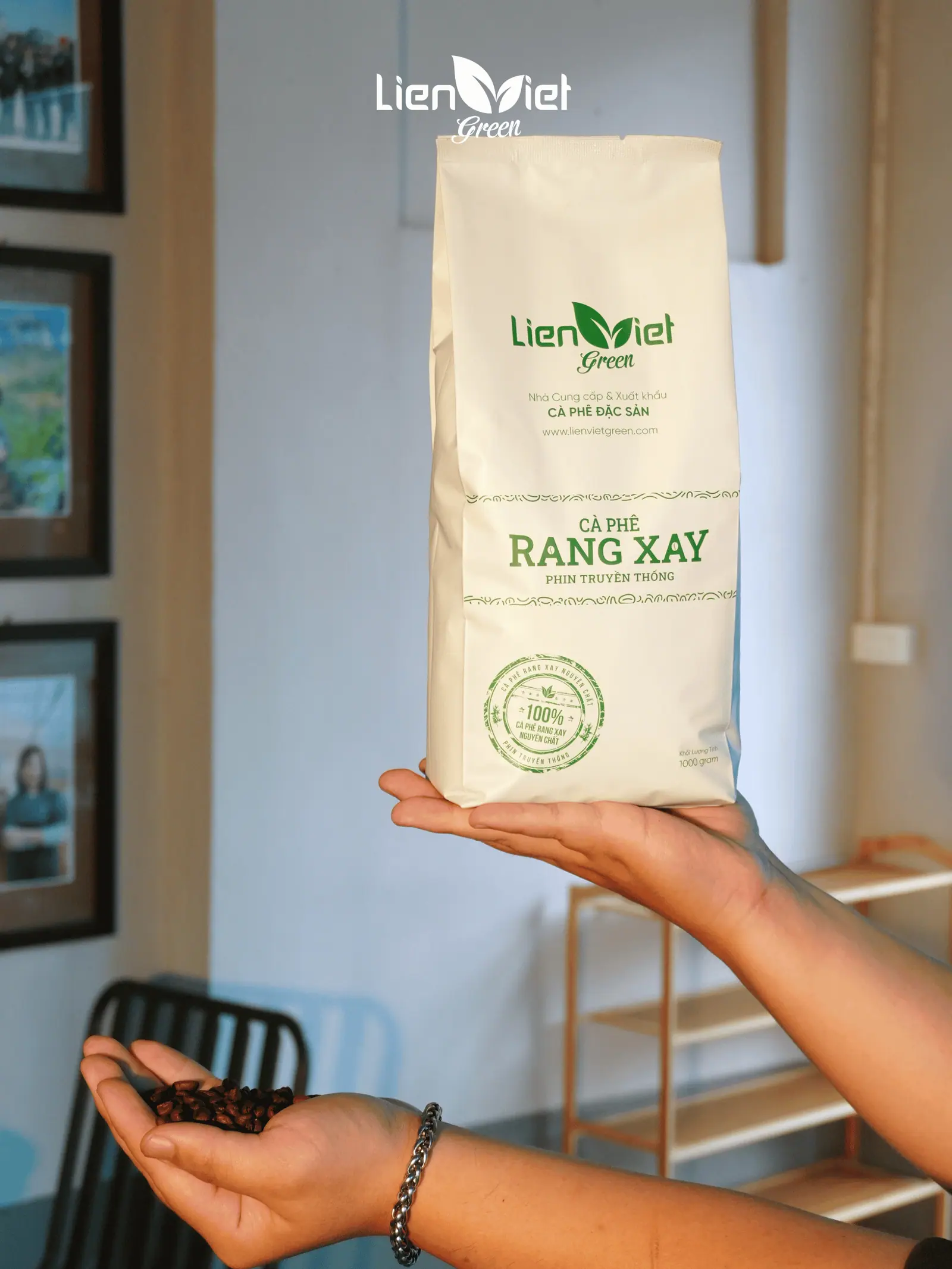
To store roasted coffee beans in a café, keep them in sealed bags with a one-way valve in a cool, dark, dry place, fill the grinder hopper only with what you need for a few hours, and grind just before brewing. This protects the beans from oxygen, heat, moisture and light, the four main causes of stale coffee.
📌 The 4 Primary Enemies of Roasted Coffee Quality
- Oxygen (O2): Triggers rapid lipid oxidation, producing stale off-flavors and degrading aromatic volatile compounds.
- Moisture (Humidity): Increases bean moisture content > 5%, promoting mold growth and weakening Espresso crema structure.
- Heat (Temperature): Accelerates natural CO2 degassing rates and thermally degrades delicate aromatic esters.
- Light (UV Radiation): Photochemically breaks down organic pigments and essential coffee oils.
1. The Degassing Timeline & Storage Dynamics
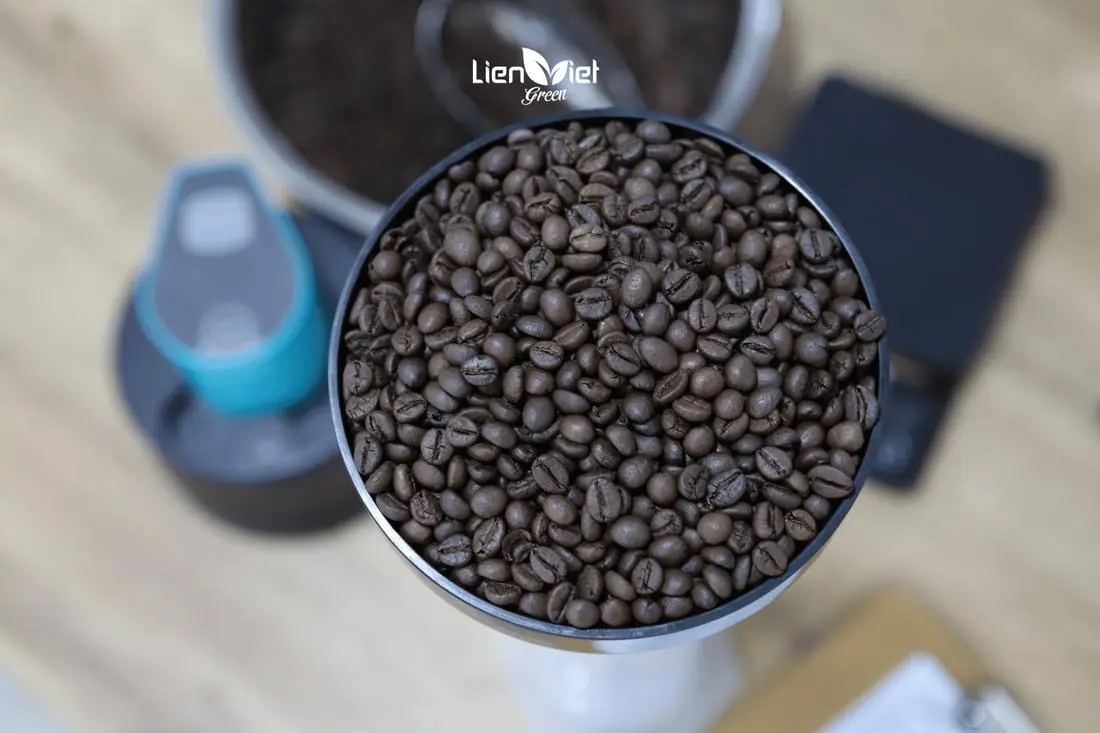
The window between 7 and 14 days post-roast represents the “Degassing Peak”—when beans shed excess CO2 and achieve optimal flavor stability for Espresso extraction. Brewing beans 1-2 days post-roast results in turbulent, bubbly crema due to excessive gas discharge.
2. Standard Operating Procedure (SOP) for Commercial Storage
| Storage Zone / Format | Optimal Environmental Specs | Best Quality Window | Barista Operational Note |
|---|---|---|---|
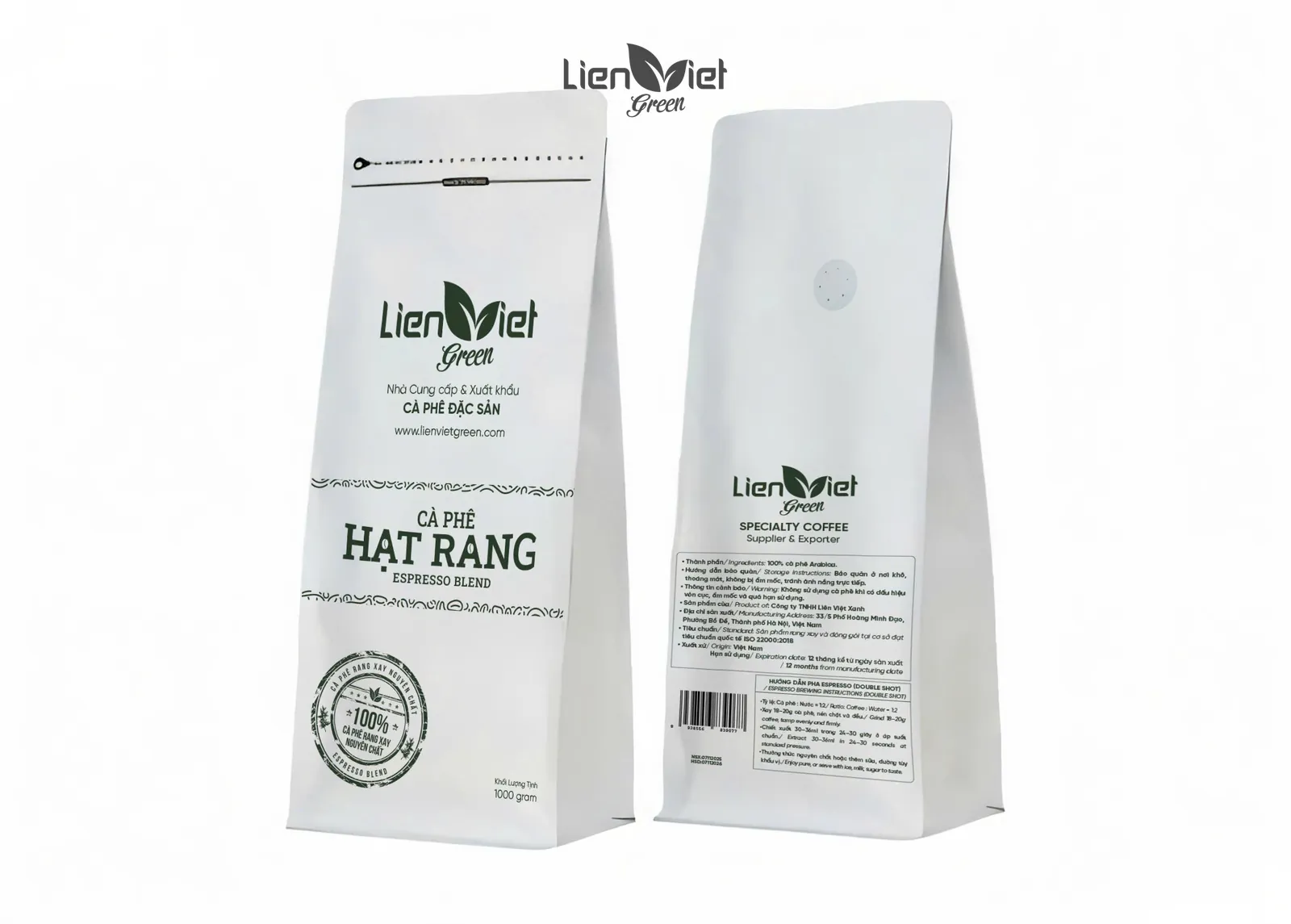
| Cafe Storage Inventory (1kg – 5kg bags) | One-way valve foil bag, 20°C – 25°C, humidity < 60% | 1 – 3 months post-roast date | Seal bag tightly with clips after opening; store elevated off floor |
| Grinder Hopper | Fill only for 4 – 6 hours of peak operation | Use within same day | Empty remaining beans into airtight containers nightly; wipe hopper clean |
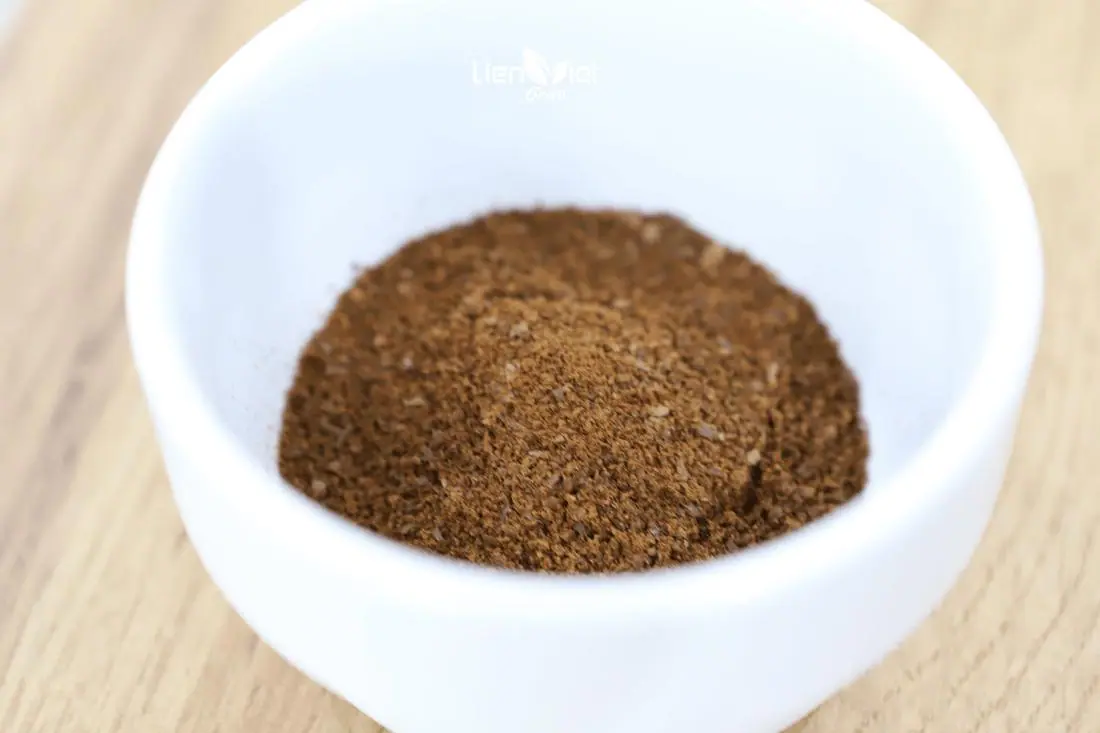
| Pre-Ground Coffee (Powder) | Opaque airtight stainless steel or glass container | Grind fresh on-demand (brew within 15 min) | Never grind beans overnight as surface area exposure increases 100x |
The science behind shelf life is explained in coffee moisture content and water activity.
If you are deciding what format to buy, compare whole bean vs pre-ground coffee for F&B businesses.
Learn about our fresh roasted coffee supply for cafés and chains, or book a cupping at our Long Bien roastery.
Frequently asked questions
How should a café store roasted coffee beans?
Keep the beans in bags with a one-way valve, reseal the bag tightly after each use, and store it in a dark, cool place off the floor. The storage room should stay at around 20°C to 25°C.
How many beans should go into the grinder hopper?
Load only enough beans for 4 to 6 hours of service. At the end of the day, empty the leftover beans into an airtight container and wipe the coffee oil off the hopper.
Can coffee be ground in advance and kept overnight?
No. Ground coffee is exposed to far more oxygen than whole beans and loses aroma very quickly. Grind only what you are about to brew and use it within about 15 minutes.
Why not brew espresso with freshly roasted beans?
Beans roasted only 1 to 2 days earlier still hold too much CO₂, which makes the crema bubbly and quick to collapse. Beans usually settle into stable espresso flavor about 7 to 14 days after roasting.
How long do roasted coffee beans keep?
Roasted beans are at their freshest within about 2 to 4 weeks of the roast date when kept in a sealed one-way-valve bag. Once opened, use the bag within 1 to 2 weeks. Ground coffee loses aroma much faster and should be used within a few days. Avoid the fridge, where beans absorb moisture and food odors.
Fresh Roasted Coffee Supply Solutions for Commercial Cafes
Lien Viet Green delivers freshly roasted coffee beans on weekly schedules, ensuring beans arrive at peak degassing condition.