Coffee traceability is the ability to record and look up data for a coffee lot at every stage, from the farm's GPS coordinates and processing to storage, roast logs and the code on the finished bag. It is becoming a requirement for global trade because rules such as the EU Deforestation Regulation (EUDR) ask buyers to prove where and how their coffee was grown.
What is coffee traceability? Explore the European Union Deforestation Regulation (EUDR), farm GPS polygon mapping, remote sensing verification, and what a standard traceability dossier contains.
The global coffee trade has entered a transformative era of full transparency. Discerning consumers and international regulatory bodies no longer accept vague origin claims. They demand verifiable answers: Exactly which smallholder farmed this coffee? What are the farm’s GPS coordinates? Was forest cleared to grow it? Can food safety be verified across every stage of the supply chain?
Coffee traceability has evolved from an optional marketing story into a mandatory technical gateway for F&B brands, roasters, and commercial exporters aiming to secure sustainable supply chains.
What is coffee traceability and why is it mandatory for global trade?
Coffee traceability is the technical capability to systematically capture, verify, and retrieve data across every link of the supply chain: from farm coordinates and cultivation practices, harvest sorting and GrainPro hermetic storage, to roast logs and the lot code on retail packaging.
Regulatory Compliance & Risk Elimination
Helps importers and retail brands keep the records ready for border checks, lowering the risk of penalties and supply interruptions.
Brand Differentiation & Retail Value
A verifiable origin story builds trust with sustainability-conscious customers.
EUDR regulations and strict international export benchmarks
The European Union Deforestation Regulation (Regulation (EU) 2023/1115 – EUDR) mandates that imported commodities, notably coffee, must originate exclusively from land not subjected to deforestation after December 31, 2020.
Comparative audit matrix
| Audit Criterion | Traditional Commodity Chain | Fully Traceable Supply Chain |
|---|---|---|
| Geolocation Mapping | Aggregated through middlemen, zero farm plot coordinates | Each lot linked to the GPS coordinates (point or polygon) of every smallholder plot |
| Deforestation Verification | No satellite remote sensing baseline data | Satellite data checked against the plot's forest cover history |
| Batch Segregation | Mixed origins prevent root-cause defect isolation | A unique lot code per batch, allowing the finished product to be traced back to the farm |
| Smallholder Engagement | Price squeezing, unstable seasonal income | Clear agreements with growers, technical support for cultivation and selective harvest |
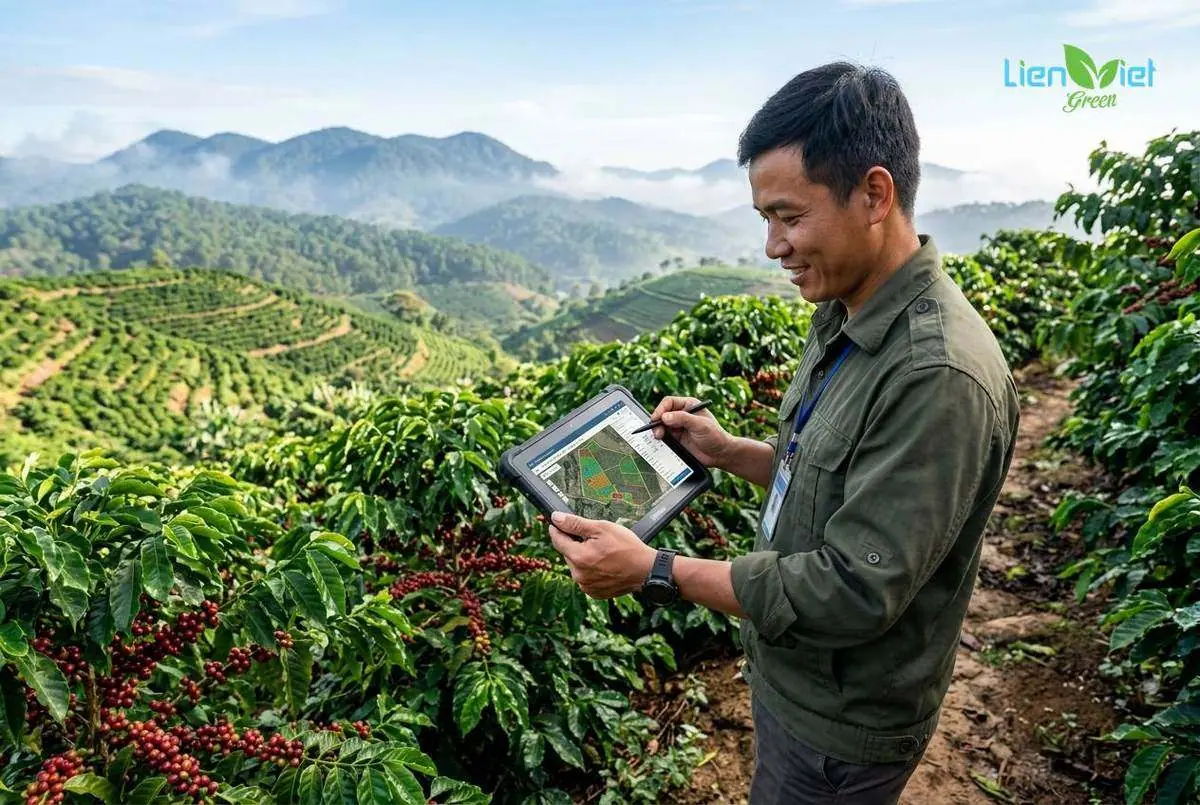
Digital GPS polygon mapping and satellite remote sensing verification
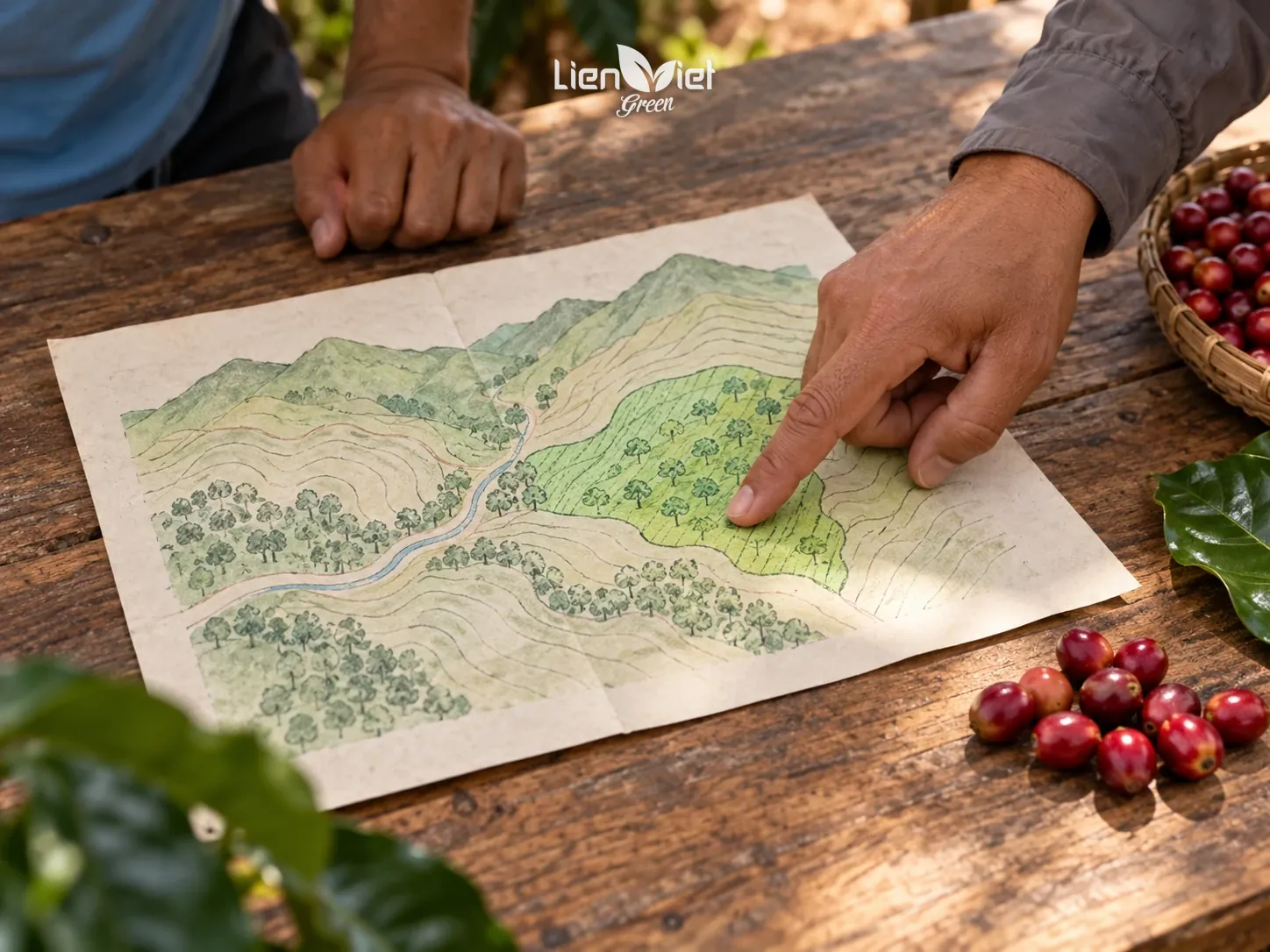
The diagram below is a sample illustration only, not data from a specific farm or company. It shows how a GPS polygon and satellite cross-check record is typically organised:
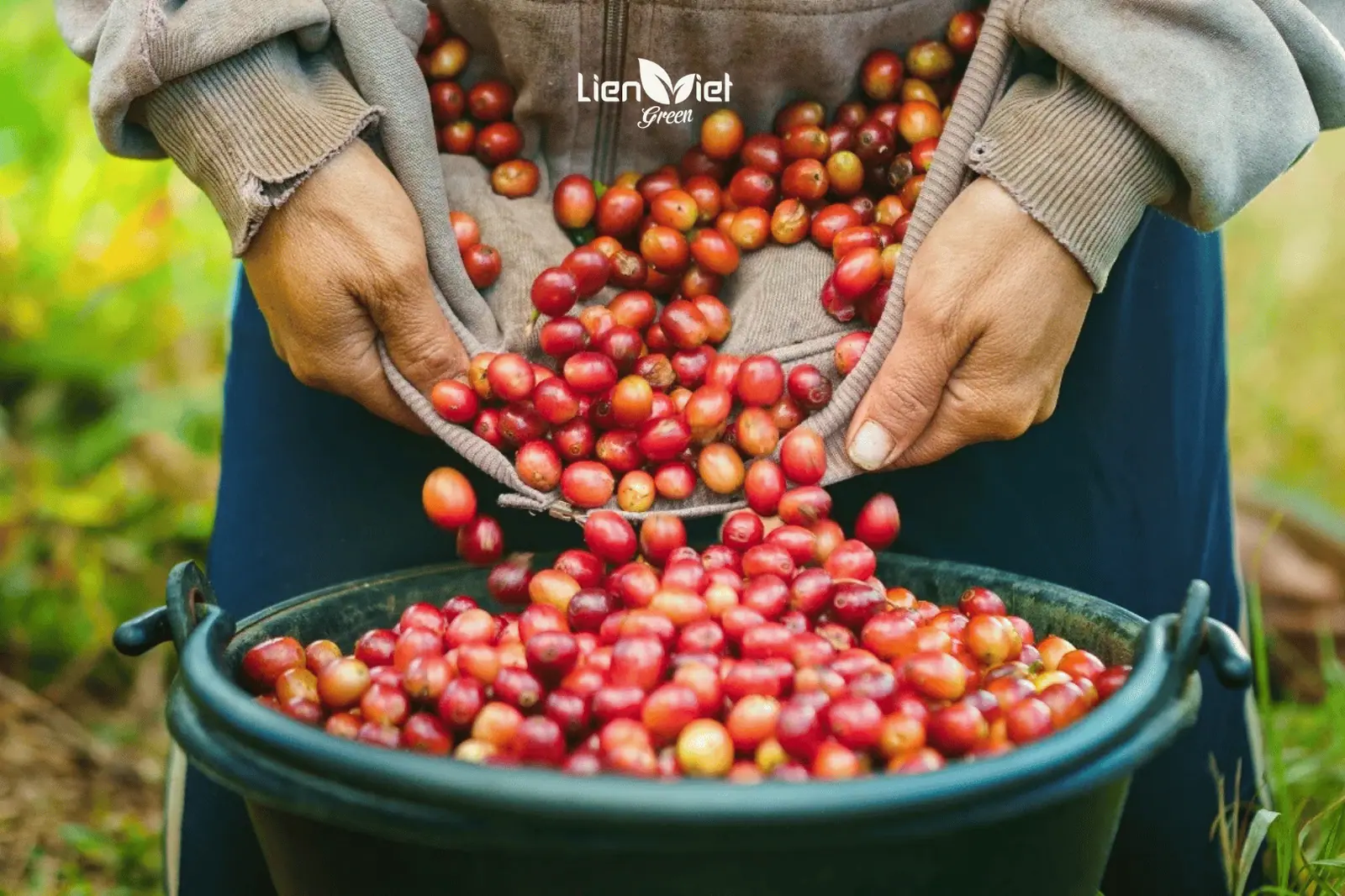
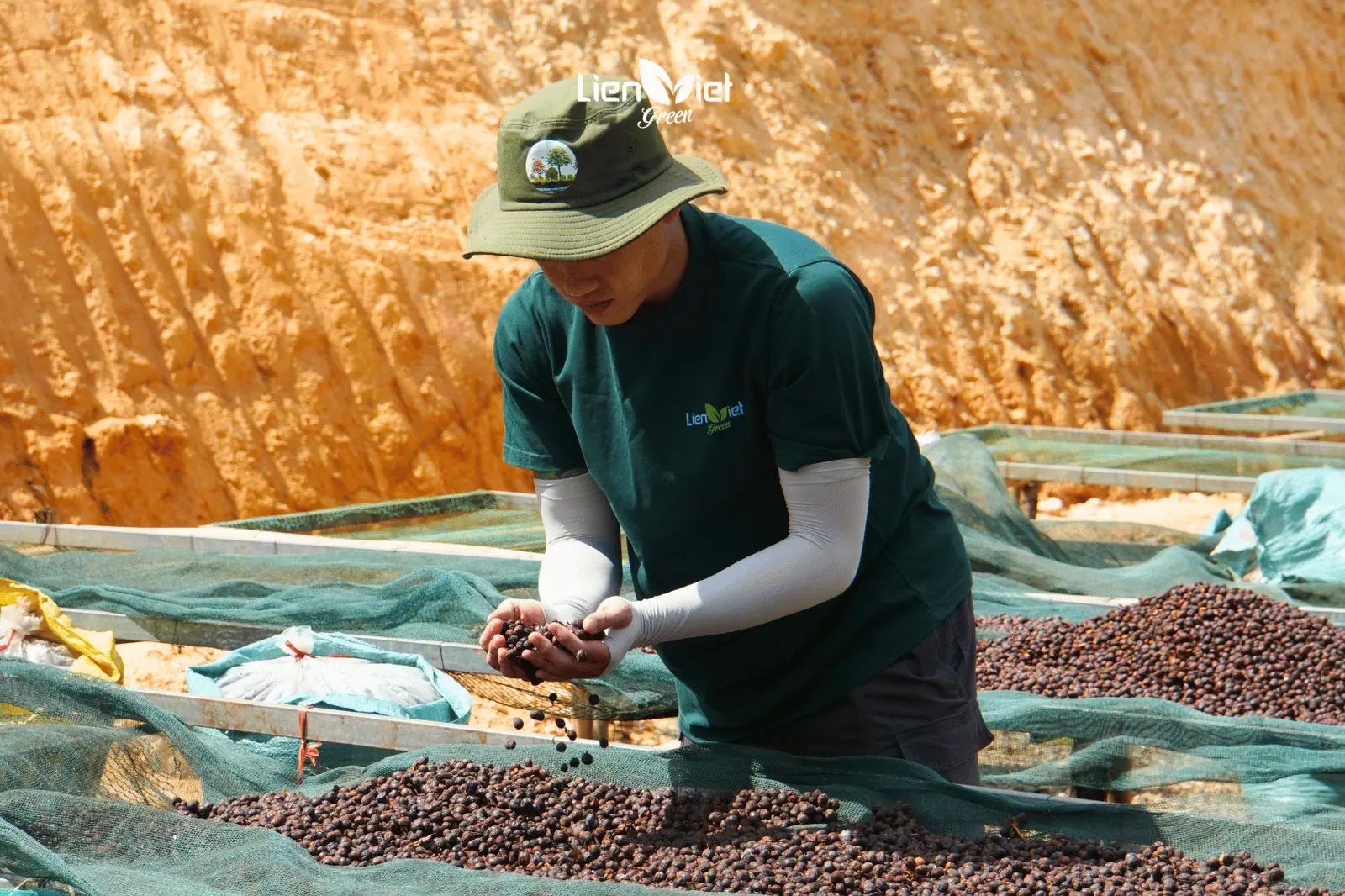
Selective hand-harvesting of ripe coffee cherries represents the essential foundation for physical traceability and exceptional sensory cup clarity:
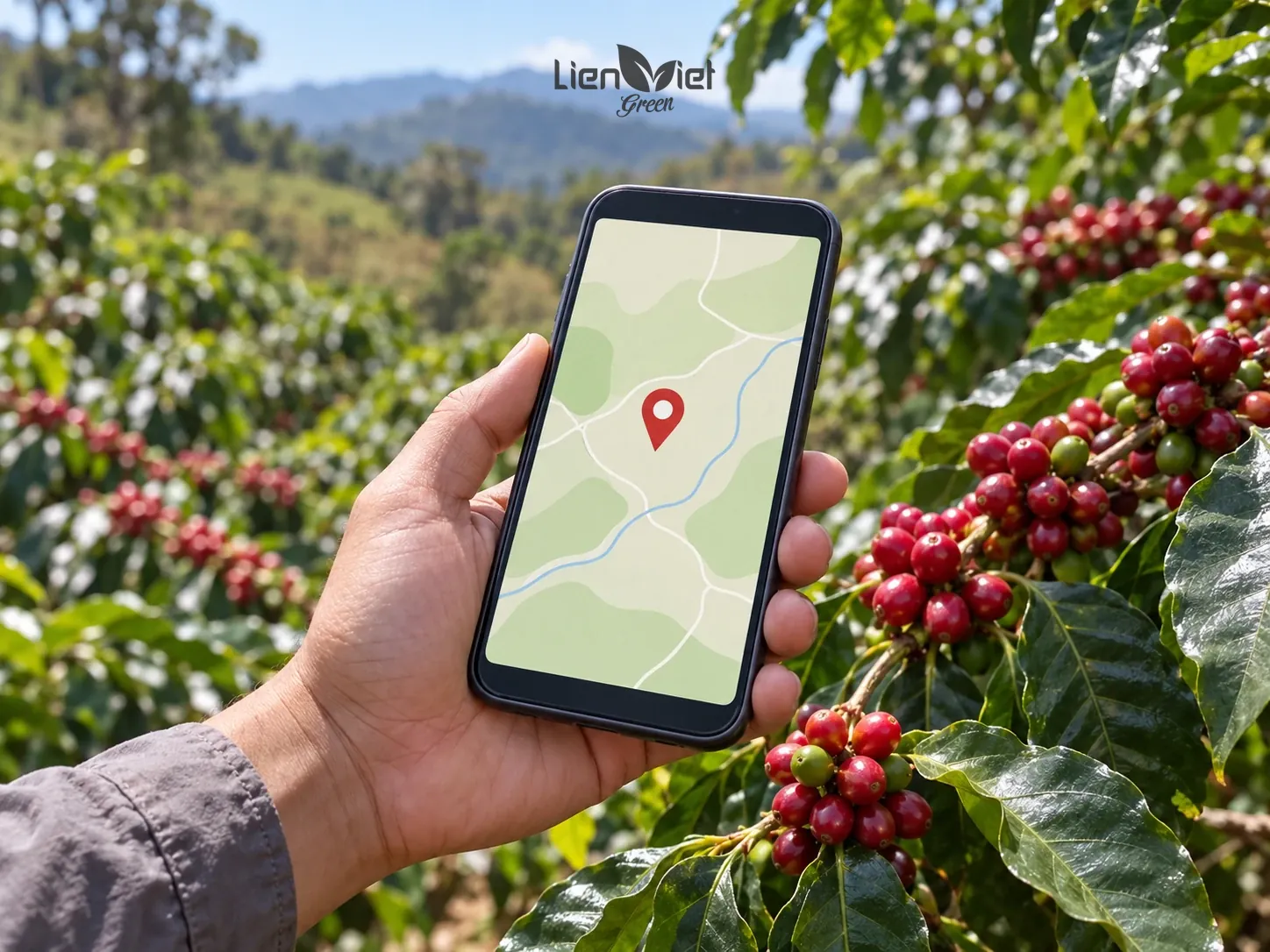
Four core data tiers in a technical traceability dossier
A standard export-ready traceability dossier typically rests on four data tiers:
- Tier 1: GPS Polygons & Farmer Registry
- Tier 2: Moisture MC <12% & Water Activity Aw <0.60
- Tier 3: Hot Air Telemetry & Agtron Readings
- Tier 4: Q Grader Sensory CoA
-
Tier 1: Agronomic & Geographic TelemetryFarm polygon GPS boundaries, elevation (1,200m – 1,600m), botanical varieties (Catimor, Typica, Red Bourbon), and harvest vintage.
-
Tier 2: Post-Harvest & Hermetic Storage ParametersProcessing method (Washed, Natural, Honey), solar greenhouse drying curve, and hermetic bags (such as GrainPro) to limit mould and ochratoxin A (OTA).
-
Tier 3: Roasting Batch LogUnique Batch ID, roaster temperature and airflow curves, Development Time Ratio (DTR%), and whole/ground Agtron roast readings.
-
Tier 4: Q Grader Sensory Certification (CoA)Standardized Specialty Coffee Association (SCA) cupping score, detailed flavor breakdown, body evaluation, and zero-defect validation.
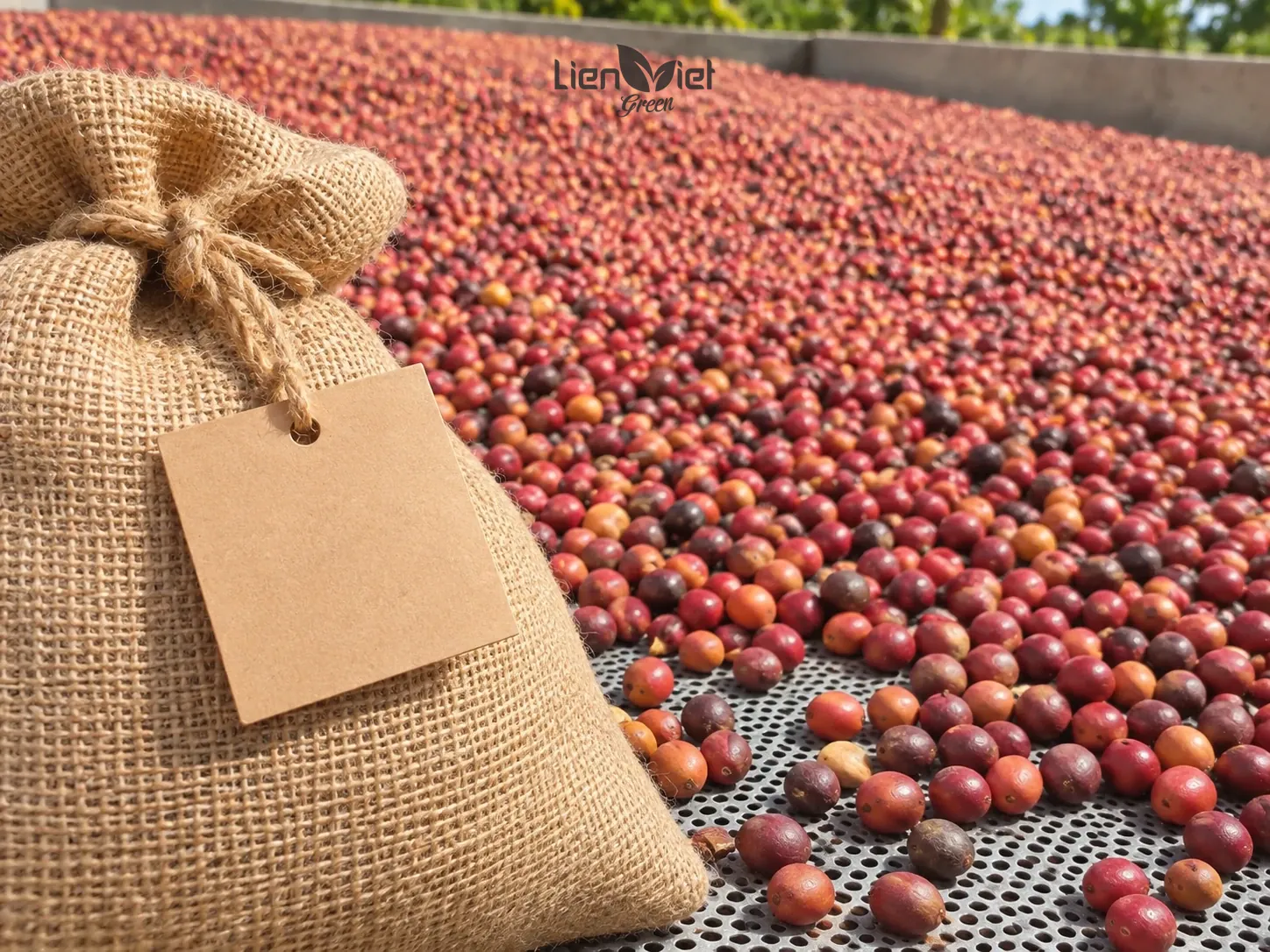
Economic returns and brand value for modern F&B coffee chains
For modern commercial coffee brands, traceability is not merely a compliance burden. It also makes the brand story more credible. Four concrete benefits:
What Lien Viet Green records for each coffee lot
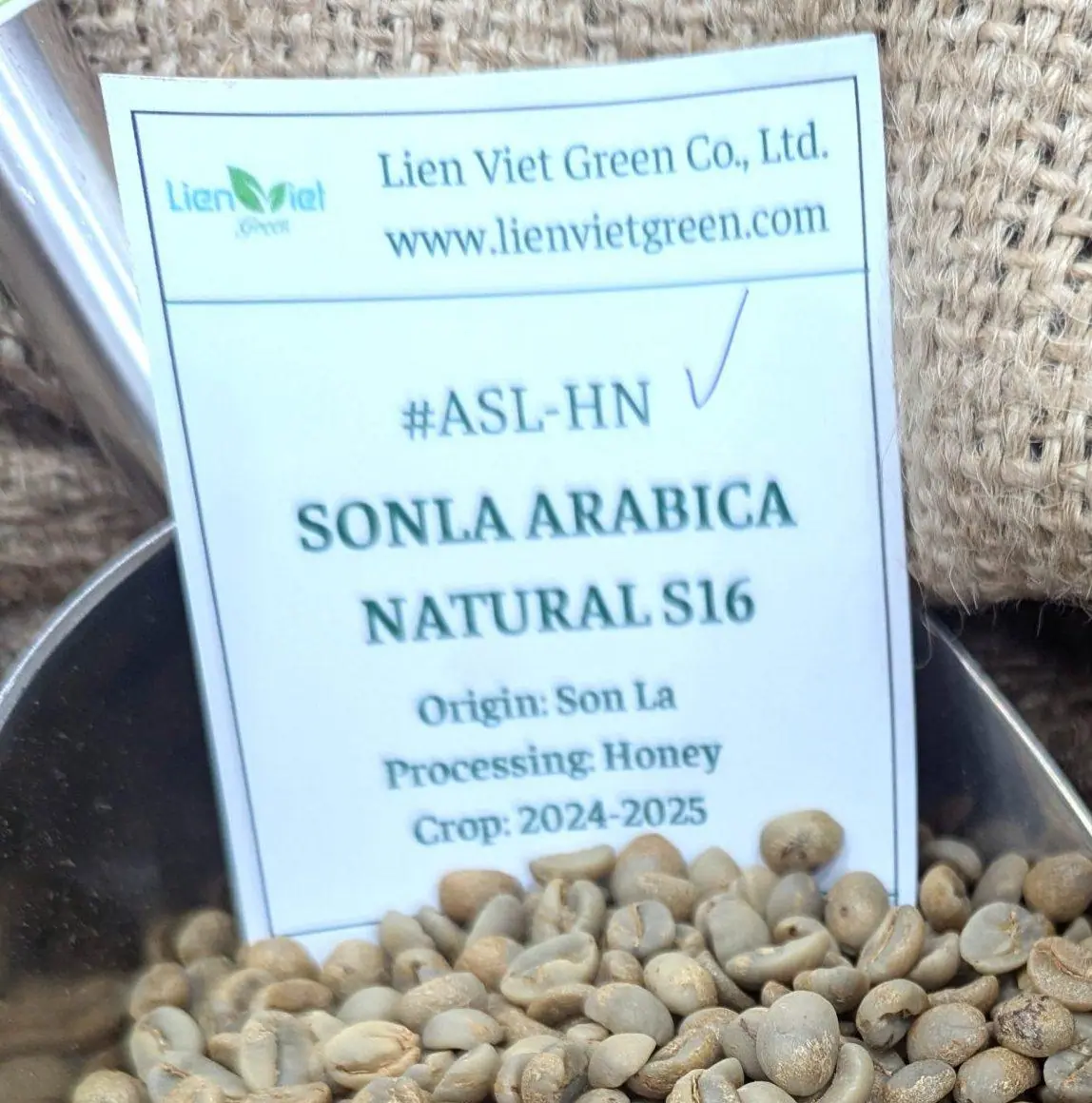
For Lien Viet Green coffee, both green beans and roasted coffee are labelled with the growing region, processing method, altitude and harvest season. The roastery uses a Hot Air roaster, a Q Grader team cups to control each batch before delivery, and the roastery holds ISO 22000:2018.
If your cafe or brand needs more data, such as farm plot coordinates or its own lot codes for a private-label product, ask first to learn what can be provided and what must be added together with the growing partner.
Five steps to build a traceability dossier for private-label coffee
If you make private-label coffee (OEM), this is the order in which a traceability dossier is usually built. Ask Lien Viet Green directly which steps it can support when you request samples:
Origin Geolocation SurveyCollect GPS farm boundary polygons and land-use history, usually done by the grower or the buyer.
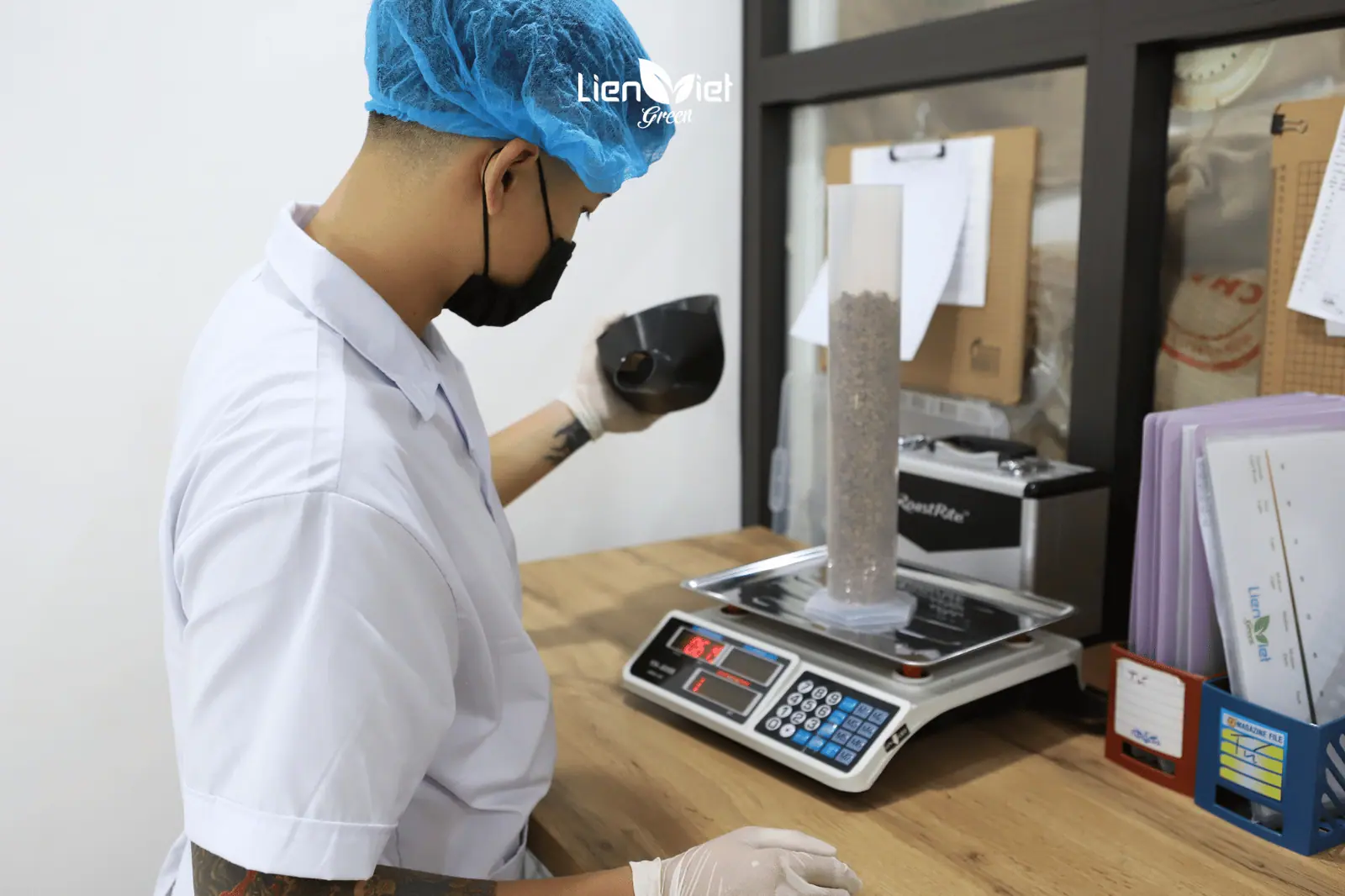
Green Bean Physical AuditsCheck moisture content, water activity, screen grading and defect counts before warehousing.
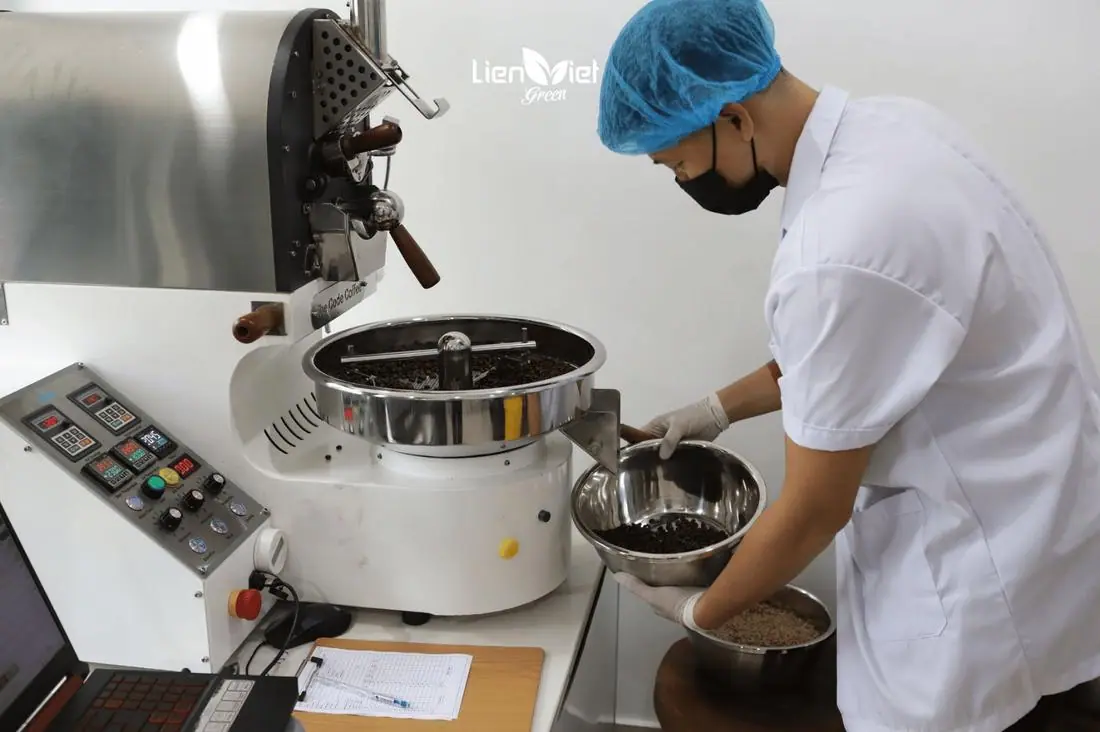
Roasting & Profile LockRoast samples, fix the temperature curve and verify colour with Agtron so later batches can repeat it.
CQI Q Grader Sensory EvaluationScore the batch by SCA cupping and issue a Certificate of Analysis (CoA) for each batch.
Lot Code on PackagingPrint a lot code or QR code so buyers can look up the origin and roast data when needed.
Conclusion: Traceability – The green passport for international expansion
Traceability represents far more than legal compliance; it is a statement of trust between your brand and your customers, and of responsibility toward Vietnamese coffee growers.
When you choose a roaster for your cafe or chain, ask for the growing region, processing method, harvest season and roast record of each lot. You can request samples from Lien Viet Green and cup them with a Q Grader before you decide.
Want to taste Lien Viet Green roasted coffee?
Contact Lien Viet Green for free coffee samples and to discuss growing region, processing and roast records that suit your cafe or brand.
To see where this data starts, follow our origin sourcing journeys with farm partners.
Traceability is one part of a wider plan, covered in our article on long-term coffee supply chain strategy for quality.
To make coffee under your own brand, start with our OEM and private-label coffee service, or book a cupping at our Long Bien roastery.
Sources: Coffee Quality Institute (CQI) Q Grader certification; Specialty Coffee Association (SCA) coffee standards; Regulation (EU) 2023/1115 on deforestation-free products (EUDR); ISO 22000:2018 on the ISO website and Lien Viet Green roastery ISO 22000:2018 certificate.
Frequently asked questions
What does coffee traceability mean?
It is the ability to record and retrieve data for a coffee lot at every step: farm coordinates, farming practices, processing, storage, the roast batch record and the code on the finished package.
What does the EUDR require for coffee?
The EUDR is the European Union's deforestation regulation. Companies must show that their coffee was grown on land that was not deforested after December 31, 2020, usually with GPS coordinates of the farm plots.
What data goes into a coffee traceability dossier?
A standard dossier has four tiers: growing region and GPS data, processing and storage parameters, roast batch logs, and the Q Grader cupping score sheet.
How do F&B chains benefit from traceability?
You have complete raw material records for food safety checks, you can find the cause quickly if a lot has a problem, and you have a clear origin story that builds trust with customers.
How can customers check where their coffee comes from?
If the roaster prints a QR or lot code on the package, customers scan it with a phone to see the farm, certification and roast information the roaster has published for that bag.