Coffee Industry Glossary: 50 Essential Terms Every Business Owner Must Know
50 essential coffee industry terms spanning species, harvesting, processing, roasting, brewing, and sensory evaluation — a practical reference for café owners, roasters, and F&B professionals.
Every coffee business owner should know the core terms in five areas: coffee species, harvesting and processing, roasting, brewing, and sensory evaluation. This glossary explains 50 of them, from Arabica and Fine Robusta to First Crack, extraction and cupping.
📌 Technical Key Highlights
- Roastery Standard: Certified ISO 22000, evaluated by Q Grader panel.
- Roasting Tech: 100% Hot Air fluid bed convection, precise thermal curve tracking.
- Batch Consistency: Strict Agtron spectrophotometer roast color and moisture control.
- Traceability: 100% transparent sourcing from Vietnamese coffee origins.
Coffee species & raw materials
Operating a coffee business requires more than selecting beans or investing in equipment. To work effectively with suppliers, build menus, and control quality, operators must understand the technical terminology used across the entire coffee value chain.
The world’s most widely cultivated coffee species, prized for complex aromas, refined acidity, and natural sweetness. The foundation of the specialty coffee market.
Contains nearly twice the caffeine of Arabica, producing dense body and bold bitterness. Vietnam is the world’s largest Robusta producer and exporter.
Robusta lots scoring ≥ 80 points on the CQI cupping scale with zero primary defects. Clean sweetness, balanced finish, and layered complexity — far from commodity Robusta.
An uncommon species with oversized cherries and distinctive botanical aromatics. Gaining traction among specialty roasters exploring diverse flavor profiles.
Raw, unroasted coffee seeds dried to stable moisture (10–12%). The primary commodity traded in international coffee markets.
An international non-profit that develops quality standards and administers the Q Coffee System for grading Arabica and Robusta. Certifies Q-Graders and R-Graders worldwide.
A limited-quantity lot harvested from a specific parcel or processing batch. Strict traceability and meticulous processing; commands significant price premiums.
Coffee sourced from one defined geographical entity — a country, region, cooperative, or farm. Highlights unblended terroir characteristics.
A deliberate combination of two or more coffees to achieve a target flavor profile: balanced aroma, body, aftertaste, and year-round consistency.
The documented ability to track coffee from the agricultural parcel through processing, export, and roasting. Increasingly demanded by F&B chains and export markets.
The combined natural factors — climate, soil, altitude, and farming practices — that give a growing region its distinctive flavor identity.
Elevation above sea level where coffee is grown. Higher altitude → slower cherry ripening, greater sugar accumulation, more complex flavor development.
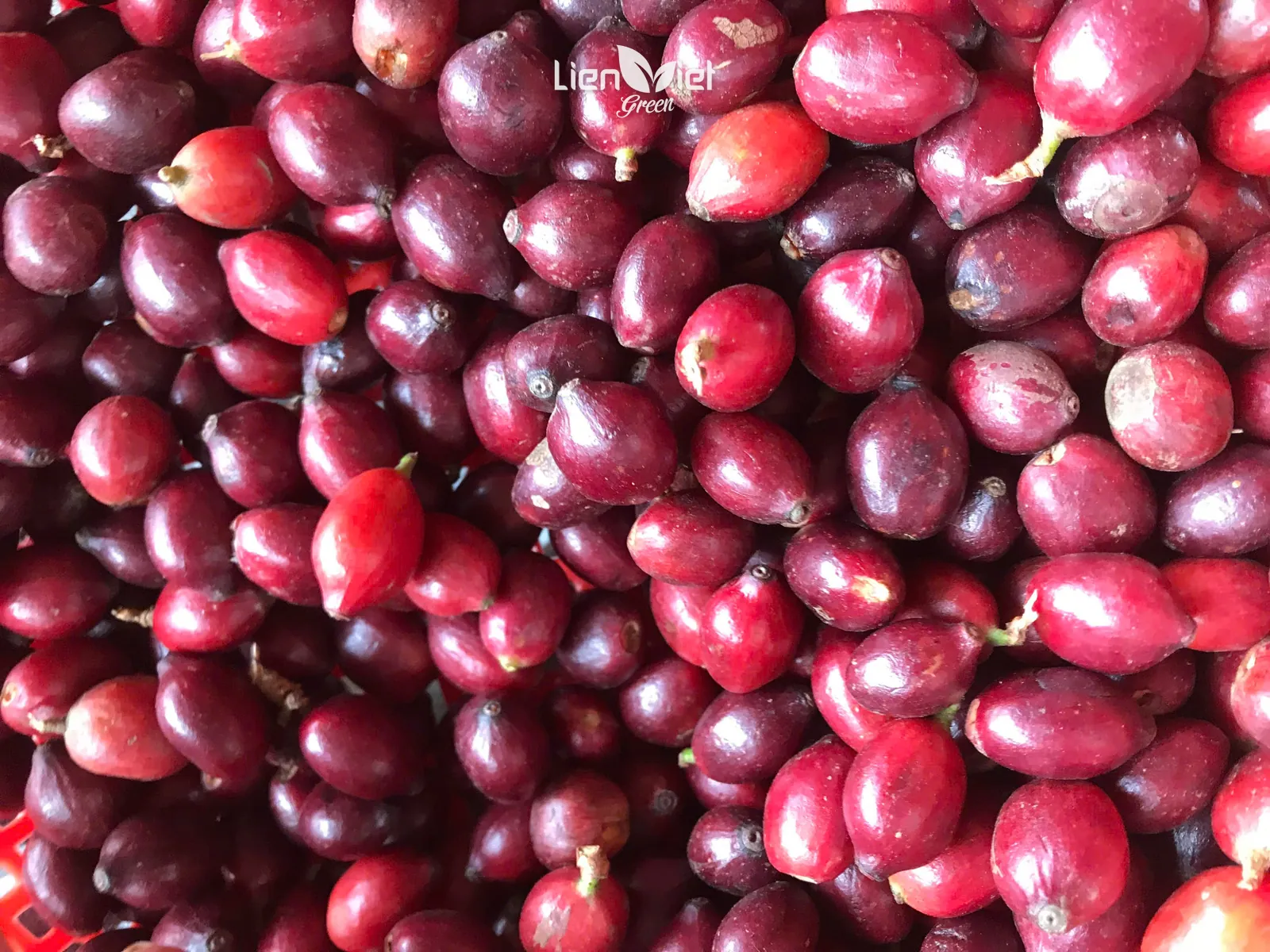
A measure of sugar concentration in ripe coffee cherries. Used to assess raw material quality and determine optimal harvest timing.
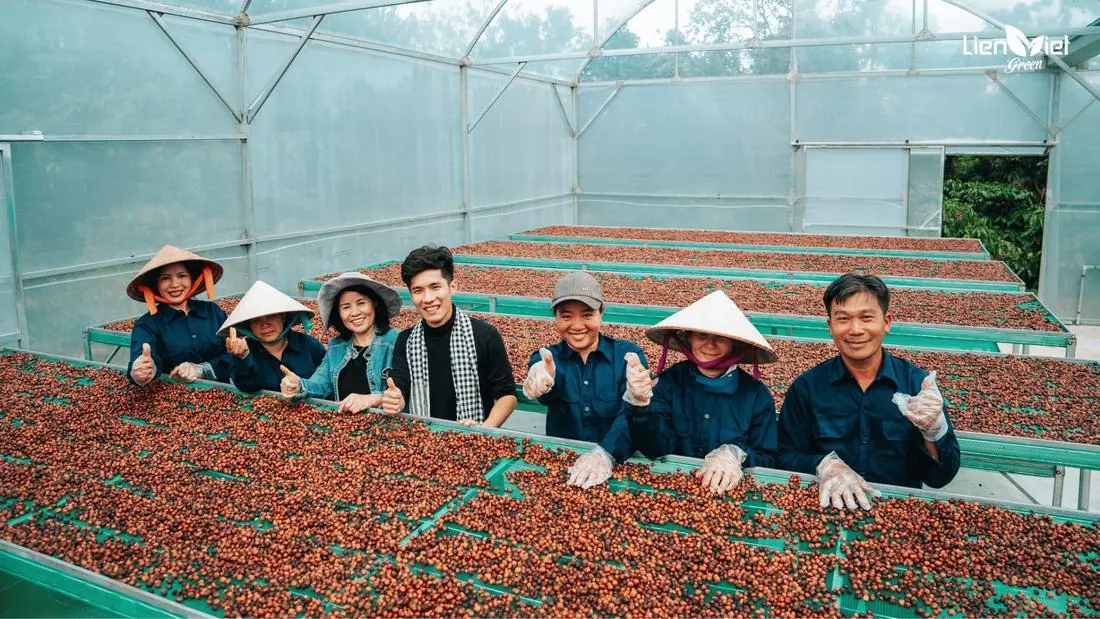
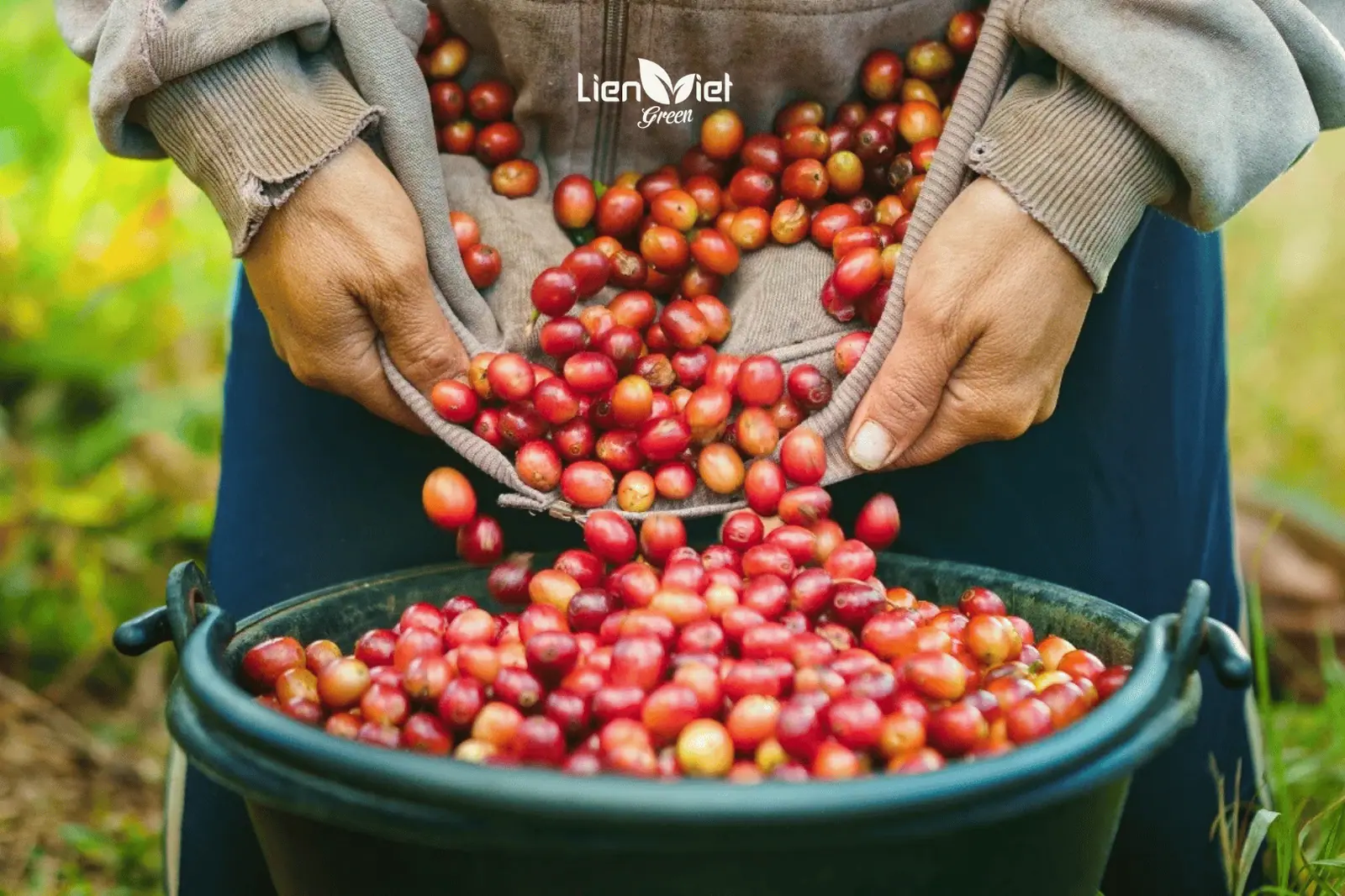
Harvesting only fully ripe cherries by hand. Improves raw material quality and reduces defect rates during processing.
Stripping all cherries from a branch at once. Higher throughput but produces a mix of ripe, under-ripe, and over-ripe fruit.
Beans with physical flaws: black, broken, insect-damaged, or underdeveloped. Removal is mandatory in high-quality coffee production.
Bean size classification by standard sieve. Uniform screen size ensures even roasting and prevents uneven development.
1. Arabica
All post-harvest steps to separate beans from the cherry and prepare them for drying. Processing method significantly affects final cup flavor.
Wet processing — pulp removal, fermentation, and washing before drying. Produces a clean cup, pronounced acidity, and clear varietal expression.
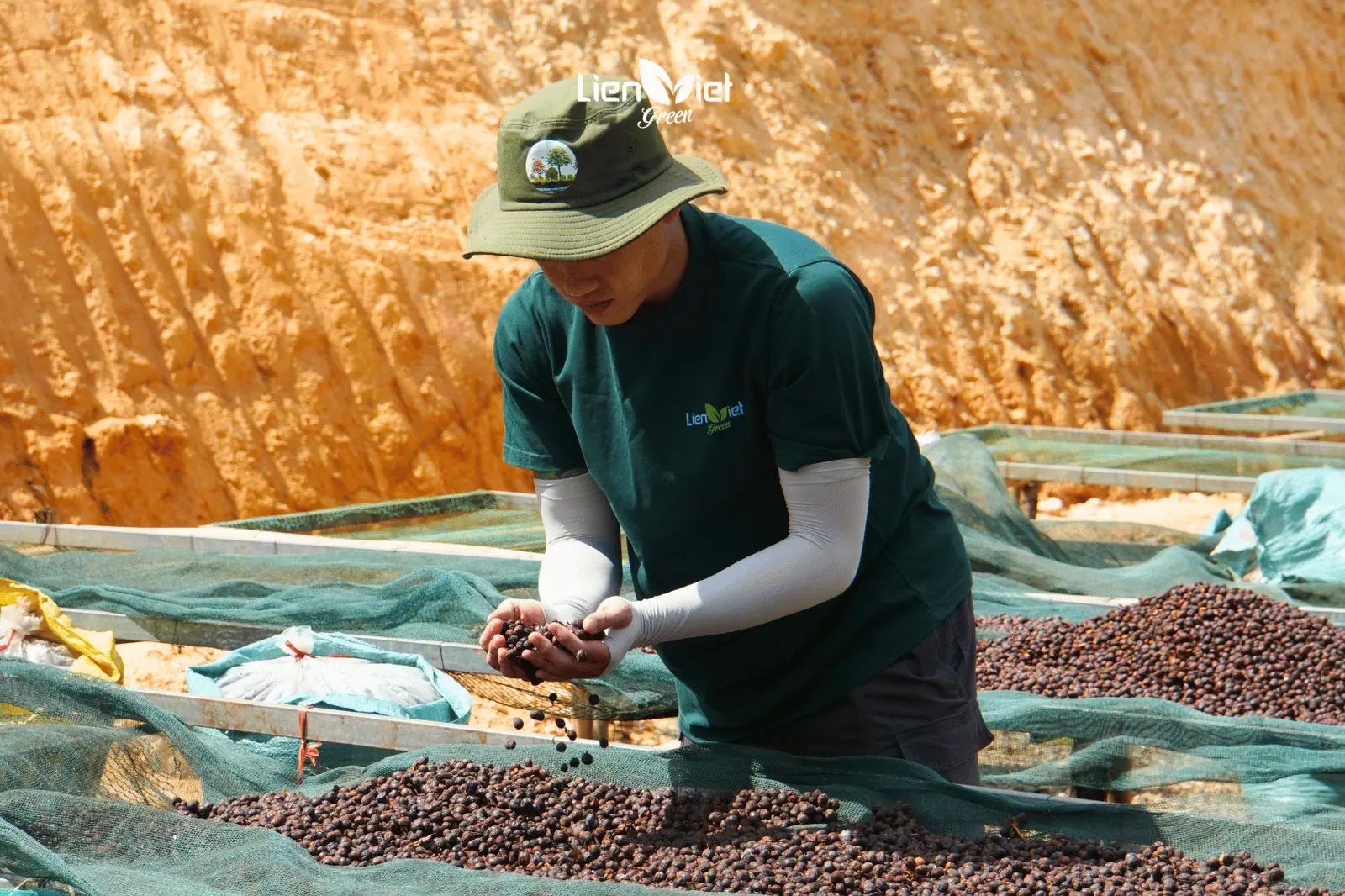
Whole-cherry drying after harvest. Sugars from the fruit pulp transfer into the bean, boosting sweetness and fruit-forward flavors.
Partial mucilage retention during drying. Varying amounts of mucilage yield different levels of sweetness and body.
Natural or controlled microbial conversion of sugars in the cherry into aromatic compounds. A critical driver of flavor differentiation.
Fermentation in a near-oxygen-free environment. Develops highly complex and stable flavor profiles.
Fermentation in a CO₂-rich environment, inspired by winemaking. Produces delicate, distinctive flavor attributes.
The sugar-rich layer surrounding the bean after de-pulping. A key nutrient source for fermentation microbes; strongly influences processed flavor.
Post-processing step that reduces bean moisture to safe storage levels. Prevents mold and extends shelf life.
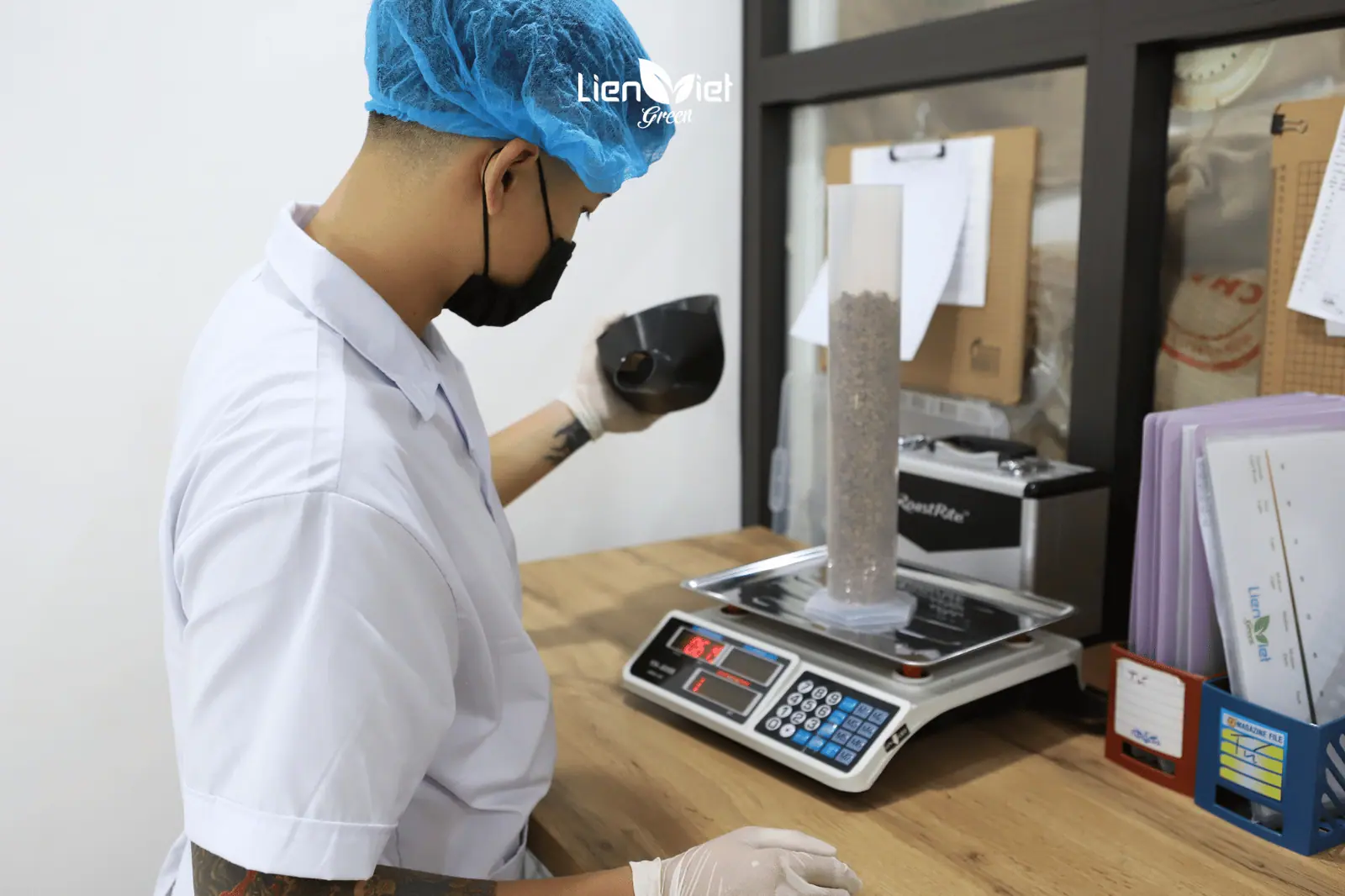
Residual moisture percentage in green beans. Too high → mold risk. Too low → flavor loss during roasting.
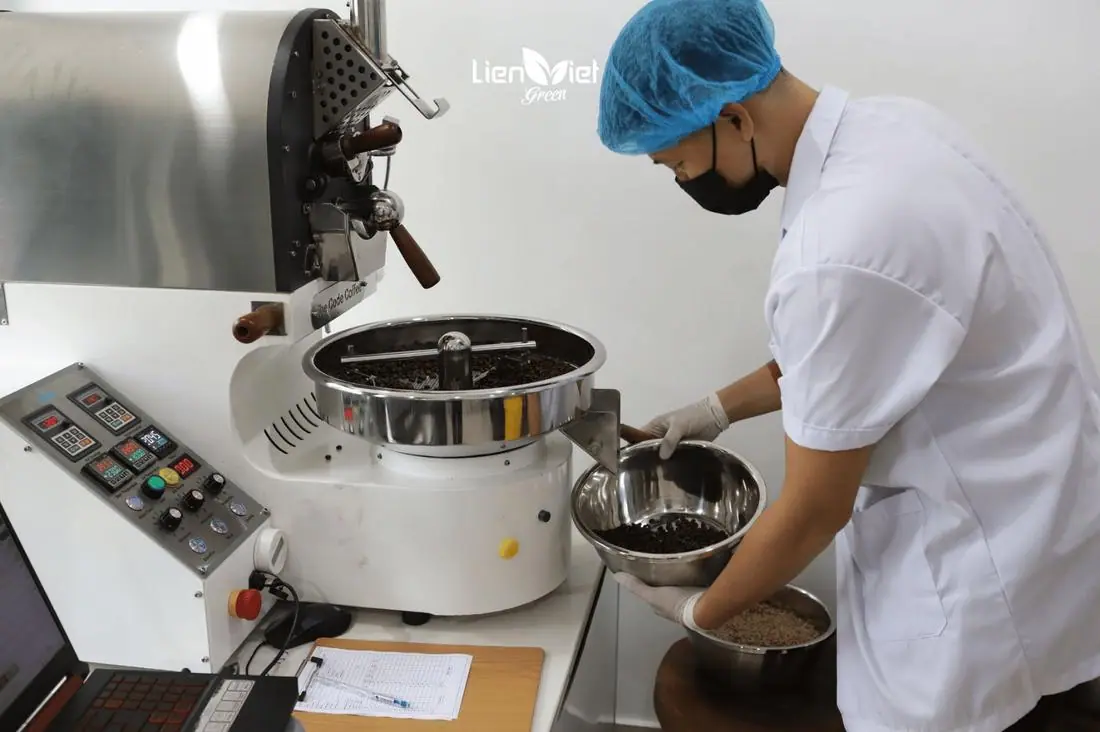
Applying heat to transform internal bean compounds into characteristic color, aroma, and flavor. The stage that unlocks each bean’s potential.
The technical record of a roast batch: temperature, time, and key milestones. Enables consistent flavor reproduction across production runs.
The first audible popping as beans reach a specific internal temperature. A critical marker for flavor development timing.
A second round of popping at higher temperature. Flavor shifts darker, acidity decreases, roast-driven character dominates.
The interval from First Crack to batch discharge. Determines the balance of aroma, sweetness, acidity, and aftertaste.
A color measurement system for roasted beans and ground coffee. Provides objective roast-level assessment beyond visual inspection.
The rate of temperature increase during roasting. Proper RoR control ensures even bean development and prevents surface scorching or underdeveloped cores.
Natural CO₂ release after roasting. Coffee needs a rest period before brewing for stable extraction and optimal flavor.
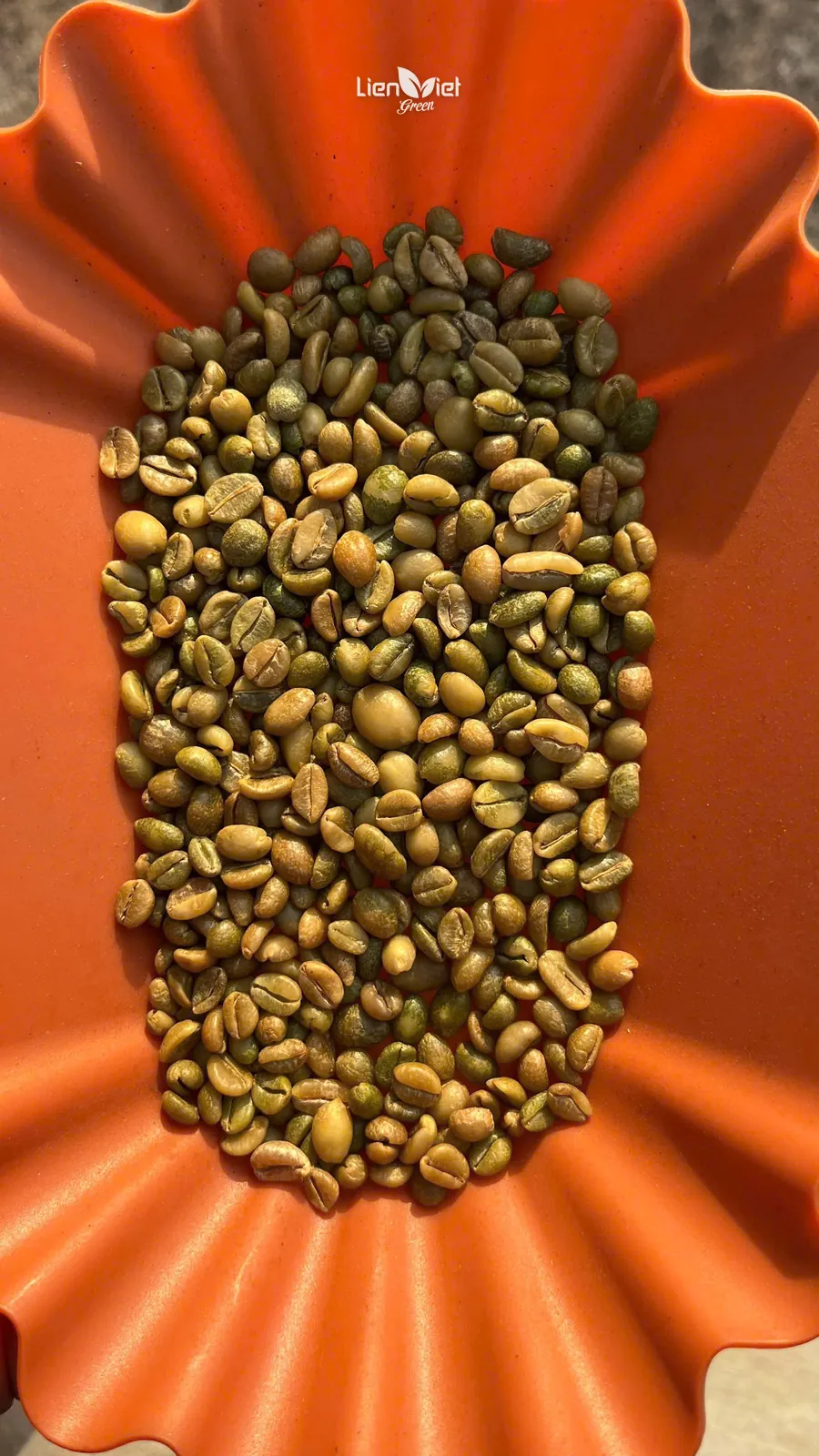
2. Robusta
High-pressure, short-time extraction. The foundation of Latte, Cappuccino, Americano, and most café beverages.
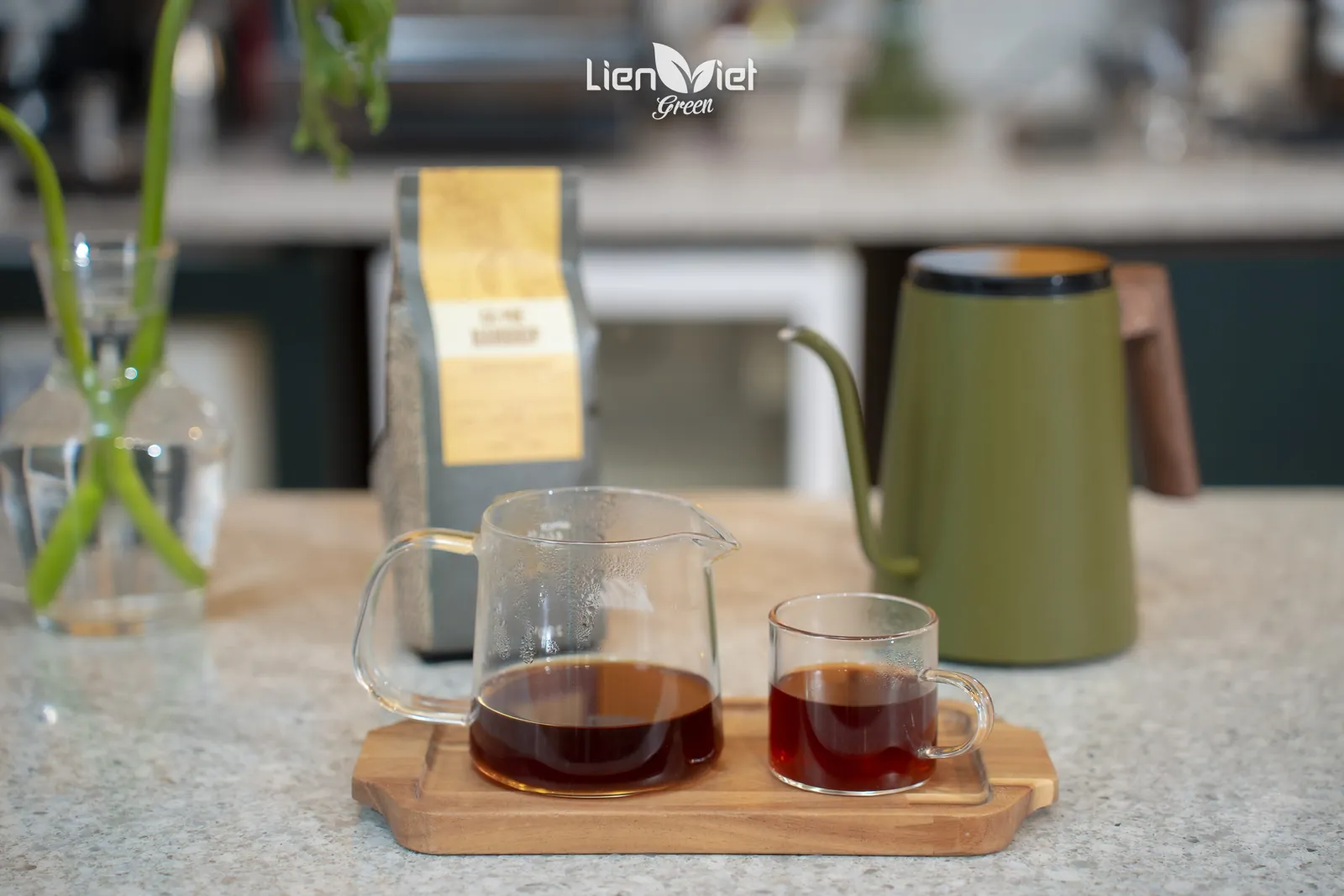
The process of water dissolving soluble compounds from ground coffee. Quality depends on grind size, brew ratio, water temperature, and contact time.
Insufficient extraction → thin, sour, lacking sweetness. Usually caused by too-short contact time or too-coarse grind.
Excessive extraction → bitter, dry, harsh finish. Usually caused by too-long contact time or too-fine grind.
The ratio of coffee to water. Selecting the right ratio controls strength and maintains cup-to-cup consistency.
The weight of ground coffee used per brew. Precise dosing ensures consistent extraction quality across every cup.
Total dissolved solids in the brewed beverage. Measured with a refractometer to assess extraction efficiency.
The percentage of soluble compounds extracted from the coffee grounds. A key metric for evaluating brew optimization.
The lingering flavor after swallowing. Quality coffee → long, clean, pleasant finish. Short or harsh → sub-optimal material or roast/brew process.
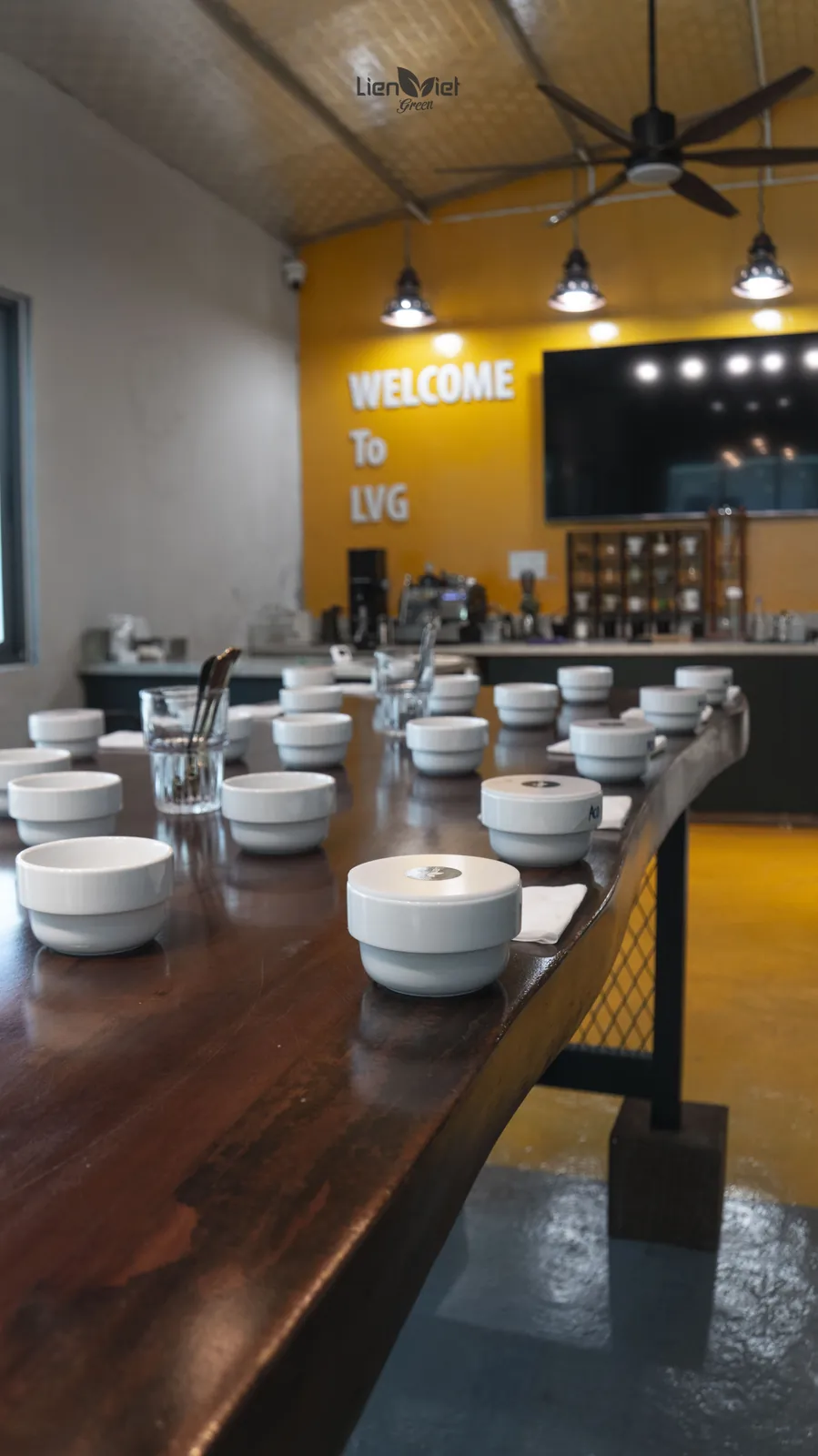
Standardized coffee tasting protocol for evaluating sensory quality. Used globally by roasters, exporters, and quality professionals.
The scent perceived before and during tasting. Good aroma → clear, clean, multi-layered fragrance.
Natural brightness that creates a lively, balanced impression. Distinct from sourness caused by defects or improper storage.
The tactile weight, smoothness, and texture on the palate. Ranges from light to heavy depending on variety, processing, and brew method.
Natural taste descriptors perceived in the cup: chocolate, caramel, nuts, floral, fruit. Not added flavoring — formed by variety, origin, processing, and roasting.
Coffee scoring ≥ 80 points under SCA evaluation standards, meeting rigorous quality benchmarks. Reflects comprehensive control from farming and processing through roasting and brewing.
Lien Viet Green goes beyond supplying materials — we consult on sourcing, blend development, sensory profiling, and industry trends. Carefully selected origins, rigorous quality control, and a technically proficient team deliver comprehensive solutions for F&B chains, roasters, and export businesses.
Share your product line and business model — our team will recommend suitable materials and blends.

Technical Quality Standards Comparison Matrix
| Quality Metric | Conventional Standard | Lien Viet Green OEM Standard |
|---|---|---|
| Roasting Tech | Direct flame drum, minor smoke trace | 100% Hot Air fluid bed convection, uniform roast |
| Batch QC Control | Subjective visual checking | Agtron color meter + ISO moisture + ARTISAN logs |
| Packaging Format | Standard poly or paper bag | 4-layer foil laminate with 1-way degassing valve |
Sensory terms such as aroma, acidity and flavor notes are easier to use with the coffee taster's flavor wheel at hand.
For a closer look at two key roasting milestones, read first crack and second crack in coffee roasting explained.
If you run a café or chain, see how we work with cafés and F&B chains, or book a cupping at our Long Bien roastery to put these terms into practice.
Sources: Coffee Quality Institute (CQI) Q Grader certification; Specialty Coffee Association (SCA) coffee standards; ISO 22000:2018 on the ISO website and Lien Viet Green roastery ISO 22000:2018 certificate.
Frequently asked questions
Which coffee terms should a café owner learn first?
Start with the terms for coffee species, processing, roasting, brewing and sensory evaluation, for example Arabica, Robusta, Washed, Natural, Roast Profile, First Crack, Espresso, Extraction, Aroma and Body. Knowing them helps you talk with suppliers, build a menu and control quality.
What is the difference between under-extraction and over-extraction?
Under-extraction dissolves too little from the grounds, so the cup tastes thin, sour and lacks sweetness, usually from brewing too fast or grinding too coarse. Over-extraction pulls too much, so the cup turns bitter, dry and harsh, usually from brewing too long or grinding too fine.
Why does coffee need to rest after roasting?
Freshly roasted beans release CO₂, a process called degassing. Letting the coffee rest for a while before brewing gives more stable extraction and a more settled flavor.
What score makes a coffee specialty coffee?
A coffee counts as specialty when it scores 80 points or more on the SCA cupping scale. The score reflects good control from farming and processing through roasting and brewing.
Partner with ISO 22000 Certified OEM Coffee Roaster
Lien Viet Green supports hotel chains, F&B franchises, and commercial brands with custom roast profiles and supply reliability.