Coffee Taster’s Flavor Wheel: A Practical Guide to Identifying Tasting Notes
Explore the Coffee Taster’s Flavor Wheel and learn how to identify distinct sensory layers in specialty coffee. Discover how standardized tasting notes enhance cup evaluation and professional communication.
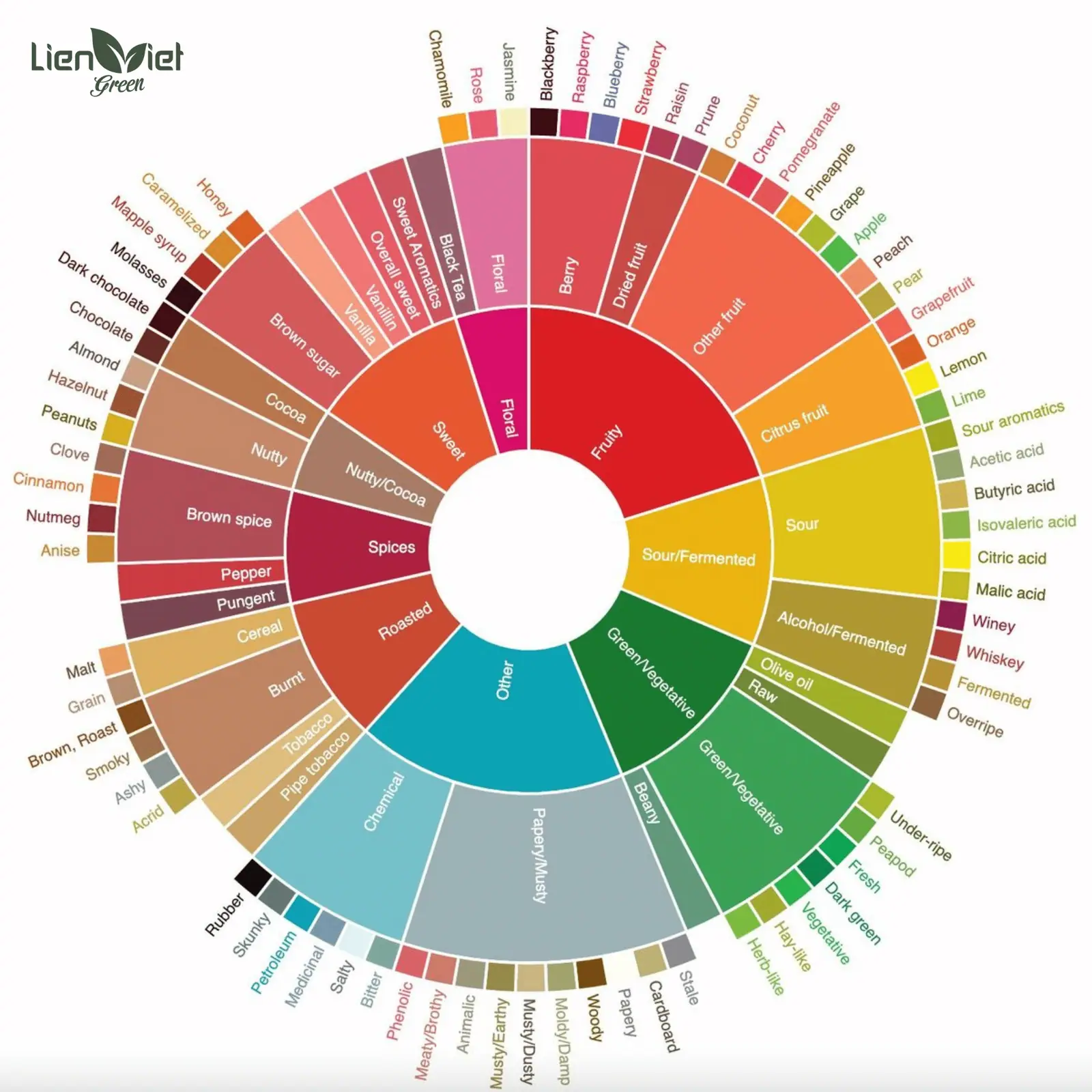
The Coffee Taster’s Flavor Wheel is a circular chart, developed by the SCA with World Coffee Research, that gives coffee professionals a shared vocabulary for aroma and flavor. You read it from the broad categories in the center out to the specific notes on the outer ring.
📌 Technical Key Highlights
- Roastery Standard: Certified ISO 22000, evaluated by Q Grader panel.
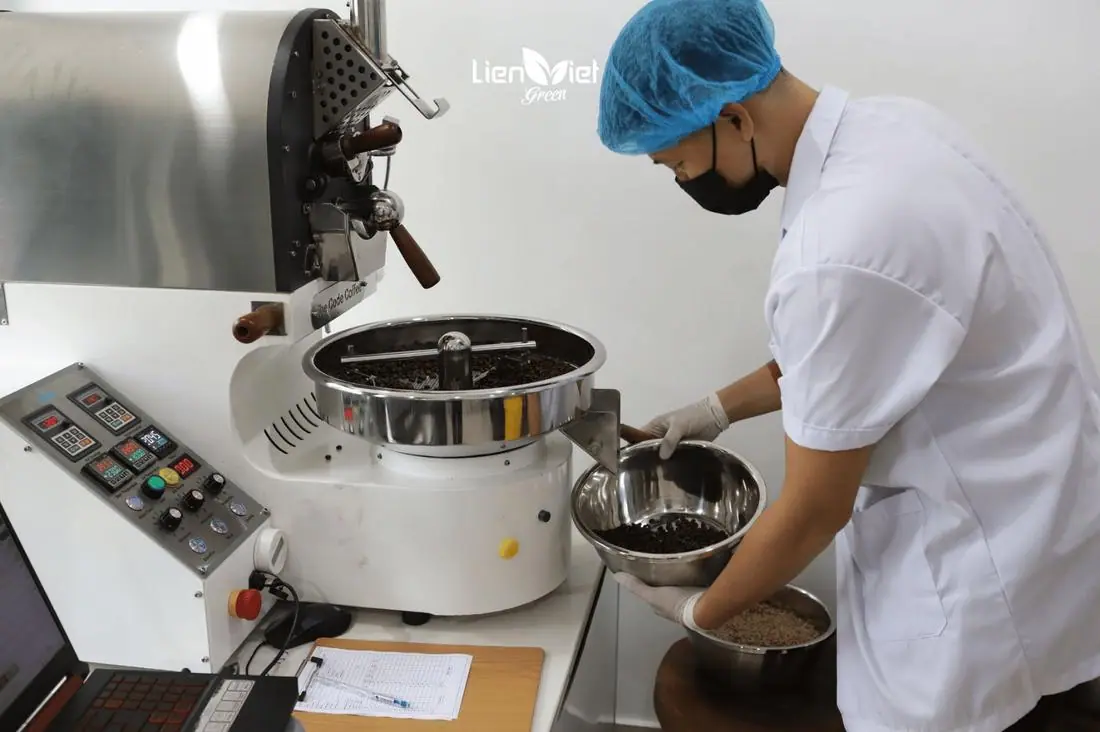
- Roasting Tech: 100% Hot Air fluid bed convection, precise thermal curve tracking.
- Batch Consistency: Strict Agtron spectrophotometer roast color and moisture control.
- Traceability: 100% transparent sourcing from Vietnamese coffee origins.
Coffee Taster’s Flavor Wheel: Demystifying Aromatics in the Cup
Have you ever read a specialty coffee label describing notes of “ripe orange, wildflower honey, dark chocolate, and jasmine,” and wondered how these flavors actually exist in coffee?
In the coffee industry, these sensory descriptors are known as Coffee Notes—specific aromas and flavor attributes detected during sensory evaluation. To provide coffee professionals and consumers worldwide with a shared sensory language, the specialty coffee industry established the Coffee Taster’s Flavor Wheel.
Whether you are a barista, cafe owner, commercial roaster, or coffee enthusiast, understanding how to navigate the flavor wheel sharpens sensory acuity and enables confident, precise cup evaluation.
Originally developed by the Specialty Coffee Association (SCA) in collaboration with World Coffee Research (WCR), the Coffee Taster’s Flavor Wheel is a circular visual lexicon designed to calibrate sensory analysis and cup descriptions.
The concentric structure of the Coffee Taster’s Flavor Wheel.
The wheel is structured hierarchically from the center outward:
This standardized system replaces ambiguous subjective terms like “rich” or “aromatic” with calibrated, objective sensory terms.
A coffee bean’s sensory profile is directly shaped by:
What Is the Coffee Taster’s Flavor Wheel?
The flavor wheel allows evaluators to connect cup attributes directly back to agricultural and processing variables.
The wheel serves as an essential tool across professional coffee operations:
When a roaster specifies notes of “yellow citrus, honey, and black tea,” green coffee buyers, wholesale clients, and consumers share an immediate, accurate expectation of the cup profile.
A common misconception among casual drinkers is that coffee with notes of orange or jasmine contains artificial additives or flavorings.
In specialty coffee, tasting notes represent naturally occurring volatile organic compounds (aldehydes, ketones, pyrazines, esters, and organic acids) synthesized by the bean during maturation, fermentation, and roasting. They are 100% natural expressions of the bean’s chemical composition and processing environment.
A cup of coffee reveals multiple sensory layers across distinct stages of preparation:
Fragrance refers to the aroma released by freshly ground coffee prior to brewing. Volatile organic compounds evaporate readily, making dry aroma one of the most immediate sensory checkpoints.
Upon adding hot water, steam liberates heavier aromatic compounds. Subtle floral, tea-like, and sweet notes often emerge clearly during this stage.
Why the Flavor Wheel Is Critical for the Coffee Industry
When sipping, evaluate the four primary taste pillars:
Start by identifying the broad category on the wheel’s inner ring before narrowing down to specific outer-ring descriptors.
The lingering sensation after swallowing. High-quality coffee is characterized by a clean, sweet, and persistent finish free from chemical or astringent taints.
Sensory perception is influenced by individual cultural palate memory. If a roaster notes “peach,” an evaluator might perceive “apricot” or “yellow plum.” What matters is identifying the broader stone fruit category rather than obsessing over an exact single fruit.
As noted, authentic specialty coffee notes derive entirely from cultivar genetics, terroir, fermentation, and roasting chemistry—never artificial essences.
As coffee cools from 90°C down to room temperature, its perceived acidity and sweetness evolve dynamically. Evaluating a cup across high, medium, and room temperatures provides a comprehensive sensory assessment.
The Coffee Taster’s Flavor Wheel is an indispensable sensory roadmap for navigating the multifaceted world of specialty coffee. By learning its vocabulary and practicing systematic cupping, coffee professionals and businesses can evaluate quality objectively, refine blend formulations, and communicate flavor profiles with precision.
Every cup tells a story of terroir, genetics, fermentation, and roasting craft. The Coffee Taster’s Flavor Wheel provides the calibrated lexicon to articulate that story with clarity and commercial impact.
Technical Quality Standards Comparison Matrix
| Quality Metric | Conventional Standard | Lien Viet Green OEM Standard |
|---|---|---|
| Roasting Tech | Direct flame drum, minor smoke trace | 100% Hot Air fluid bed convection, uniform roast |
| Batch QC Control | Subjective visual checking | Agtron color meter + ISO moisture + ARTISAN logs |
| Packaging Format | Standard poly or paper bag | 4-layer foil laminate with 1-way degassing valve |
Tasting notes are one part of the wider quality picture set out in our guide to coffee sensory benchmarks and technical parameters.
To see who is trained to use this vocabulary professionally, read what the SCA, CQI and Q Graders do.
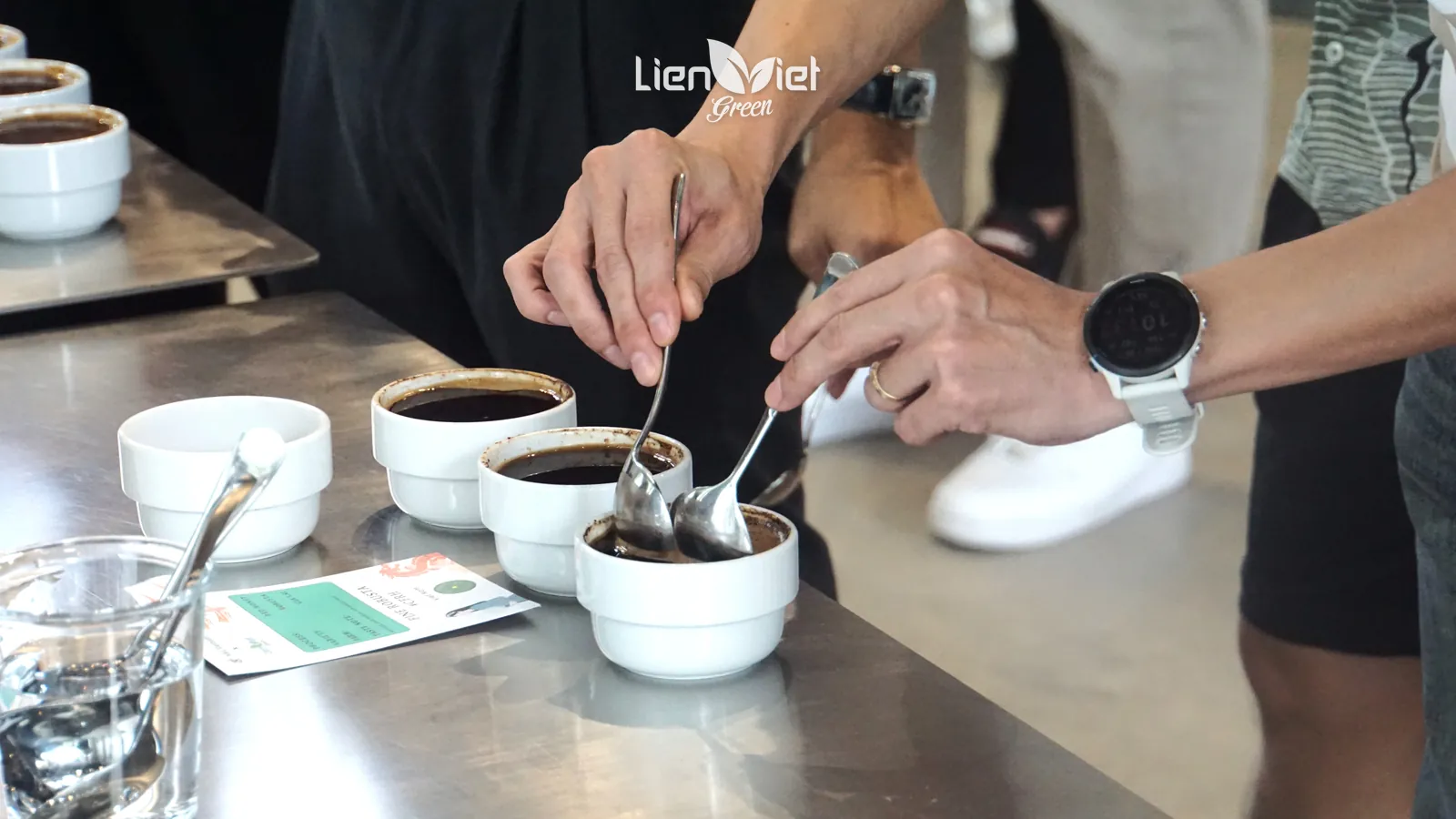
Cafés and chains can put this into practice through our roasting service for cafés and chains, or book a cupping at our Long Bien roastery and taste alongside our Q Graders.
Sources: Coffee Quality Institute (CQI) Q Grader certification; Specialty Coffee Association (SCA) coffee standards; ISO 22000:2018 on the ISO website and Lien Viet Green roastery ISO 22000:2018 certificate.
Frequently asked questions
What is the Coffee Flavor Wheel used for?
It is a multi-layered circular chart for describing coffee flavor in a shared language. Instead of vague words such as “good” or “aromatic”, you can name specific flavor groups such as fruit, floral, honey or chocolate.
Do orange or jasmine notes mean flavoring has been added?
No. In specialty coffee, notes such as orange, peach or jasmine are natural characteristics of the bean. They come from the variety, the growing region, the processing method and the roast.
How should a beginner practise identifying coffee flavors?
Start with the broad flavor groups before moving to specific notes. Smell the freshly ground coffee, smell it again after brewing, then taste it at several temperatures as it cools. It is normal to perceive something slightly different from the roaster’s description.
How can café owners use the Flavor Wheel?
Use it to write clear menu descriptions and to keep staff consistent when they present a coffee. When a menu lists “yellow citrus, honey, black tea”, customers can picture fairly closely what the cup will taste like.
Partner with ISO 22000 Certified OEM Coffee Roaster
Lien Viet Green supports hotel chains, F&B franchises, and commercial brands with custom roast profiles and supply reliability.