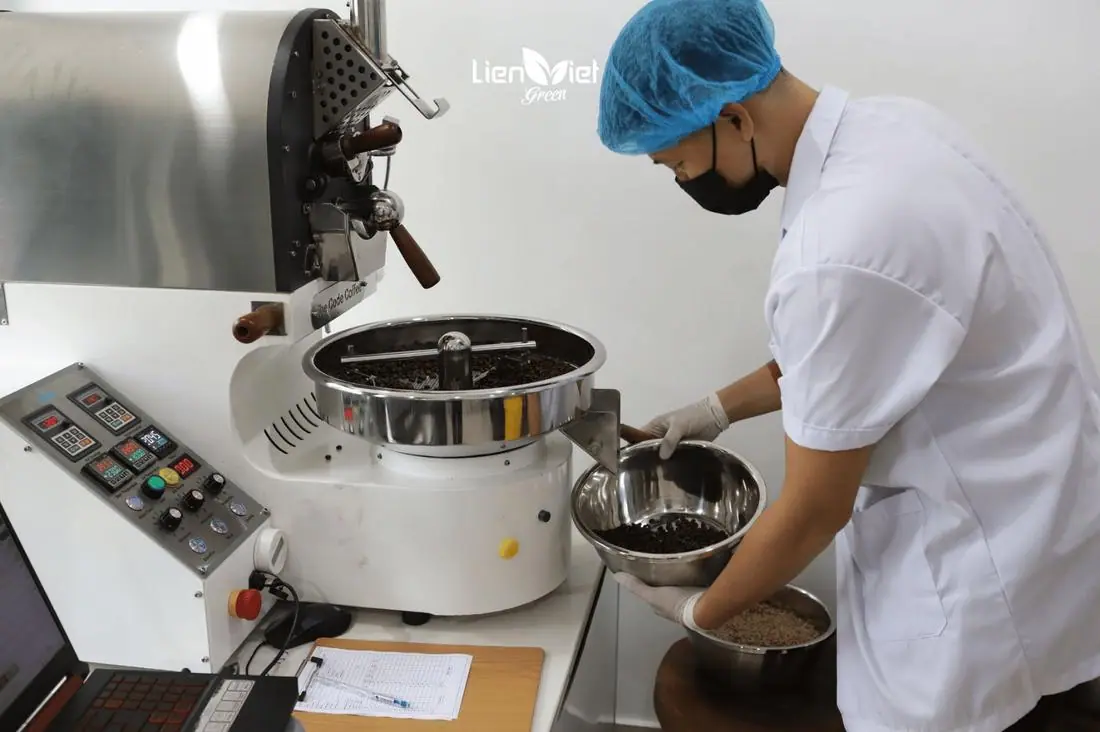
A long-term coffee supply chain strategy means working with the same growing regions across harvests, checking green coffee before roasting and roasting to saved profiles, instead of buying whatever the market offers at the time. This keeps each delivery tasting the same and makes coffee costs easier to plan.
What is a closed-loop coffee supply chain? Explore vertically integrated farm-to-cup models, COGS cost hedging mechanisms, and how Lien Viet Green secures year-round volume and flavor consistency for growing F&B coffee chains.
For growing F&B brands, hospitality operators, and expanding coffee franchises, scaling from 5 to 50 or 100 locations involves far more than securing real estate or marketing. The single greatest bottleneck threatening multi-unit expansion is supply chain inconsistency and raw material price volatility.
A Closed-Loop Coffee Supply Chain (Farm-to-Cup) solves this systemic challenge by eliminating speculative intermediaries, directly connecting highland farming cooperatives with centralized industrial roasting facilities and retail espresso bars.
What is a closed-loop coffee supply chain (Farm-to-Cup)?
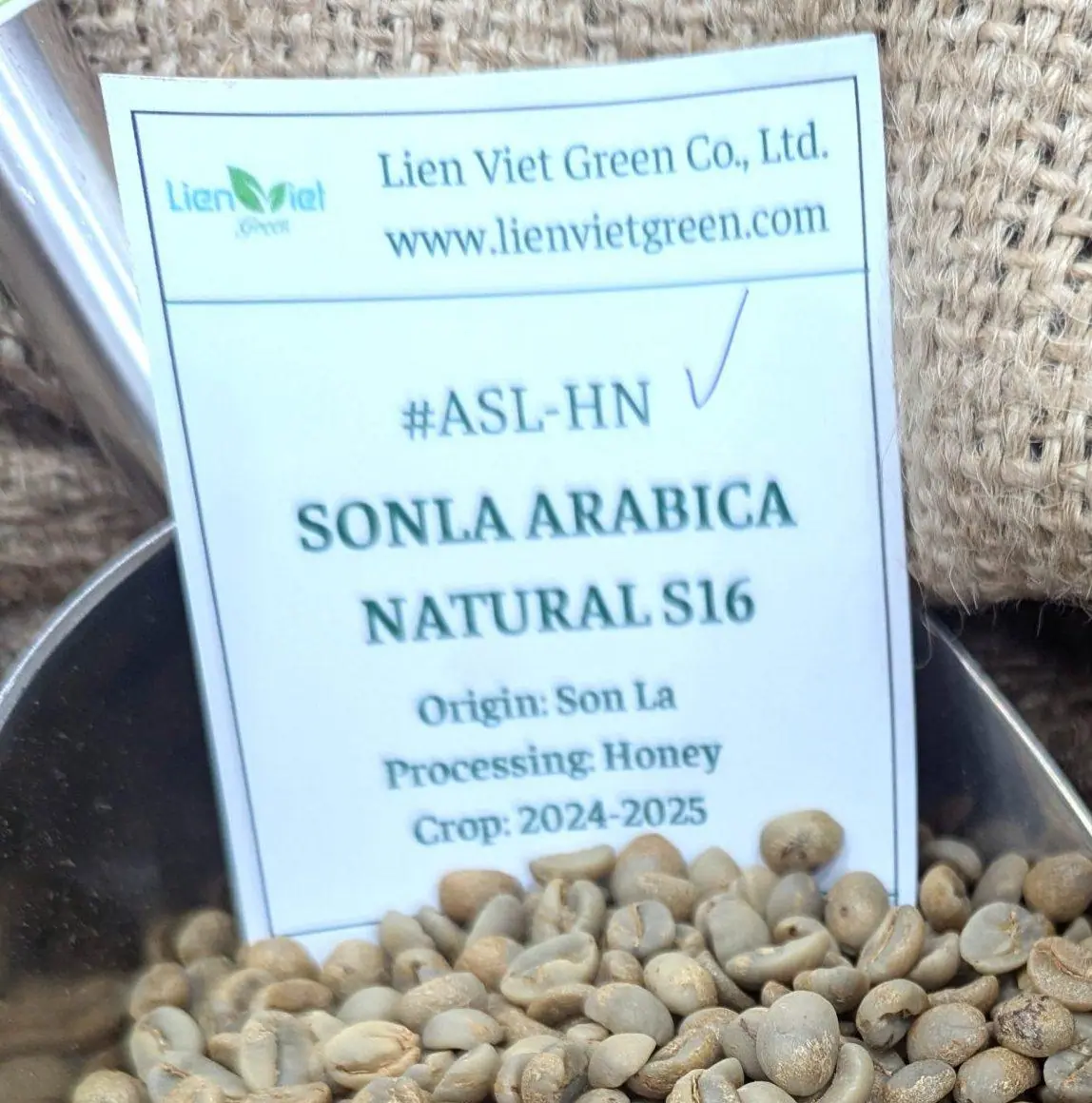
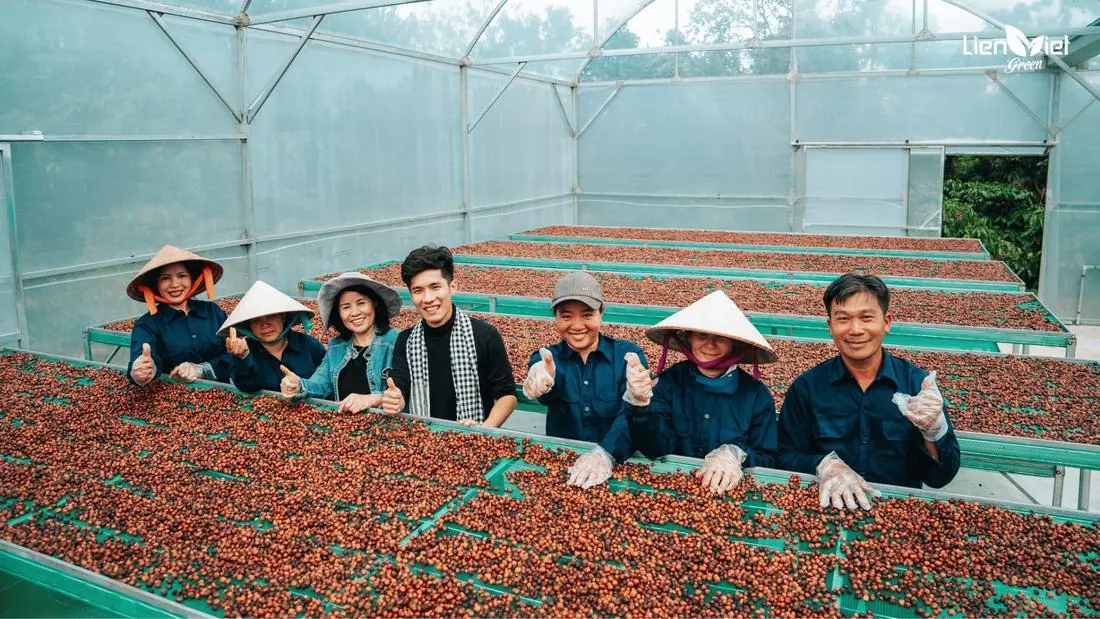
A closed-loop coffee supply chain is an operational framework where a single roasting partner directly owns or strategically manages every link of the value chain: agronomic field investments, selective cherry harvesting, controlled solar greenhouse drying, hermetic storage, custom industrial roasting, and private-label packaging.
Eliminating Middlemen Costs
Fewer layers of regional collectors, commodity traders, and brokers help F&B operators lower raw material costs and keep cost of goods sold (COGS) more stable.
Uncompromising Quality Control
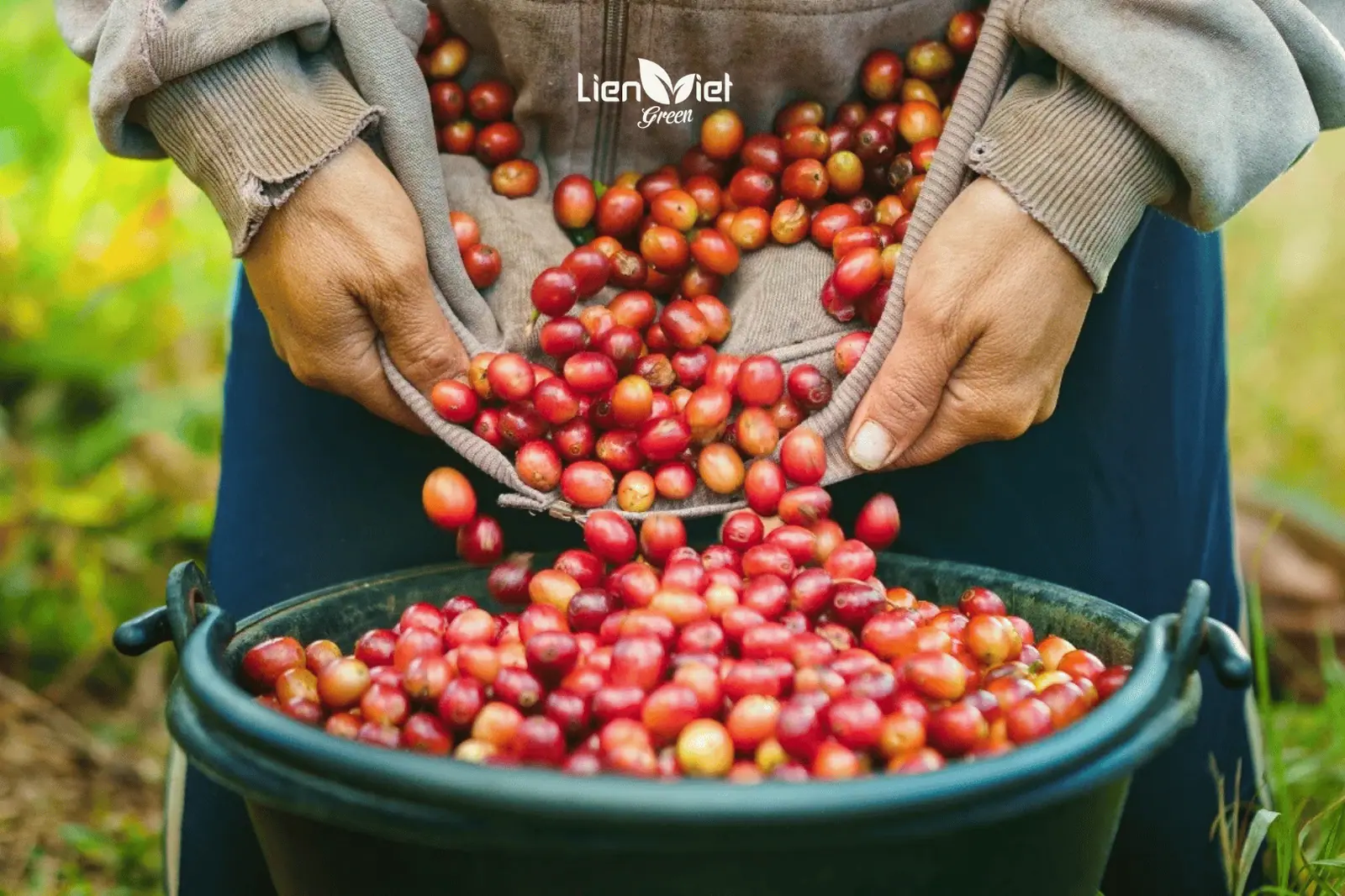
Ensuring >95% cherry ripeness and raised-bed drying protocols at the farm gate completely eliminates mold contamination and batch variance.
Three critical bottlenecks of fragmented commercial supply chains
When F&B chains expand past 10 units, relying on unregulated open-market commodity traders frequently leads to severe operational breakdowns:
Comparative supply model matrix
| Audit Benchmark | Fragmented Open-Market Supply | Lien Viet Green Closed-Loop Supply Chain |
|---|---|---|
| Flavor Consistency | Uncontrolled batch variance, flavor drifting every delivery | Locked PLC roast curves and NIR Agtron specs (100 batches identical) |
| Off-Season Shortages | Supply dries up in July–September; forced price hikes | GrainPro buffer stock planned for off-season supply |
| Origin Compliance | Zero farm plot records; high legal and food safety audit risks | QR-linked lot records with farm-level details |
| Issue Resolution Speed | Finger-pointing between traders and commercial toll roasters | Single dedicated technical point of contact for issue resolution |
Five-link vertically integrated supply chain architecture
Here is the closed-loop supply chain operational architecture deployed by Lien Viet Green across our nationwide partner network:
COGS optimization and long-term operating margin protection
Coffee ingredients represent the primary component in the cost structure of a commercial beverage. Rapid price shifts on the London and New York exchanges can erode operating profitability unless buffered by an integrated chain:
- Long-term direct farm purchasing agreements
- Multi-layer GrainPro climate-controlled storage
- Automated industrial Hot Air roasting efficiency
- Thermal roasting shrinkage capped below 0.3%
- Direct-to-store logistics eliminating distributor markups
Overcoming off-season supply shortages and bean degradation
Coffee is a seasonal crop (harvested from October to February). During off-season months (July to September), unmanaged open-market coffee rapidly stales and dries out:
-
Strategic Buffer Stock ManagementLien Viet Green plans reserve inventory with contracted B2B partners ahead of the off-season.
-
Hermetic GrainPro Modified AtmospheresRaw green beans remain preserved in airtight liners, maintaining peak freshness identical to fresh crop.
-
Roasting Capacity PlanningHot Air roasting schedules are planned ahead for holiday volume surges and new store openings.
-
Just-In-Time (JIT) Weekly ShipmentsCoffee is roasted fresh to order on weekly schedules, ensuring beans arrive at stores at peak aromatic development.
Industrial Hot Air roasting and PLC automation within closed loops
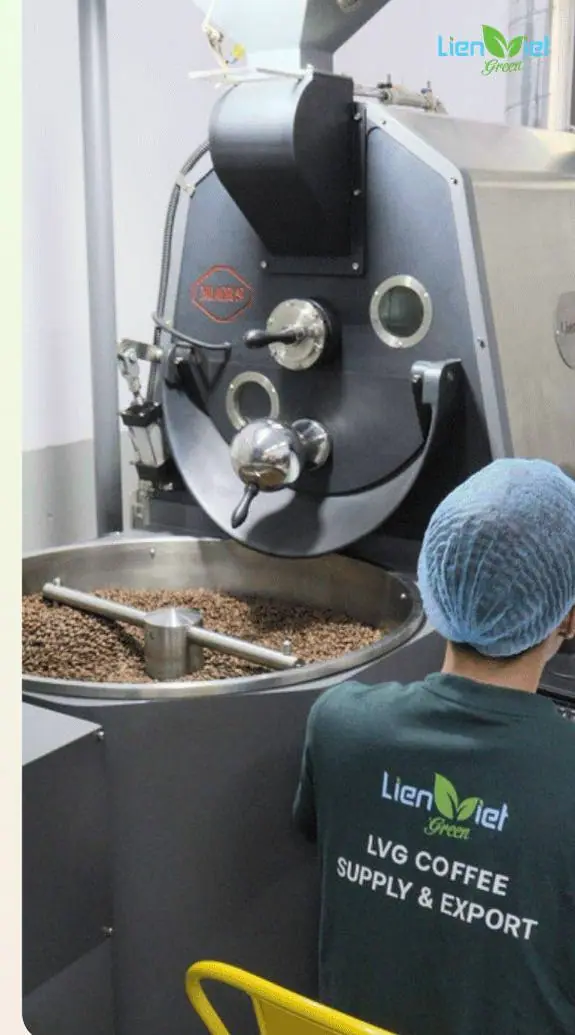
The operational core of Lien Viet Green’s processing facility is our convective Hot Air roasting technology. Unlike conductive direct-flame roasters that depend on operator subjective guesswork, our Hot Air system is 100% automated by industrial PLC microprocessors.
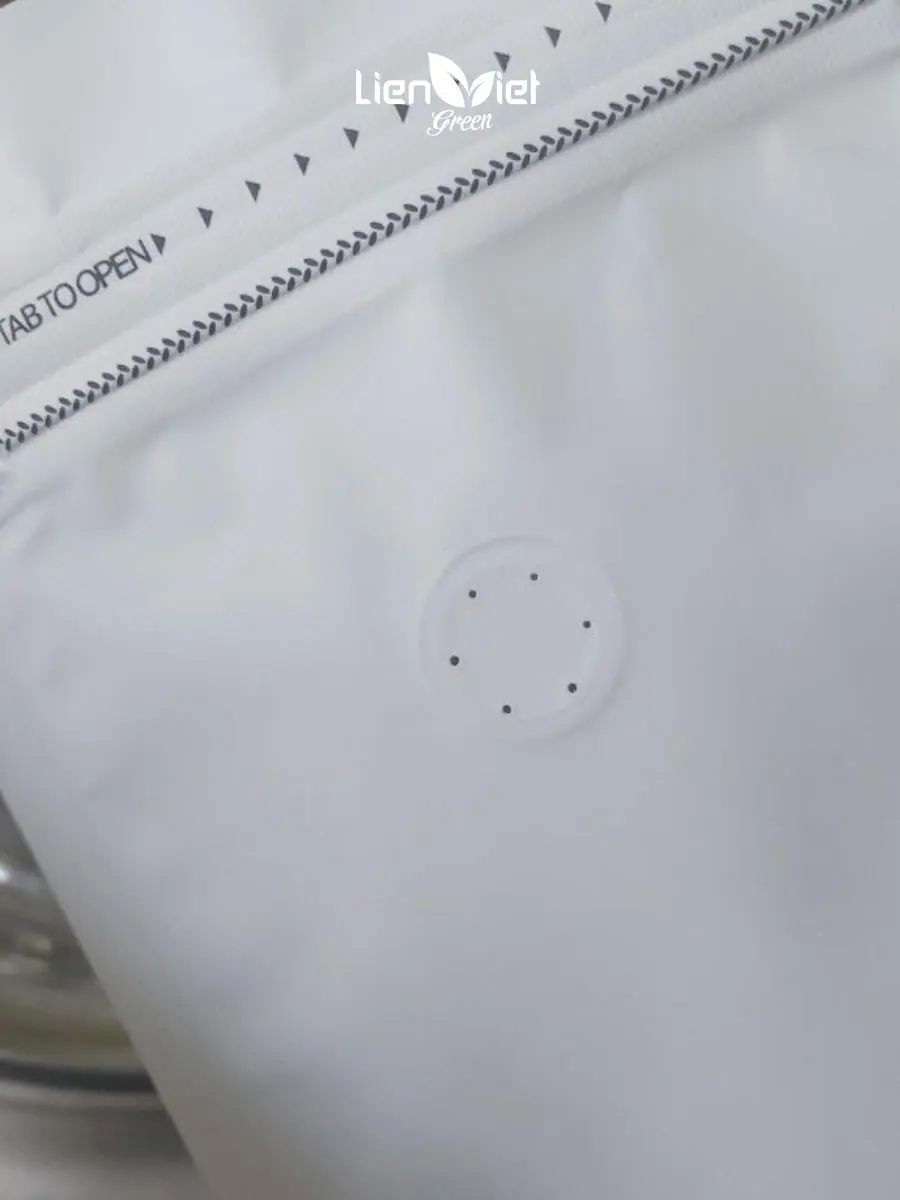
Finished coffee bags are fitted with specialized One-Way Degassing Valves, allowing roasted beans to release natural CO2 while blocking atmospheric oxygen and humidity from accelerating oxidation.
The eight-stage closed-loop quality control workflow at Lien Viet Green
Our closed-loop supply chain operates under an eight-stage rigorous protocol:
Smallholder Cooperative ContractingDistributing organic inputs and training farmers in >95% ripe cherry harvesting protocols in Son La and Da Lat.
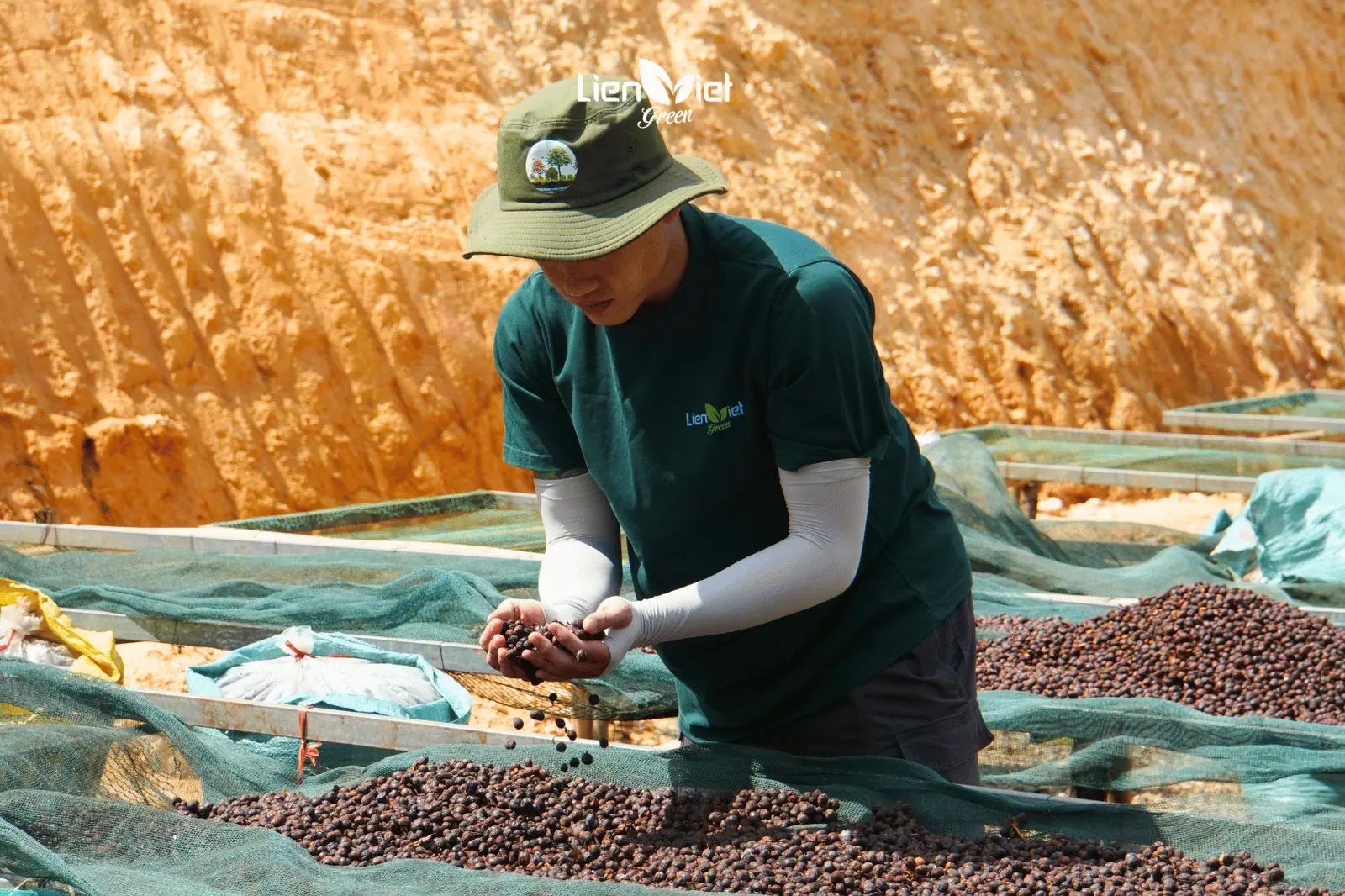
Raised-Bed Solar Greenhouse DryingIsolating drying beans from ground moisture, stabilizing moisture between 10.5% – 11.5% and Aw <0.60.
GrainPro Climate StorageSealing beans in multi-barrier hermetic liners stored in climate rooms <24°C against mold and insects.
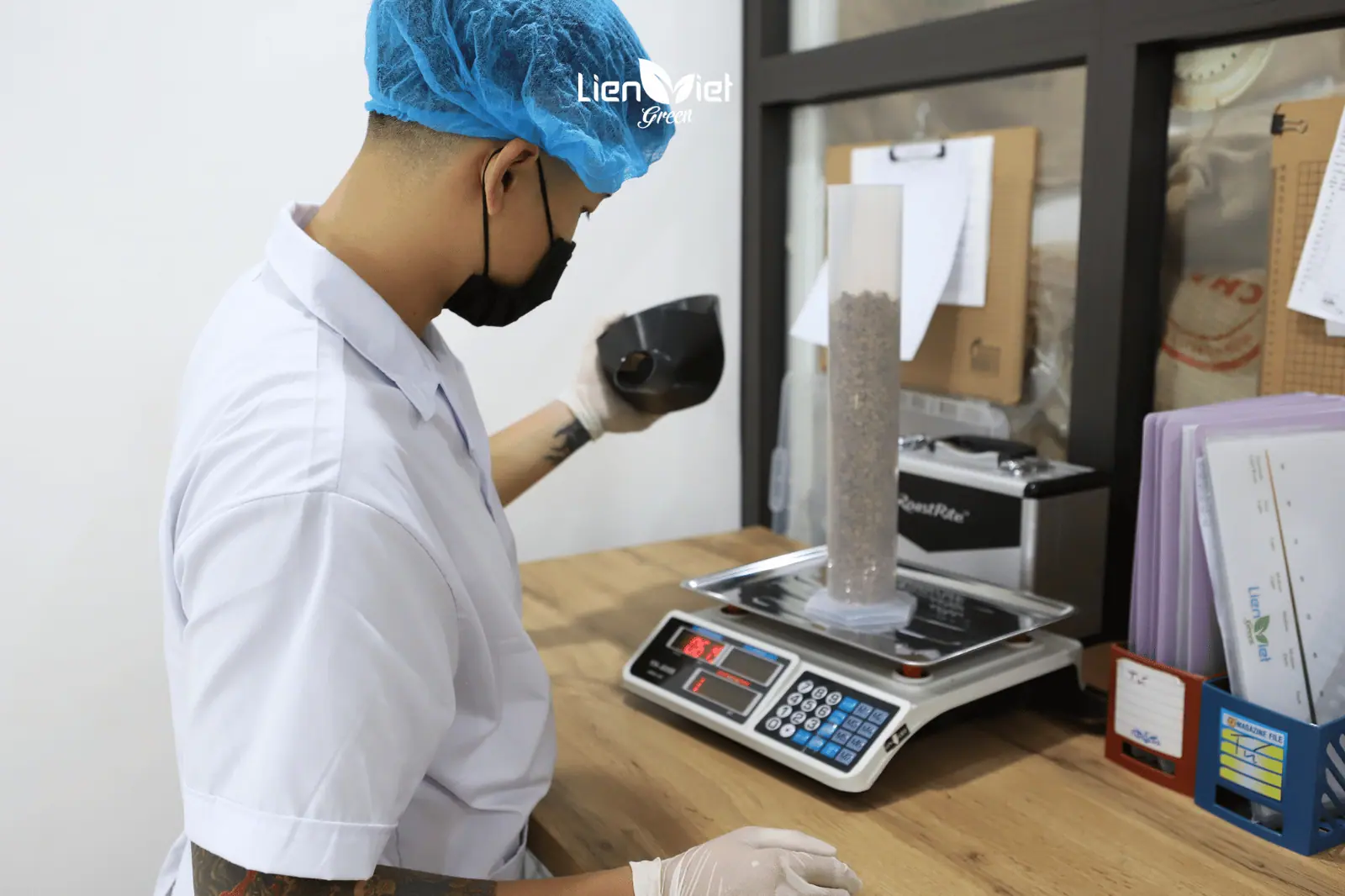
Laboratory Physical AuditsTesting moisture, water activity, screen sorting, and removing SCA defects on black-and-white trays.
Hot Air Roasting & Profile LockingRoasting via automated convective heat, monitoring computerized RoR curves, and verifying Agtron color values.
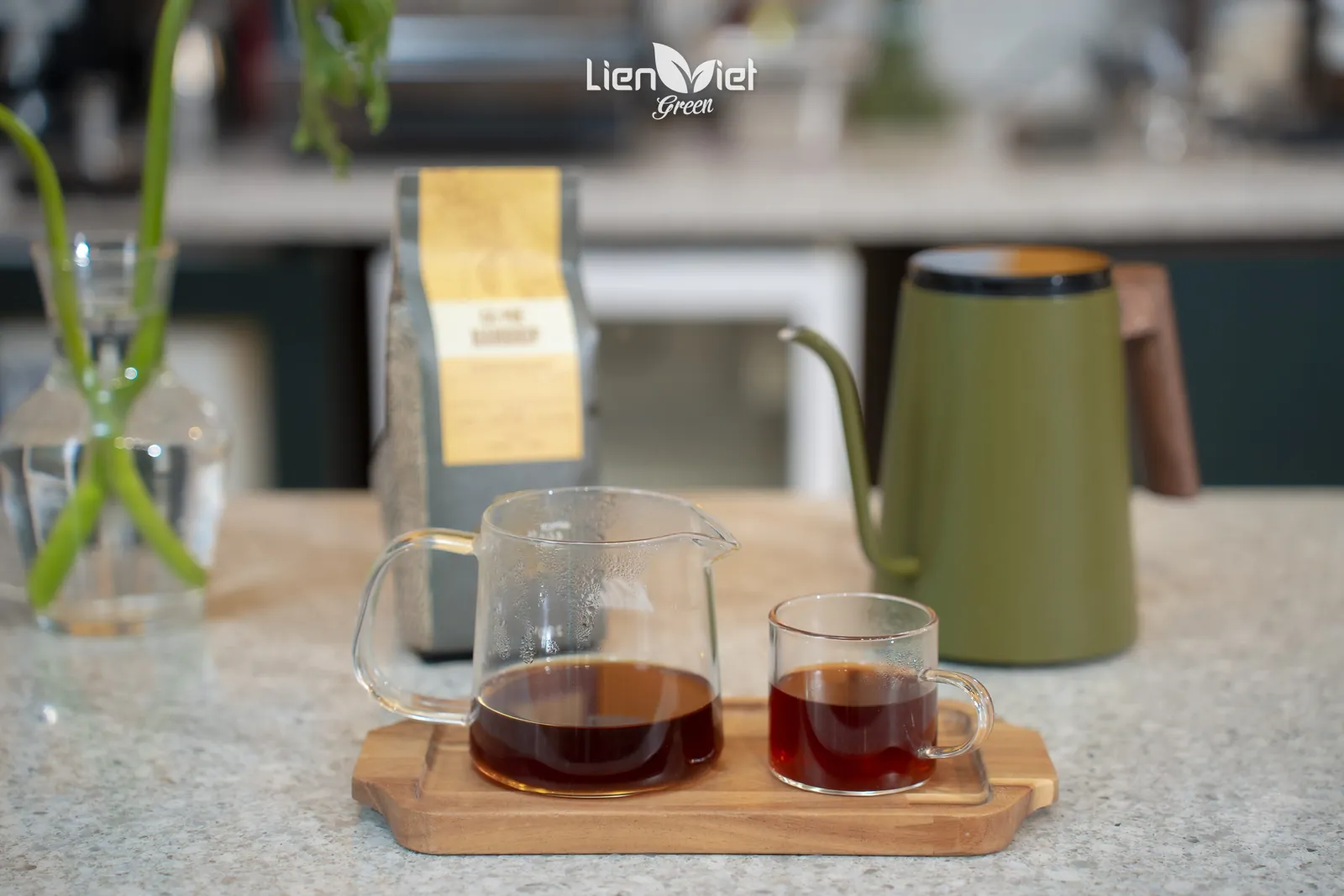
CQI Q Grader Cupping VerificationFormal SCA sensory protocol evaluation guaranteeing velvety crema, balanced acidity, and sweet finish.
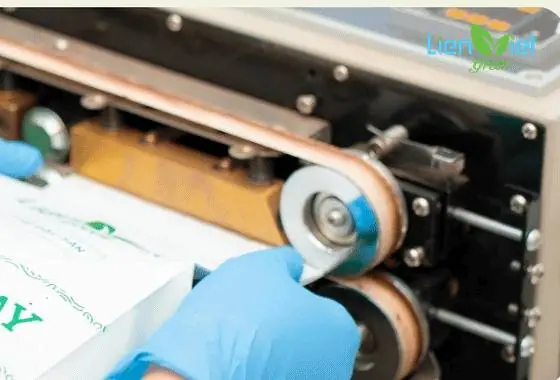
Degassing Valve PackagingAutomated packaging into multi-barrier foil bags equipped with precision one-way degassing valves.
Just-In-Time Retail DeliveryPrompt delivery directly to branch locations, accompanied by barista parameter calibrations.
Conclusion: Closed-loop supply chains – The bedrock for multi-unit F&B growth
An F&B brand can scale rapidly and sustainably only when anchored by an unshakeable supply chain. Vertical integration not only helps stabilize operating COGS but also protects the brand’s reputation for cup consistency across every retail store.
Lien Viet Green is dedicated to serving as your strategic OEM roasting partner, supporting your brand from highland farming plots to the perfect finished cup.
Seeking a Resilient Closed-Loop Coffee Supply Chain Partner?
Connect with Lien Viet Green today to receive complimentary roasted samples, develop proprietary roast profiles, and discuss OEM roasting terms.
For the specific advantages this model brings to café and restaurant brands, see closed-loop coffee supply chain advantages for F&B brands.
Our article on why inconsistent coffee quality harms F&B chains shows what is at stake when supply is left to chance.
See how we plan supply for multi-outlet brands on our coffee for cafés and chains page, or book a cupping at our Long Bien roastery to taste the lots we would roast for you.
Sources: Coffee Quality Institute (CQI) Q Grader certification; Specialty Coffee Association (SCA) coffee standards; Regulation (EU) 2023/1115 on deforestation-free products (EUDR); ISO 22000:2018 on the ISO website and Lien Viet Green roastery ISO 22000:2018 certificate.
Frequently asked questions
What is a long-term coffee supply chain?
It is a way of managing everything from the growing region and green coffee to roasting and delivery planning across several harvests, rather than buying raw material as needs arise. It helps cafés and brands keep their flavor and plan costs more confidently when the market moves.
Why does buying coffee on the spot make flavor drift?
Coffee is a crop affected by weather, harvest cycles and market prices. Each time the source changes, moisture, bean size and ripeness change too, so the old roast profile no longer fits and the cup tastes different.
How does Lien Viet Green keep quality steady from one harvest to the next?
Lien Viet Green works long-term with growing regions in Lam Dong, Dak Lak, Son La and Quang Tri. Green coffee is checked before roasting, roasted on Hot Air roasters to saved profiles, and each batch is measured for Agtron roast color so every lot matches.