Demystifying Quang Tri Liberica Coffee Characteristics: Agronomy, Anaerobic Fermentation, and Roasting Profiles
A comprehensive technical guide to Quang Tri Liberica coffee characteristics—exploring botanical attributes, late harvest cycles, controlled anaerobic fermentation protocols, and specialized roasting curves.
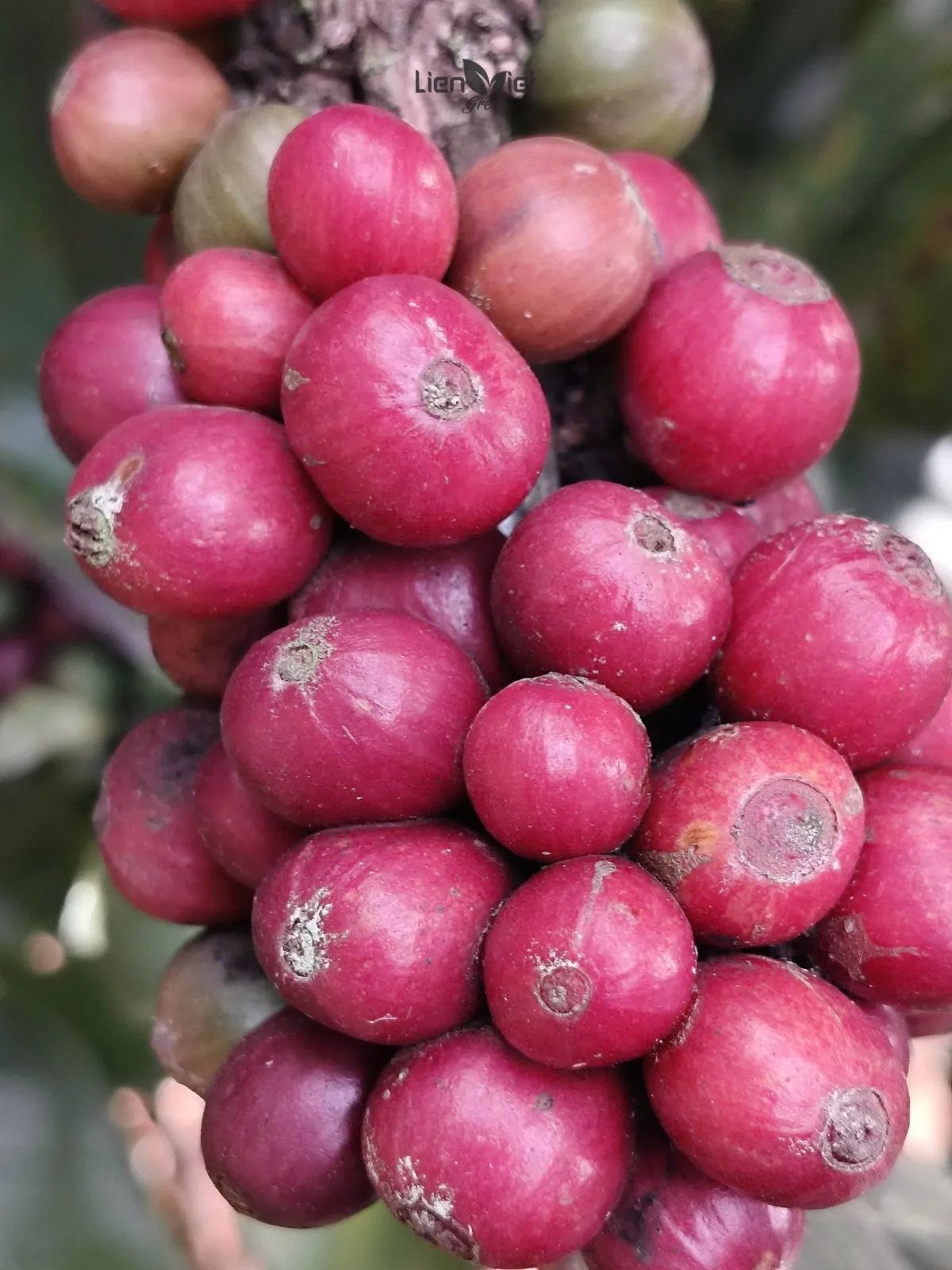
Quang Tri Liberica, locally called cà phê Mít (jackfruit coffee), is a late-ripening, dense-bean coffee known for its ripe jackfruit aroma and natural sweetness. Its quality depends on picking only fully red cherries, controlled anaerobic fermentation and carefully managed roasting, because the beans give no clear first crack.
📌 Technical Key Highlights
- Roastery Standard: Certified ISO 22000, evaluated by Q Grader panel.
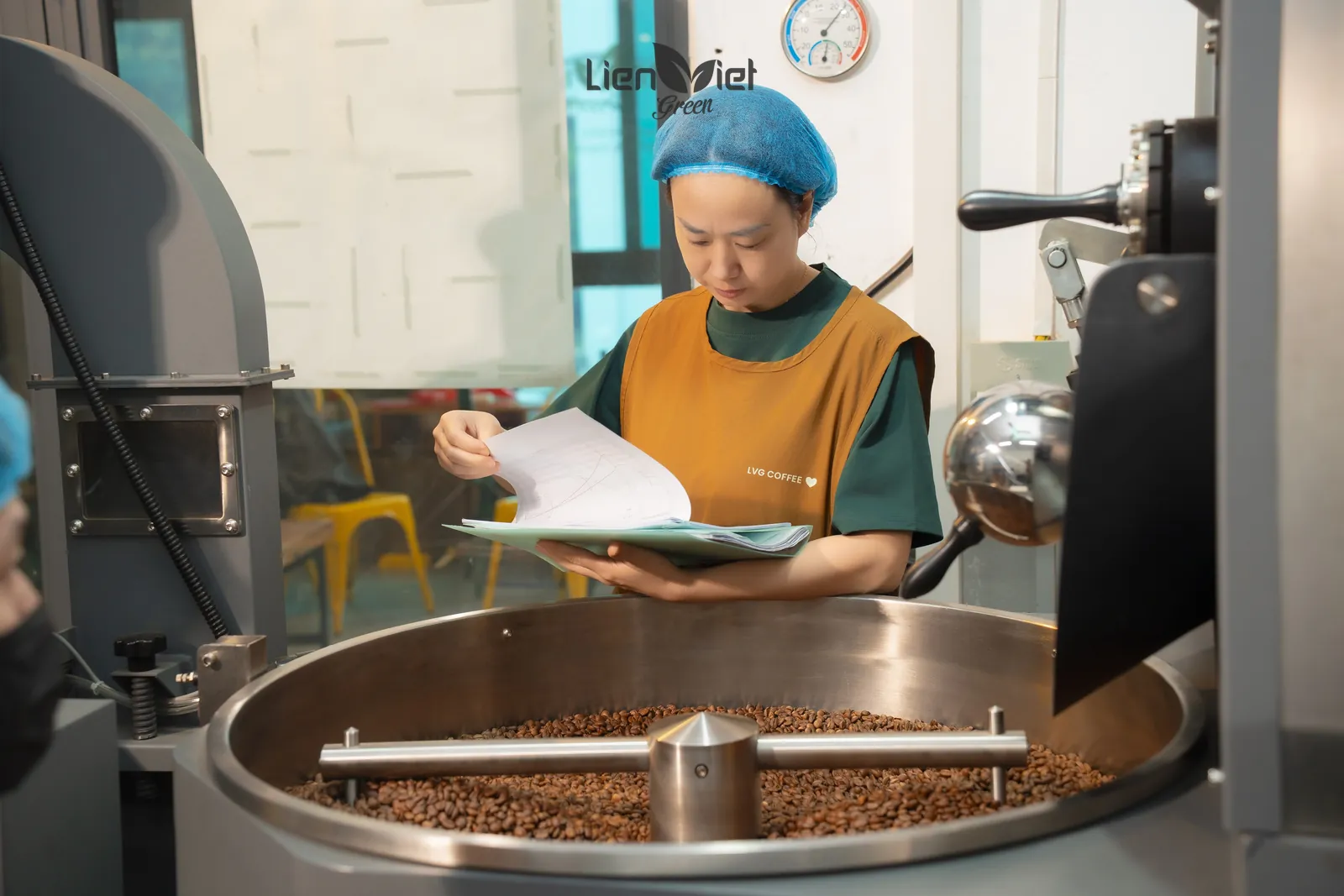
- Roasting Tech: 100% Hot Air fluid bed convection, precise thermal curve tracking.
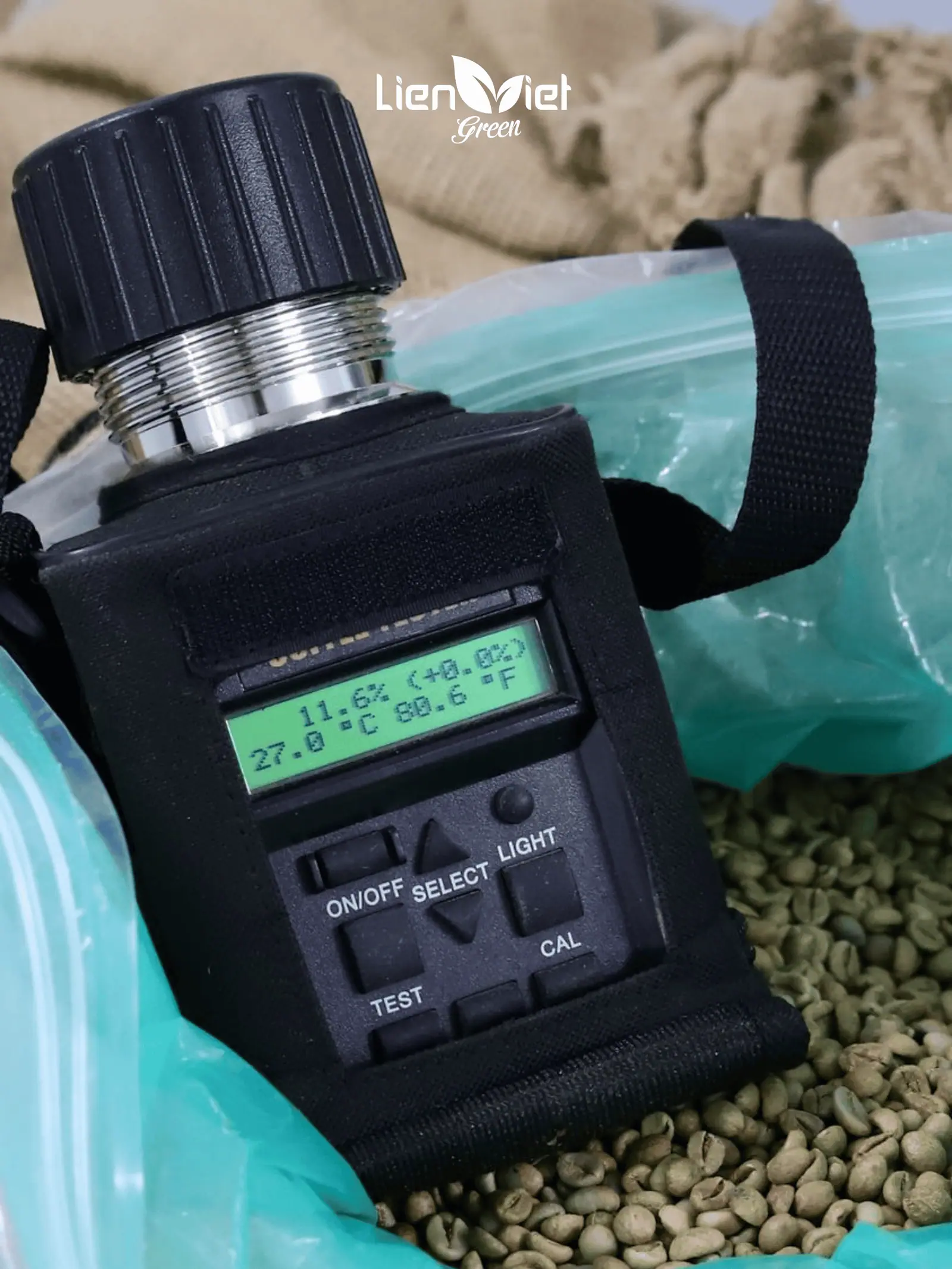
- Batch Consistency: Strict Agtron spectrophotometer roast color and moisture control.
- Traceability: 100% transparent sourcing from Vietnamese coffee origins.
Demystifying Quang Tri Liberica Coffee Characteristics: A Rare Cultivar Reimagined
Within the specialty coffee spectrum dominated by Arabica and Robusta, Liberica coffee represents a distinctive botanical and sensory category. Possessing an unconventional flavor spectrum, substantial body, and complex thermal behavior during roasting, Liberica demands specialized post-harvest and roasting expertise to unlock its commercial potential.
In Quang Tri province, particularly the Huong Phung and Huong Hoa districts, Liberica coffee is emerging as a high-potential specialty asset. Characterized by prominent tropical fruit notes and pronounced natural sweetness, Quang Tri Liberica showcases how regional terroir, late-season ripening, and controlled processing can redefine an overlooked species.
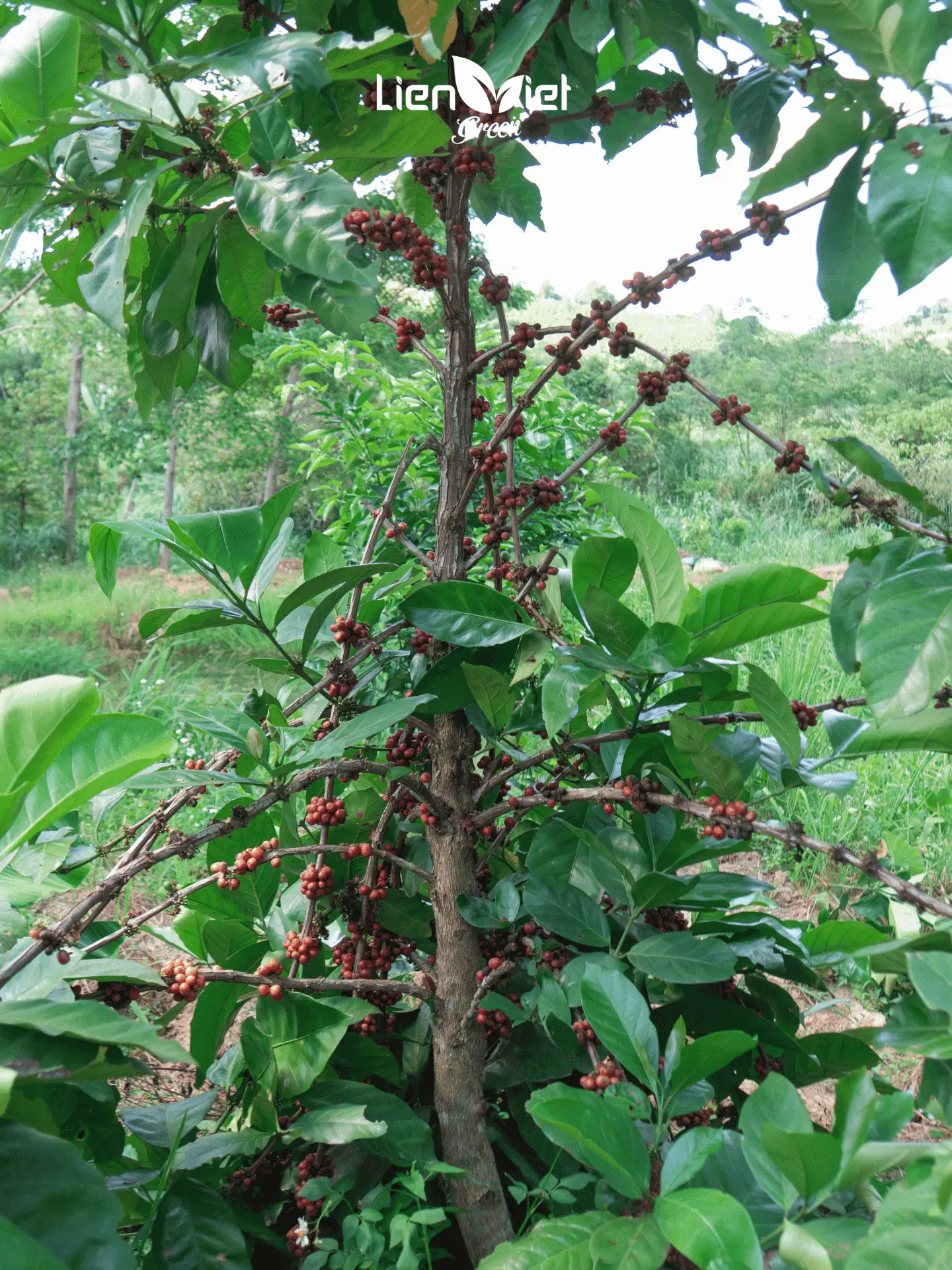
Locally termed Cà phê Mít (Jackfruit coffee) due to its broad foliage resembling jackfruit leaves, Liberica develops into large arborescent trees significantly taller than conventional Arabica or Robusta bushes. The cherries feature thick, fibrous exocarps and robust cellular density, demonstrating exceptional natural resistance to pests, disease, and adverse weather conditions.
Liberica coffee features large tree canopies, thick-skinned cherries, and high resilience to environmental stress.
Historically, Liberica trees in Quang Tri were planted primarily as border windbreaks for commercial Arabica estates. Over decades, these trees acclimatized to the basaltic mountain soil, producing unique physiological adaptations that specialty processors now harness.
In commercial trade and local discourse, Liberica and Excelsa are frequently conflated under the broad term Cà phê Mít. While botanical taxonomists debate whether Excelsa constitutes a distinct species or a botanical variety (Coffea liberica var. dewevrei), the commercial harvest in Quang Tri consists predominantly of Liberica, occasionally integrated with trace stands of Excelsa. Processing roasters evaluate the lot based on physical bean density and cupping profile.
Quang Tri’s mountain microclimate provides ideal conditions for reviving specialty Liberica coffee.
Botanical Traits: The Resilience of Liberica
During past decades, Liberica was largely marginalized due to lower yields per hectare, challenging processing mechanics, and historical low commercial pricing compared to Robusta. Many regions eradicated Liberica plots in favor of commercial cash crops.
Quang Tri, however, preserved substantial mature stands. Today, as global roasters actively seek exotic flavor profiles, Quang Tri Liberica is undergoing a significant market revaluation as a limited-edition specialty microlot.
A distinctive agronomic feature of Liberica is its asynchronous harvest schedule. While Arabica and Robusta harvests in Central Vietnam conclude between November and January, Liberica matures substantially later, ripening throughout February and March.
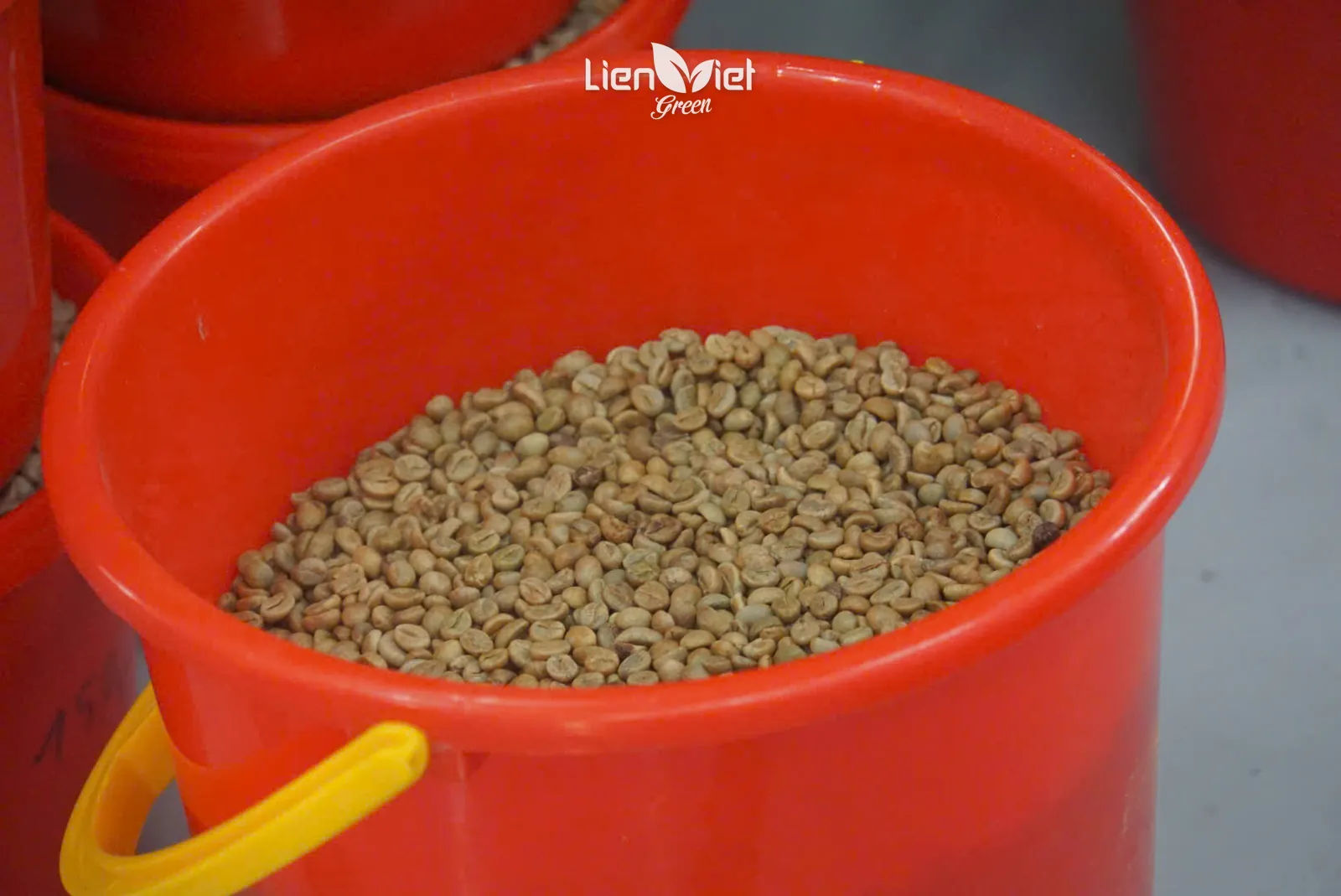
This extended maturation allows cherries to synthesize complex sugars, polysaccharides, and organic acids over an extended developmental timeline. Lien Viet Green enforces strict selective hand-picking: only 100% full-red, mature cherries are accepted, eliminating underripe fruit that imparts harsh vegetative or woody notes.
Harvested cherries undergo rigorous washing and density flotation before entering controlled anaerobic fermentation. Whole cherries are sealed in airtight fermentation tanks with one-way gas release valves, creating an oxygen-deprived environment.
Inside the tanks, anaerobic microorganisms metabolize mucilage sugars, generating volatile esters and complex organic acids that infuse into the seed embryo. The fermentation cycle is monitored using digital pH meters; processing is terminated precisely when pH reaches 4.5. This ensures the optimal threshold between clean sweetness, crisp fruit acidity, and the prevention of over-fermentation defects.
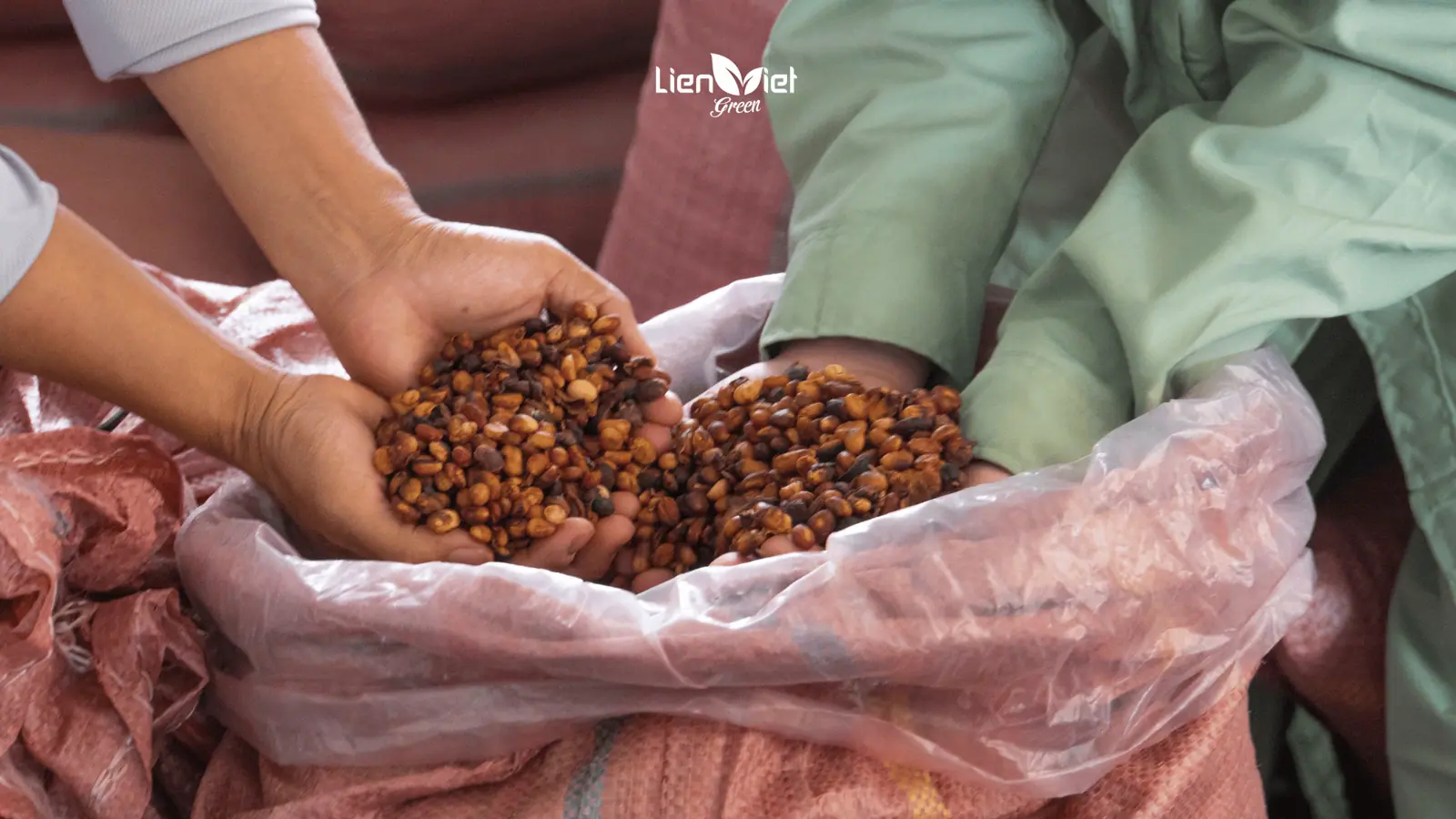
Following initial sun-drying on raised beds, the parchment coffee undergoes a planned rest interval before concluding final moisture reduction. This scheduled equalization period stabilizes internal cellular moisture gradients, preserving bean viability and extending green coffee shelf-life.
Liberica vs. Excelsa Classification
Roasting Liberica requires significant technical adjustments compared to Arabica or Robusta. Liberica beans possess high physical density, asymmetrical geometry, and often do not exhibit an audible, crisp “first crack.” Roasters must rely on real-time rate-of-rise (RoR) data, bean color inspection, and meticulous thermal energy modulation.
Suboptimal roasting profiles easily yield astringent, rubbery, or harsh woody notes. Mastered correctly, however, the roast highlights intense tropical fruit aromatics and a clean, lingering sweetness.
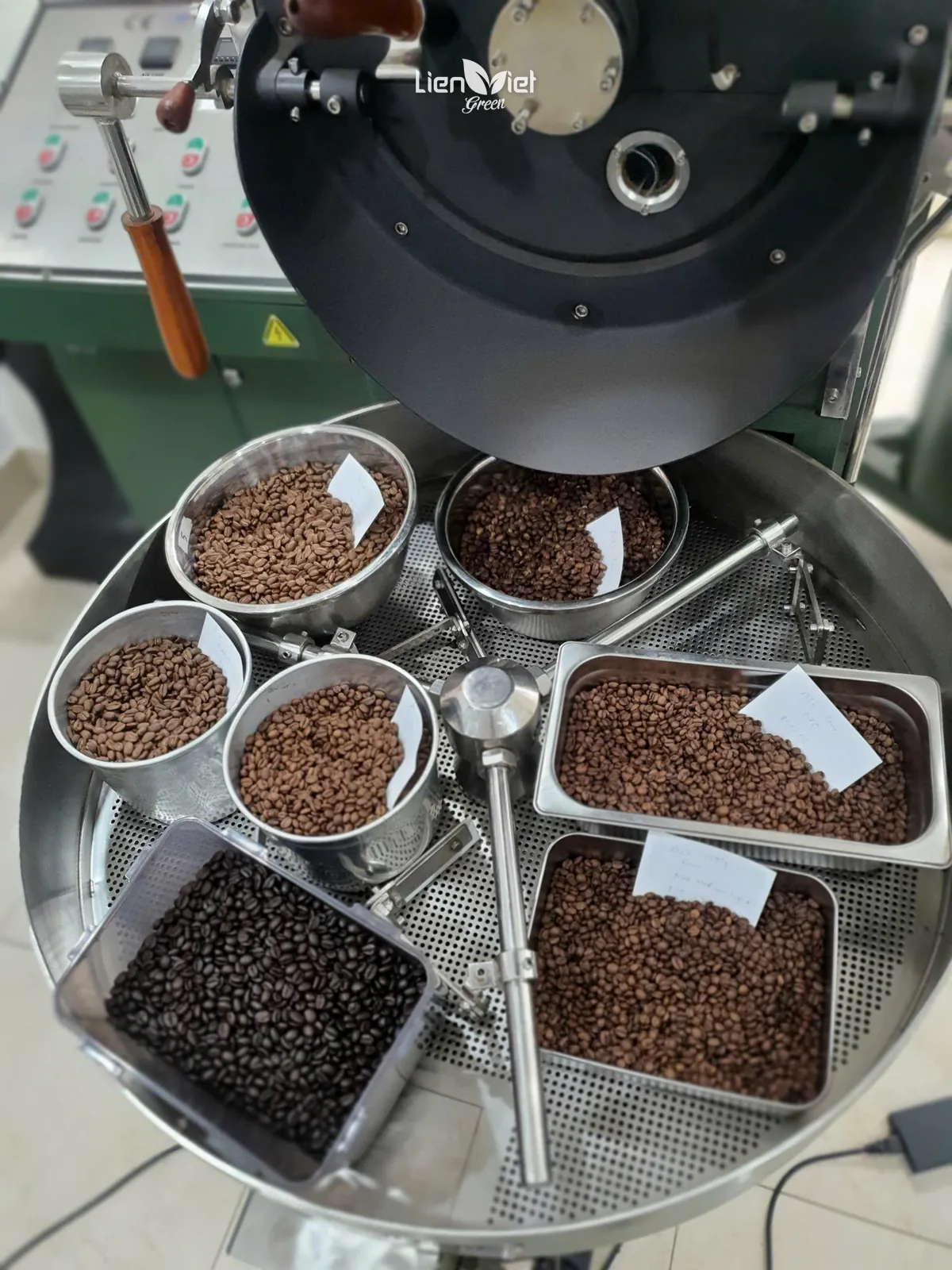
To maximize sensory complexity, Lien Viet Green utilizes a calibrated dual-batch roasting strategy:
The two batches are blended post-roast, yielding a multifaceted cup characterized by vibrant sweetness, crisp tropical fruit acidity, and a smooth, balanced body. This profile performs exceptionally well in manual pour-over extractions and specialty espresso formulations.
The standout characteristic of properly processed Quang Tri Liberica is its unmistakable aroma of ripe jackfruit. Unlike the citrus and floral tendencies of Arabica, Liberica delivers a concentrated, opulent tropical fruit spectrum:
The renaissance of Quang Tri Liberica demonstrates how specialized processing and precise thermal profiling can elevate underutilized botanical species into high-value specialty offerings. For specialty roasteries, boutique cafes, and progressive F&B brands, Quang Tri Liberica offers a distinctive origin narrative and an unforgettable cup profile that expands the boundaries of traditional coffee menus.
Technical Quality Standards Comparison Matrix
| Quality Metric | Conventional Standard | Lien Viet Green OEM Standard |
|---|---|---|
| Roasting Tech | Direct flame drum, minor smoke trace | 100% Hot Air fluid bed convection, uniform roast |
| Batch QC Control | Subjective visual checking | Agtron color meter + ISO moisture + ARTISAN logs |
| Packaging Format | Standard poly or paper bag | 4-layer foil laminate with 1-way degassing valve |
To understand the fermentation step in more depth, read how controlled fermentation shapes specialty coffee flavor.
Liberica is part of a wider story told in what specialty coffee is and why Vietnam is a specialty terroir.
If you want a distinctive origin on your café menu, see our roasting service for cafés and chains, or book a cupping at our Long Bien roastery to taste our coffees for yourself.
Sources: Coffee Quality Institute (CQI) Q Grader certification; ISO 22000:2018 on the ISO website and Lien Viet Green roastery ISO 22000:2018 certificate.
Frequently asked questions
What is Liberica jackfruit coffee (cà phê Mít)?
Cà phê Mít is the Vietnamese name for coffee from the Liberica and Excelsa group. The trees are large and woody, with broad leaves and thick-skinned cherries. In Quang Tri, the jackfruit coffee harvest is mostly Liberica.
What does Quang Tri Liberica taste like?
Its most recognizable trait is a strong, clear aroma of ripe jackfruit. While many specialty coffees lean toward berry, citrus or floral notes, Quang Tri Liberica centers on a natural ripe-jackfruit character with pronounced sweetness.
Why is Liberica hard to roast?
Liberica gives no clear, audible crack to signal each roast stage the way Arabica or Robusta do. Without solid roasting control, the beans easily turn woody, rubbery and harsh, and lose their fruit aroma, so roasters rely on rate-of-rise data and bean color instead.
Which brewing method suits Liberica?
At a light roast, Liberica suits pour over, where slow extraction brings out each layer of flavor. Lien Viet Green's blended dual-batch roast also performs well in specialty espresso.
When is Quang Tri Liberica harvested?
Liberica ripens late, usually in February and March, after the Arabica and Robusta harvests in Central Vietnam have finished. The slower ripening gives the cherries more time to build sugars and flavor.
Partner with ISO 22000 Certified OEM Coffee Roaster
Lien Viet Green supports hotel chains, F&B franchises, and commercial brands with custom roast profiles and supply reliability.