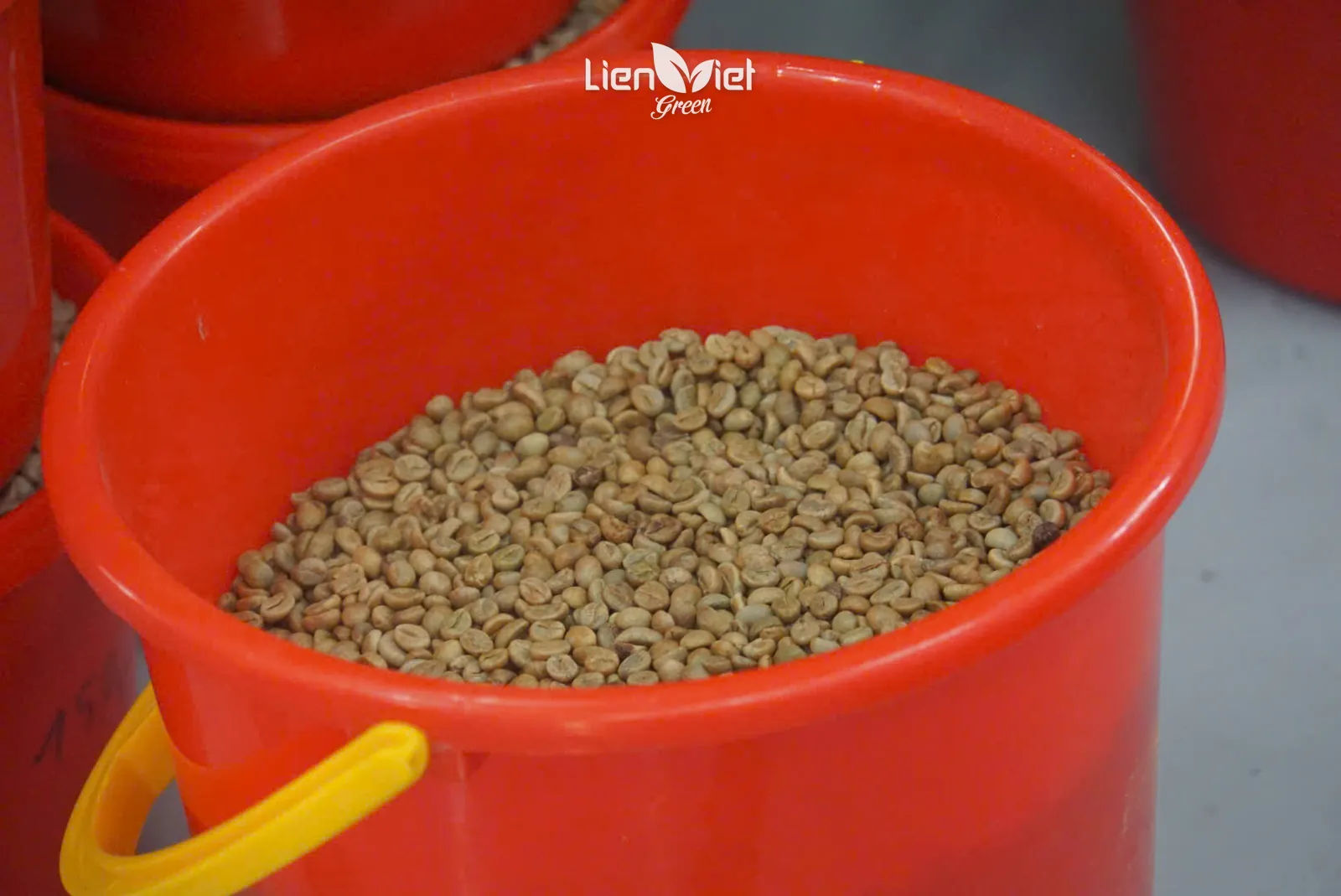
How does coffee moisture content impact roasting quality? Explore the 10.5% – 11.5% target moisture range, water activity (Aw) safety thresholds, thermodynamic Rate of Rise (RoR) shifts, and convective Hot Air precision control at Lien Viet Green.
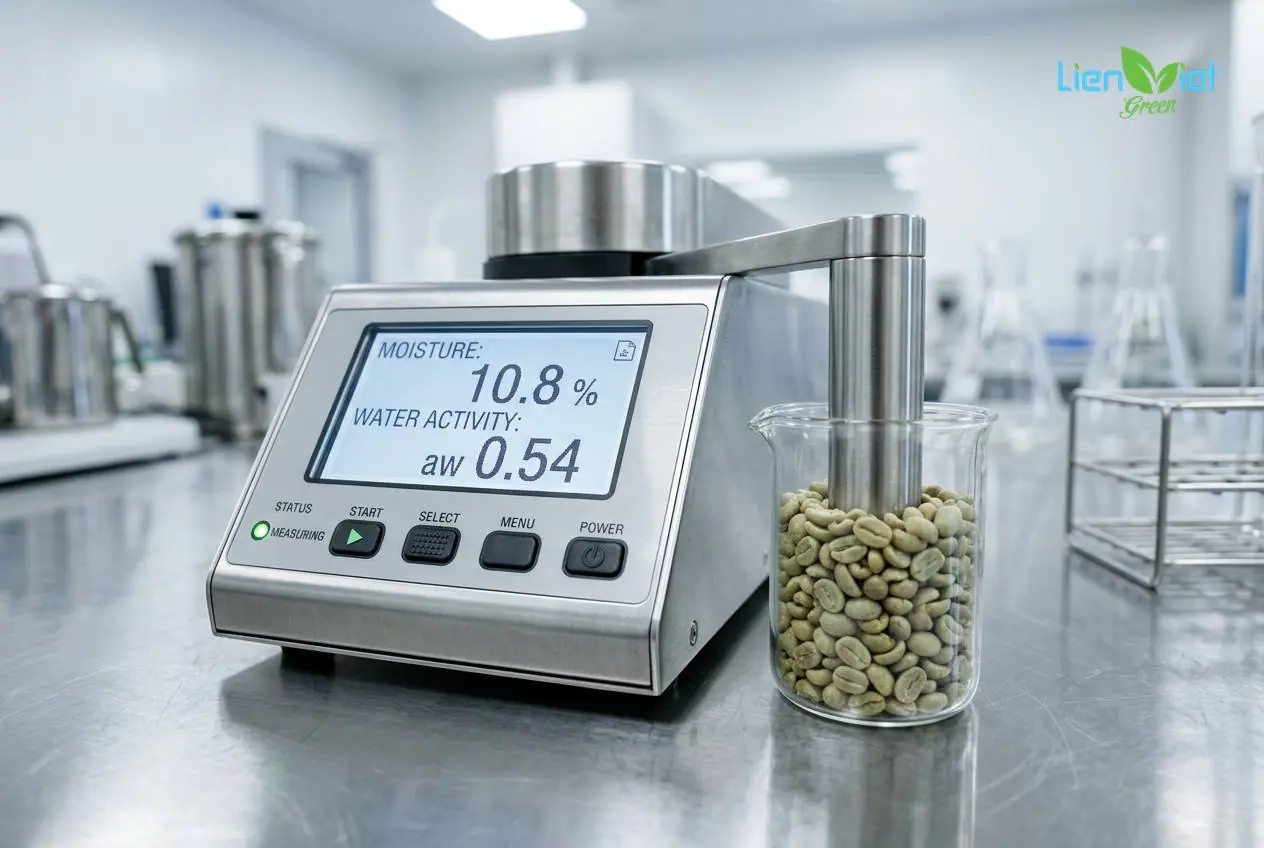
In the commercial coffee processing sector and private-label OEM manufacturing for expanding F&B chains, professionals frequently focus on botanical varietals, growing terroir, or machine hardware. However, before charging any batch into the roaster, a fundamental thermodynamic variable dictates the entire roast: the moisture content of the green coffee bean.
Moisture content governs not only raw storage longevity but also convective heat transfer rates, moisture desorptive velocity, and aromatic compound formation. A minor variance of just 1% to 2% moisture alters the bean’s specific heat capacity, requiring roasters to adjust Charge Temperatures and Hot Air airflow to avoid tipping, scorching, or internal underdevelopment.
What is coffee moisture content and why is strict control mandatory?
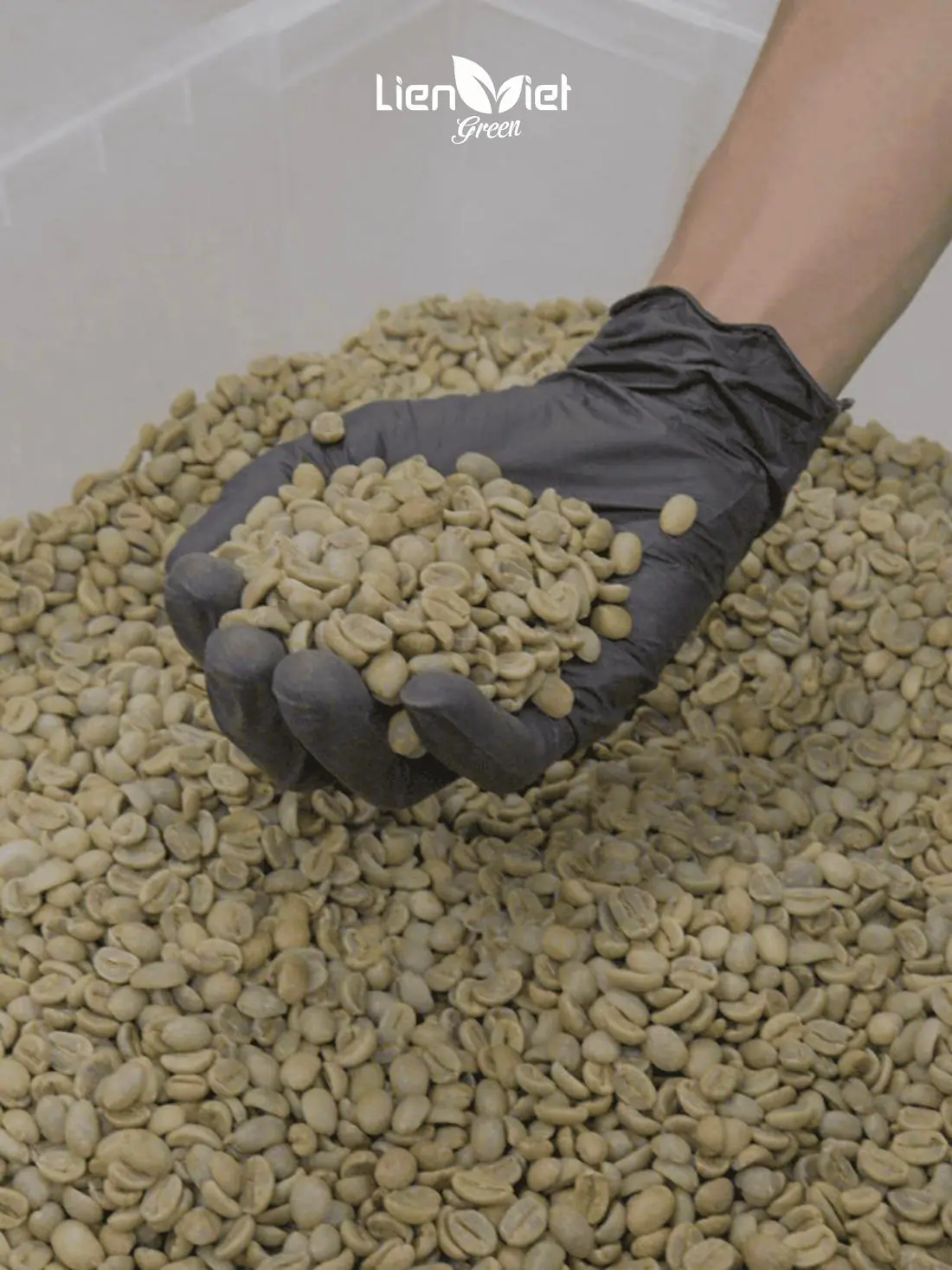
Coffee Moisture Content (MC%) represents the mass fraction of residual water bound within the cellular structure of raw green beans relative to total weight. It serves as the primary gateway inspection parameter when green lots arrive at our roasting plant.
Shrinkage Control & COGS Margin Defense
Accurate moisture measurement allows roasters to calculate roasting mass loss precisely. Unmonitored moisture variance causes erratic batch shrinkage, directly disrupting commercial F&B cost structures.
Preserving Volatile Precursors & Cell Density
Stable moisture protects non-reducing sugars and delicate organic acids from enzymatic breakdown. Beans maintain physical resilience, resisting embrittlement and lipid oxidation throughout 12 months of storage.
Comparative technical telemetry
| Audit Benchmark | Uncontrolled Open-Market Green Coffee | Lien Viet Green Standardized Green Beans |
|---|---|---|
| Inbound Moisture (MC%) | Unstable fluctuations (9.0% – 13.5%), heavy shrinkage | Calibrated strictly within target band 10.5% – 11.5% |
| Water Activity (Aw) | Exceeds safety thresholds (>0.62 Aw), mold risk | Maintained below 0.60 Aw with laboratory benchtop meters |
| Roasting Thermal Transfer | Surface tipping and facing; raw grassy bean cores | Even convective penetration; 100% core-to-surface maturity |
| Sensory Cup Stability | Harsh astringency or flat body; rapid aromatic fading | Deep sweet finish; vibrant malic acidity and floral aromatics |
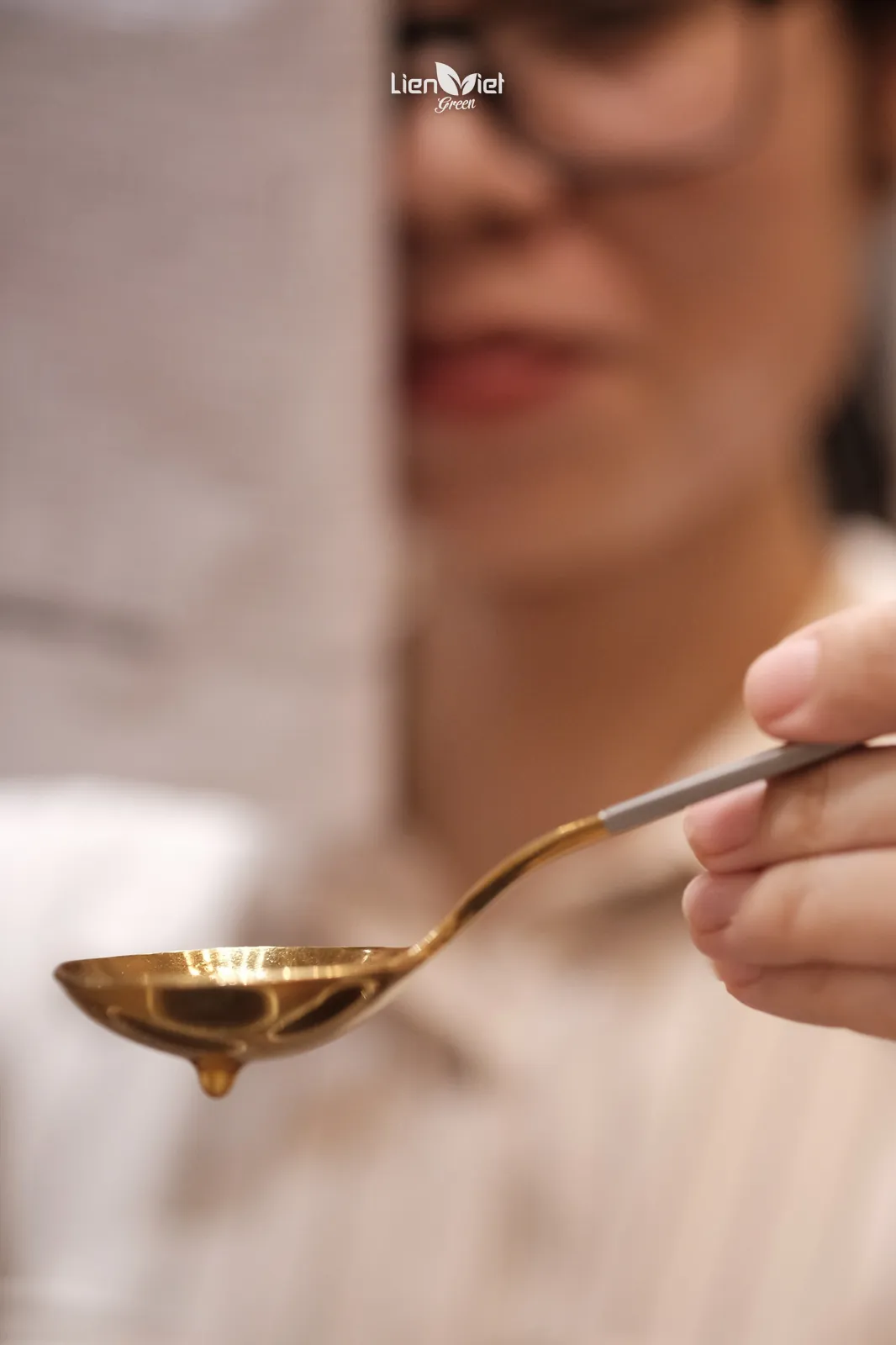
SCA moisture benchmarks and water activity (Aw) food safety thresholds
Specialty Coffee Association standards mandate export green coffee moisture levels between 10.0% and 12.0%. At Lien Viet Green, we enforce an even tighter operational tolerance band: 10.5% to 11.5%.
Furthermore, Water Activity (Aw) quantifies the energy state of free water molecules available to support microbial proliferation. If Aw exceeds 0.62, storage fungi such as Aspergillus ochraceus synthesize toxic ochratoxin A (OTA), triggering customs rejections and food safety liability.
Thermodynamic Rate of Rise (RoR) shift: How moisture alters heat curves
The thermodynamic telemetry below contrasts roasting behavior in our Hot Air drum between standard moisture beans (11.0%) and high-moisture beans (13.0%):
Moisture impact on the drying phase, cell expansion, and Maillard reactions
Water exhibits a high specific heat capacity (\(4.184 ext{ J/g}\cdot^\circ ext{C}\)), roughly double that of dry bean cellular components. Consequently, during the initial Drying Phase, thermal energy is primarily consumed by endothermic water evaporation.
If beans are overly dried (below 9.5%), bean cell walls lack a thermal buffer, resulting in surface tipping and scorching upon contact with high-temperature airflow. Conversely, excess moisture creates internal steam pressure during First Crack that violently ruptures cellular walls, producing harsh astringency.
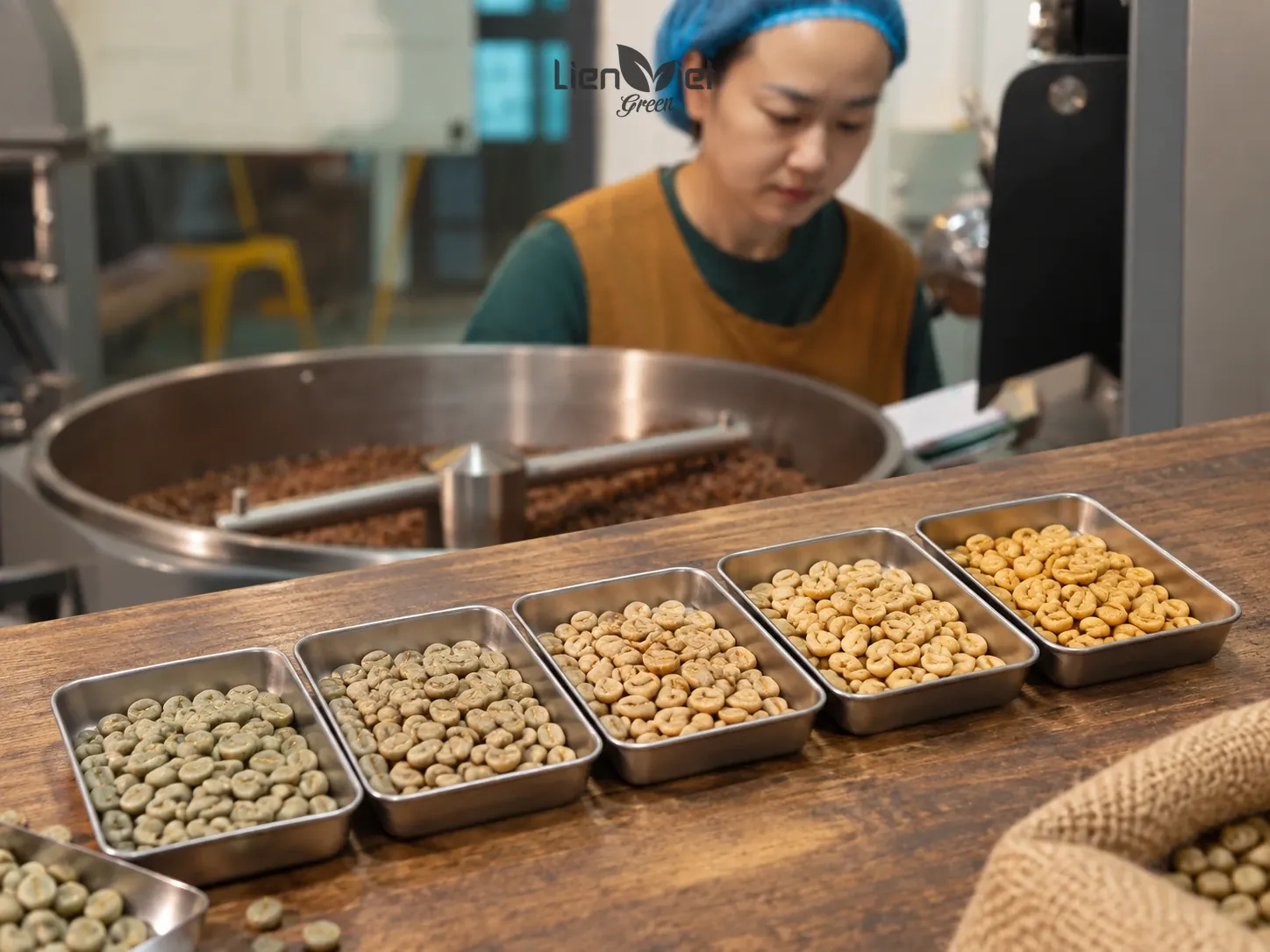

Flavor profiling and technical roast parameter benchmarking
Aligning moisture parameters with convective roasting allows Lien Viet Green to lock in precise thermodynamic thresholds for wholesale partners:
- Charge Temperature: 190°C – 210°C
- Turning Point Duration: 1 min 15 sec
- Development Time Ratio (DTR): 14% – 18%
- Whole/Ground Agtron Spread <8 Points
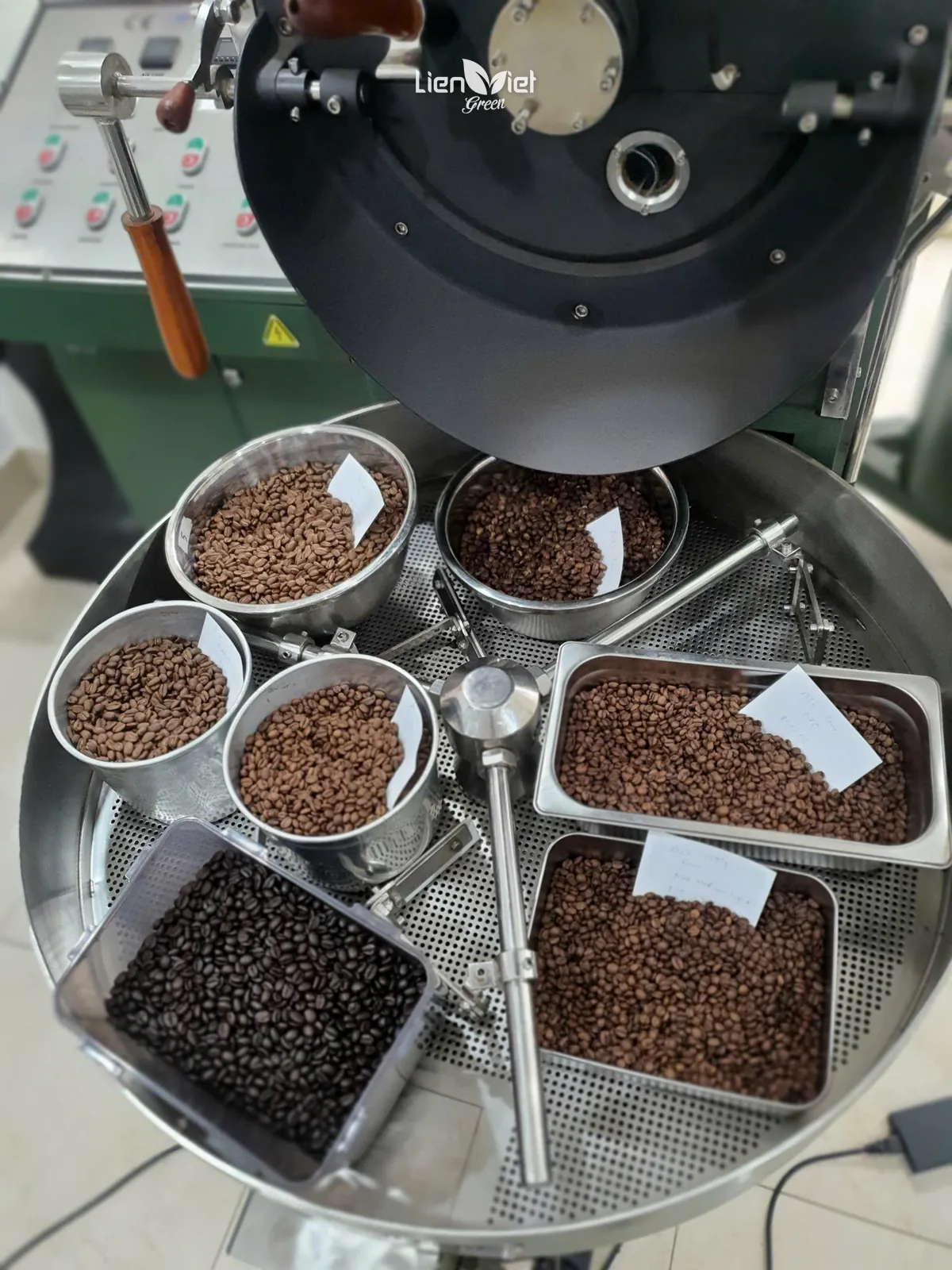
Convective Hot Air roasting technology ensuring batch-to-batch uniformity
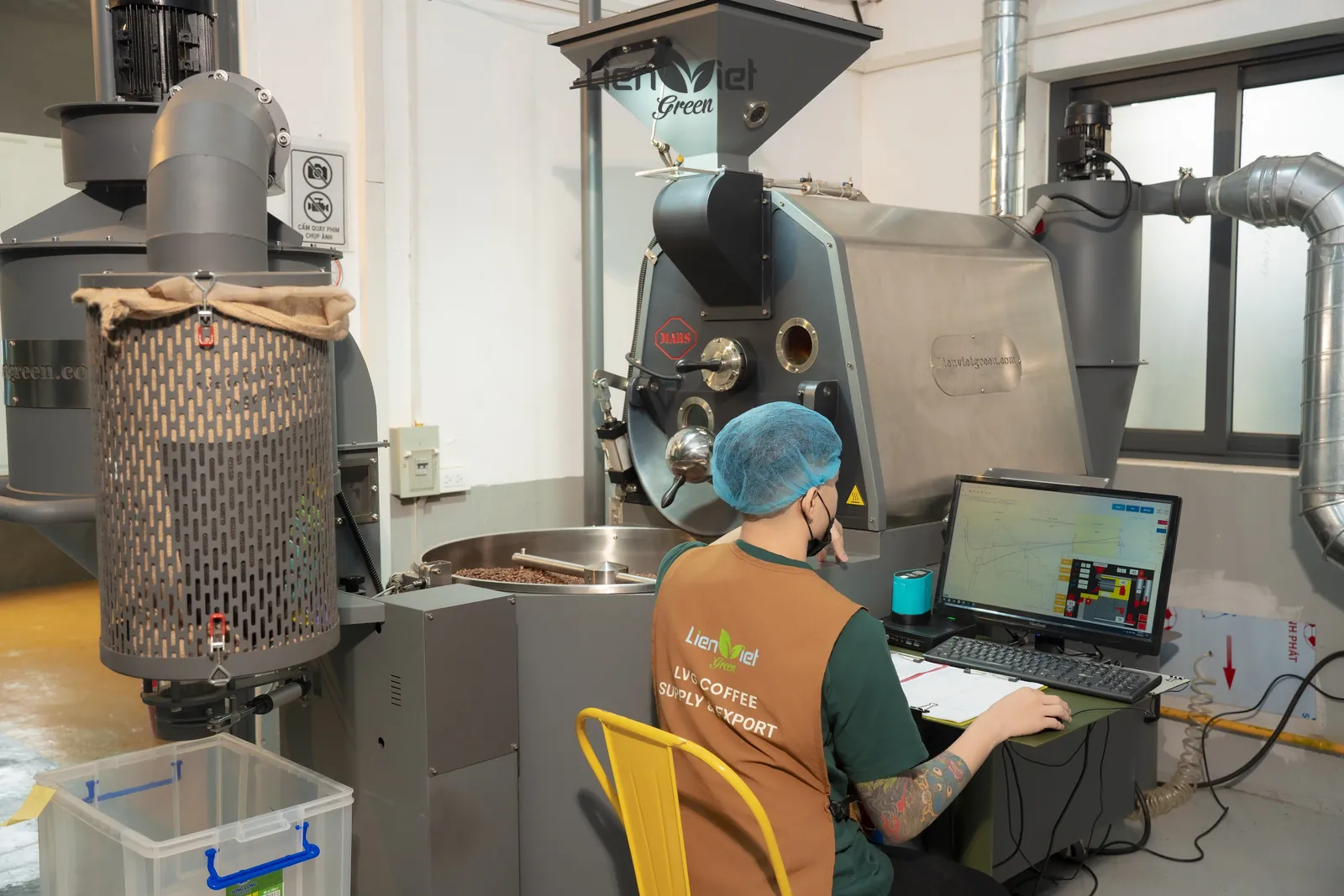
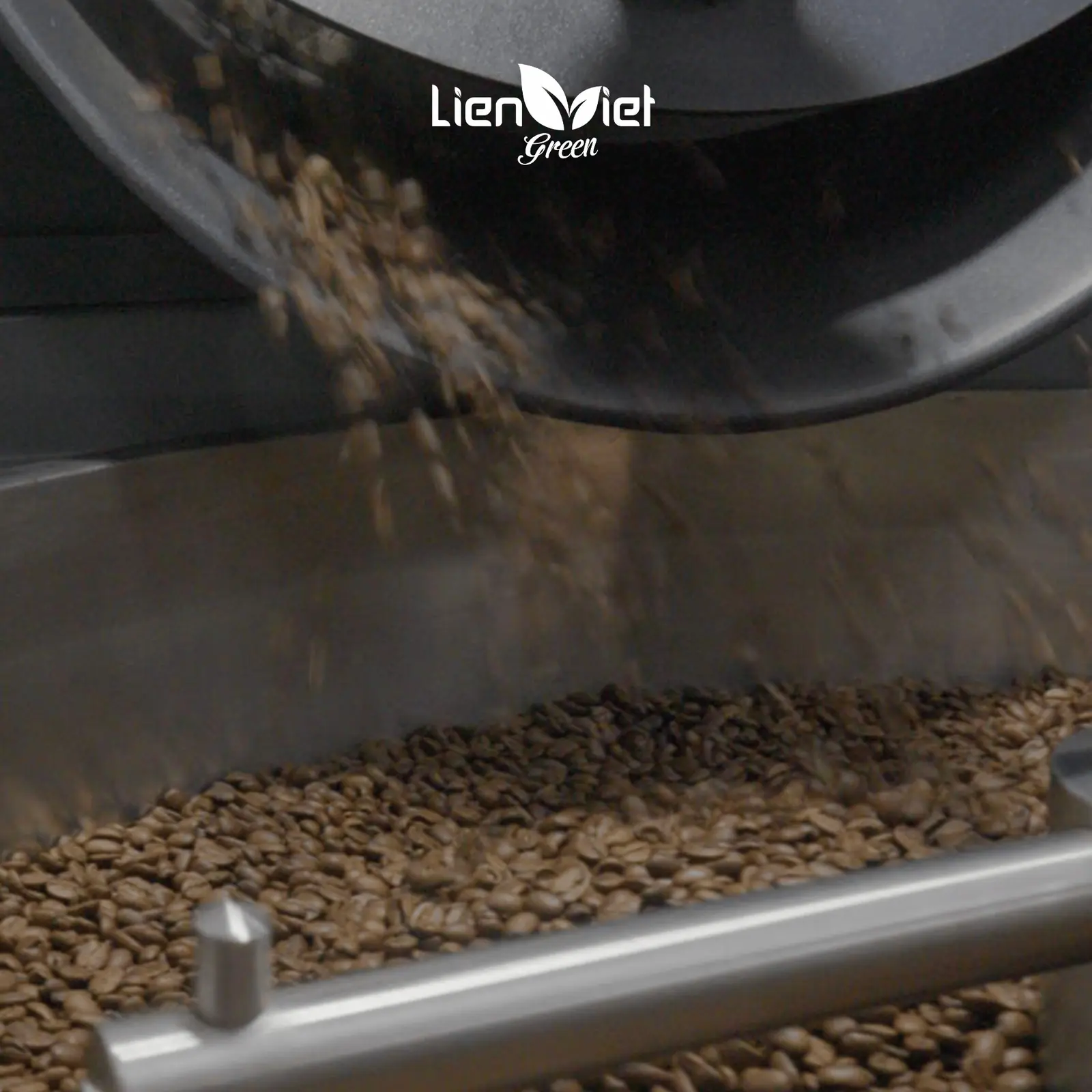
At the Lien Viet Green roasting plant, all production lines utilize recirculating convective Hot Air roasting technology. Unlike conventional direct-fired drums that rely on high-risk conductive heat transfer prone to surface burns, Hot Air systems envelope beans in an aerodynamic high-velocity convective thermal stream.
Immediately following roasting, beans are sealed inside multi-layer barrier packaging equipped with One-Way Degassing Valves, preserving freshness and delicate organic volatiles for up to 12 months across retail channels.
The eight-step closed-loop moisture control protocol at Lien Viet Green
Every coffee lot roasted in our facility adheres to an eight-stage moisture control protocol:
>95% Ripe Cherry HarvestingSelecting only ripe cherries at peak Brix to ensure balanced cellular sugar-moisture ratios.
Raised-Bed Solar Greenhouse DryingIsolating beans from soil moisture, driving gentle desorptive drying in ventilated greenhouses.
GrainPro Hermetic EnclosureSealing beans immediately once moisture reaches 10.5% – 11.5% to block re-absorption.
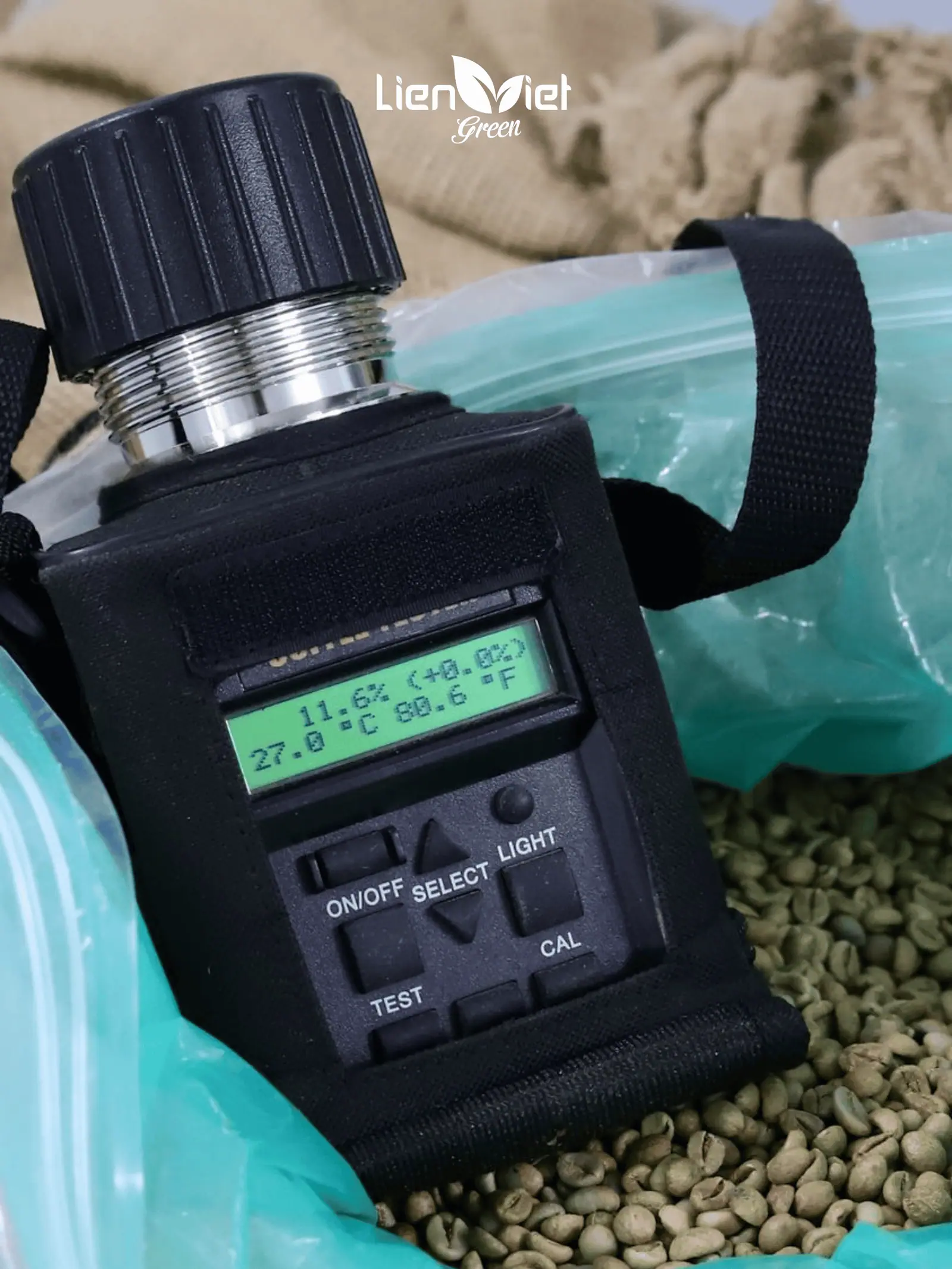
Benchtop Capacitance Inbound AuditsTesting triplicate samples with calibrated capacitance meters upon warehouse delivery.
Charge Temperature AdjustmentRoast Masters modulate roaster charge heat and airflow volume to match exact bean moisture.
Real-Time RoR Telemetry TrackingMonitoring exhaust and bean probes on industrial PLC systems to hit the precise crack window.
Sub-90-Second Forced CoolingDischarging into high-velocity vacuum trays to rapidly stabilize internal moisture equilibrium.
One-Way Degassing Valve PackagingHeat-sealing in multi-barrier foil bags with precision degassing valves and lot traceability codes.
Conclusion: Moisture control – The foundation for defending F&B margins
Green coffee moisture content is far more than a basic physical metric; it represents the critical thermodynamic foundation governing roasting success, defect prevention, and brand cup consistency across multi-unit F&B networks.
Lien Viet Green is dedicated to partnering with commercial F&B brands, delivering precision-roasted OEM solutions: thermodynamic accuracy and exceptional sensory balance.
Looking for Precision-Roasted OEM Coffee with Reliable Batch Consistency?
Partner with Lien Viet Green to harness industrial Hot Air roasting with rigorous moisture controls and receive complimentary sample roastings for your brand.
For the storage side of the same topic, see our guide to moisture content and water activity as shelf-life indicators.
Moisture readings feed directly into the curve, so it helps to understand how a coffee roast profile controls flavor and batch consistency.
If you need a roaster that checks moisture on every inbound lot before roasting your brand, explore our OEM and private-label coffee roasting. Want to taste before you decide? book a cupping at our Long Bien roastery.
Sources: Specialty Coffee Association (SCA) coffee standards.
Frequently asked questions
What is the ideal moisture content for green coffee beans before roasting?
SCA guidance puts export green coffee between 10.0% and 12.0% moisture. Lien Viet Green works to a tighter band of 10.5% to 11.5%, which keeps heat transfer predictable and batch shrinkage stable from roast to roast.
How does high moisture in green coffee affect the roast?
Excess moisture delays the turning point because water absorbs more heat than the dry bean material. The drying phase stretches, acidity and aromatics can taste dull, and steam pressure at first crack can produce harsh, astringent notes unless the roaster adjusts charge temperature and airflow.
What happens if green coffee beans are too dry?
Over-dried beans, below about 9.5% moisture, lose their thermal buffer. The surface heats too quickly, which leads to tipping and scorching while the core may stay underdeveloped.
What is water activity (Aw) in green coffee and why does it matter?
Water activity measures the free water available for microbial growth. When Aw rises above about 0.62, storage molds such as Aspergillus can produce ochratoxin A, so Lien Viet Green keeps green coffee below 0.60 Aw.
How do roasters compensate for different moisture levels?
They measure moisture on arrival, then adjust charge temperature and airflow to match each lot. At Lien Viet Green, roast masters also track Rate of Rise in real time on Hot Air roasters so each batch reaches first crack in the intended window.