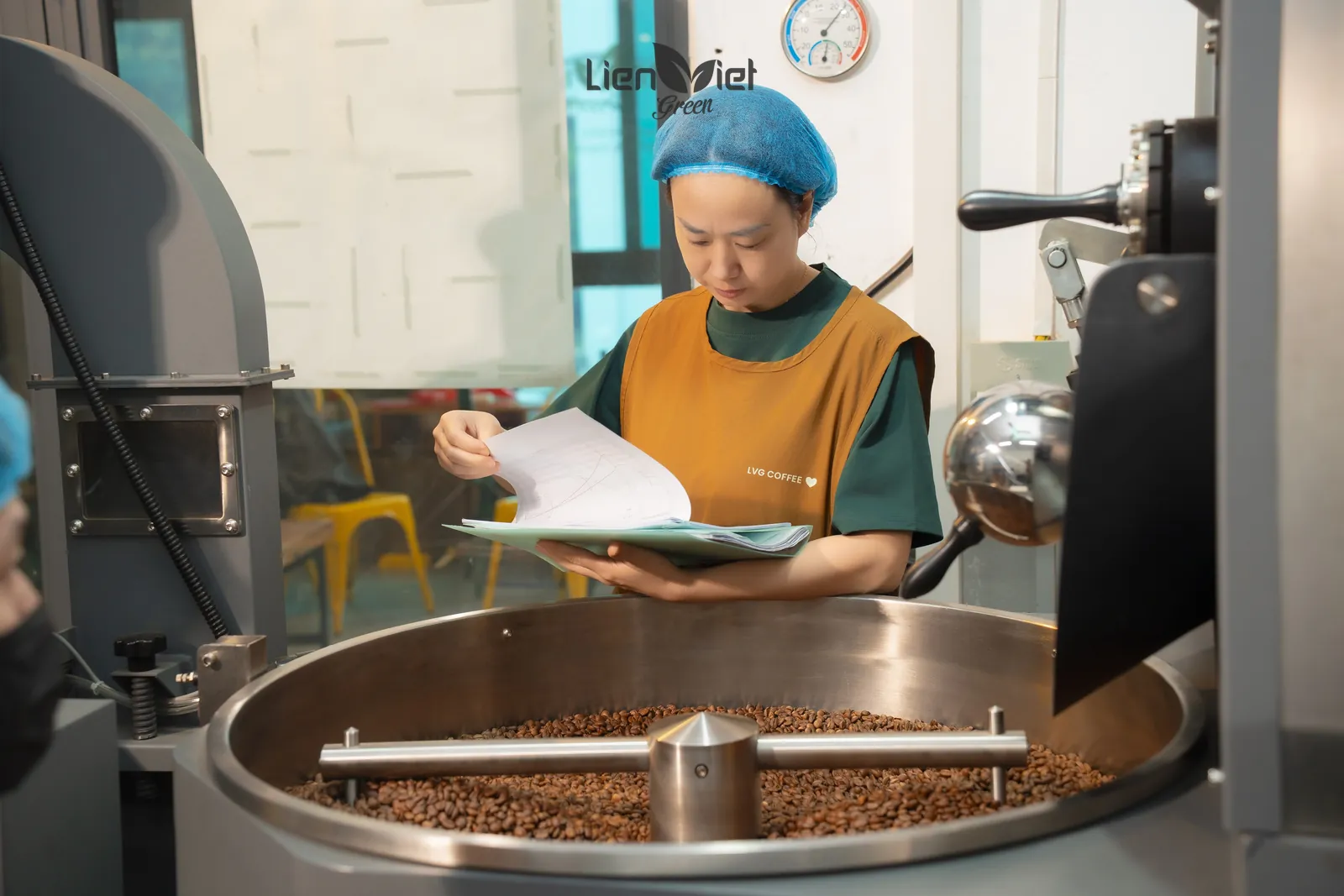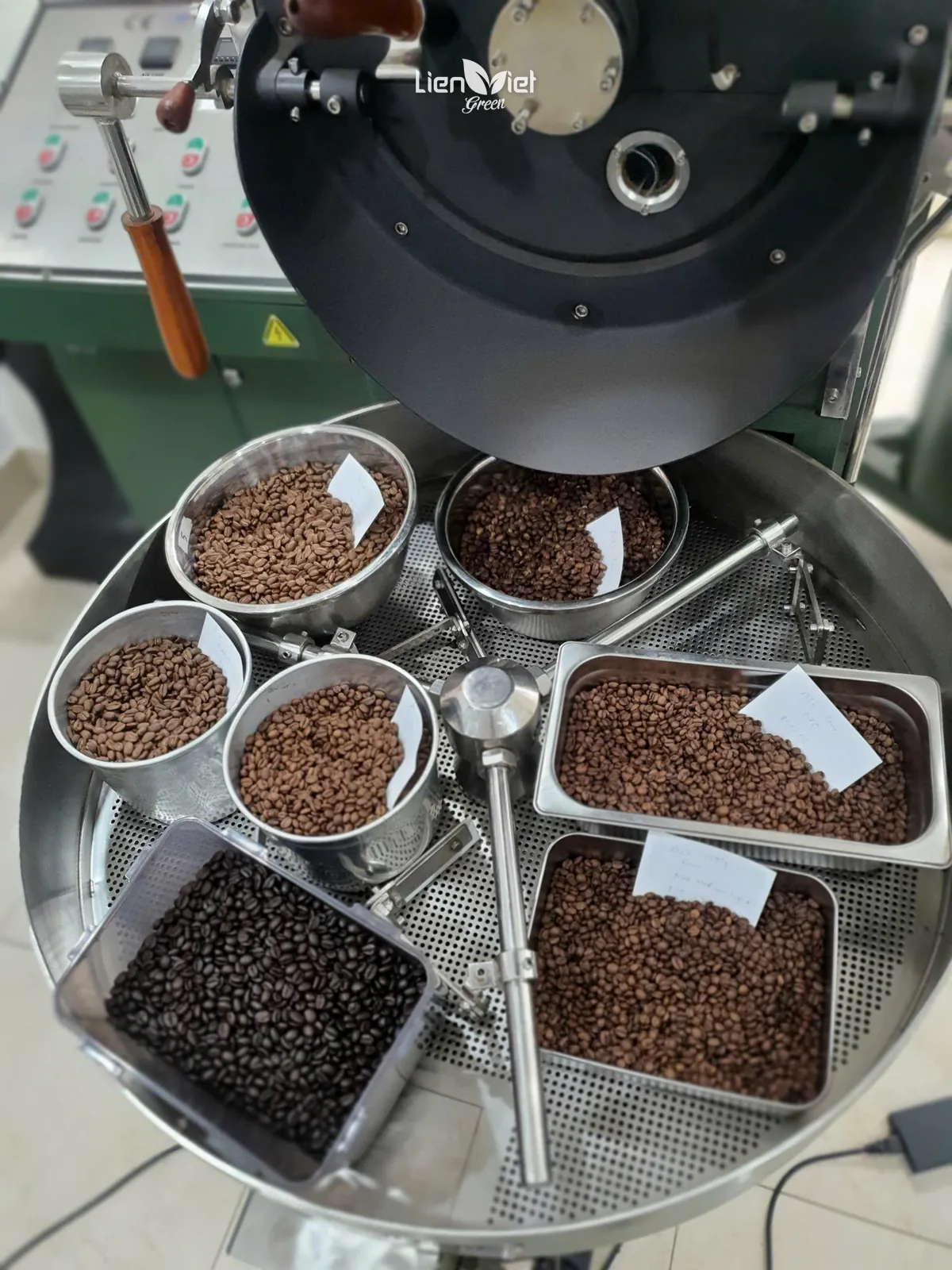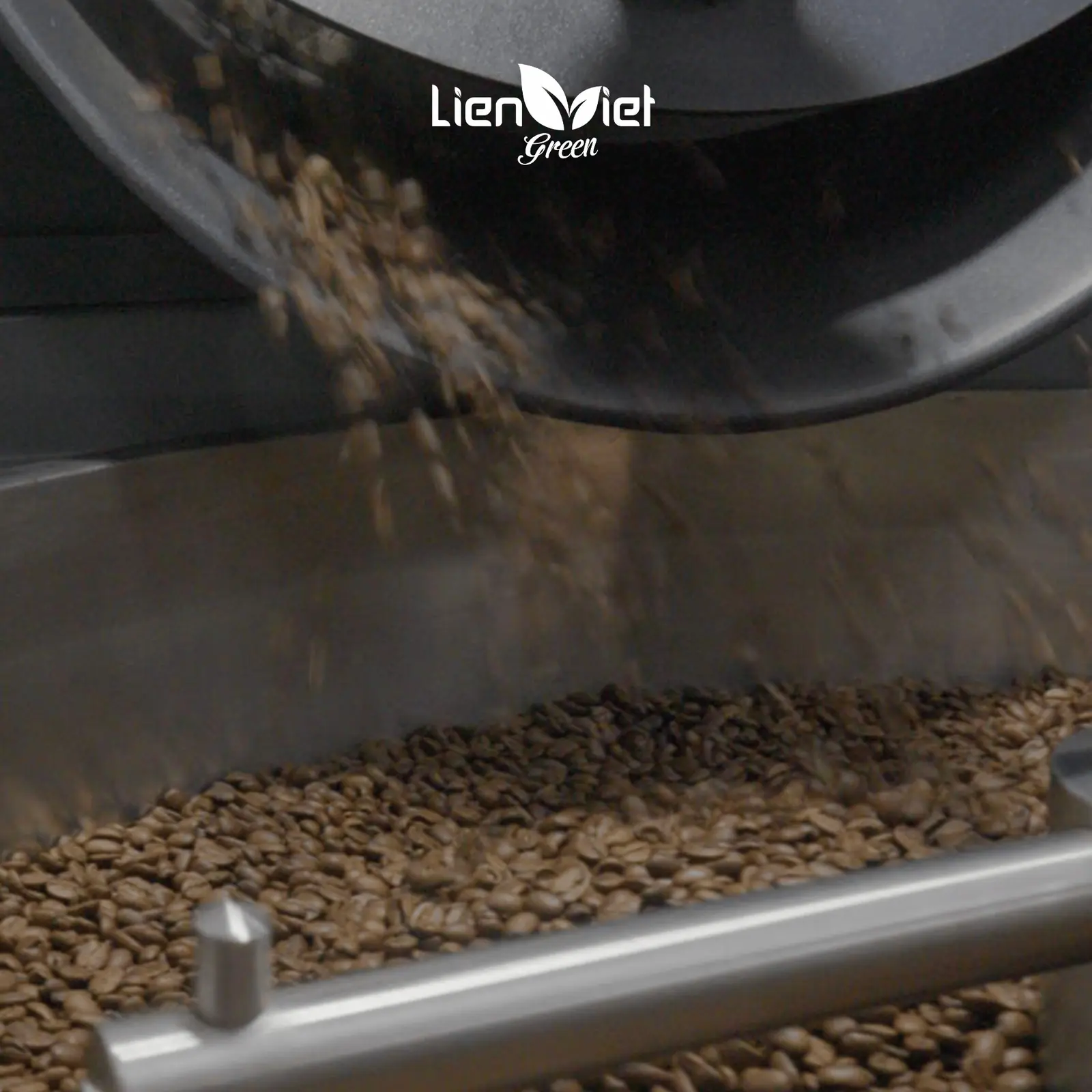
Understanding the thermodynamic differences between Hot Air convection and Drum roasting: examining heat transfer mechanics, sensory profiles, and AI-monitored Hot Air technology at Lien Viet Green.
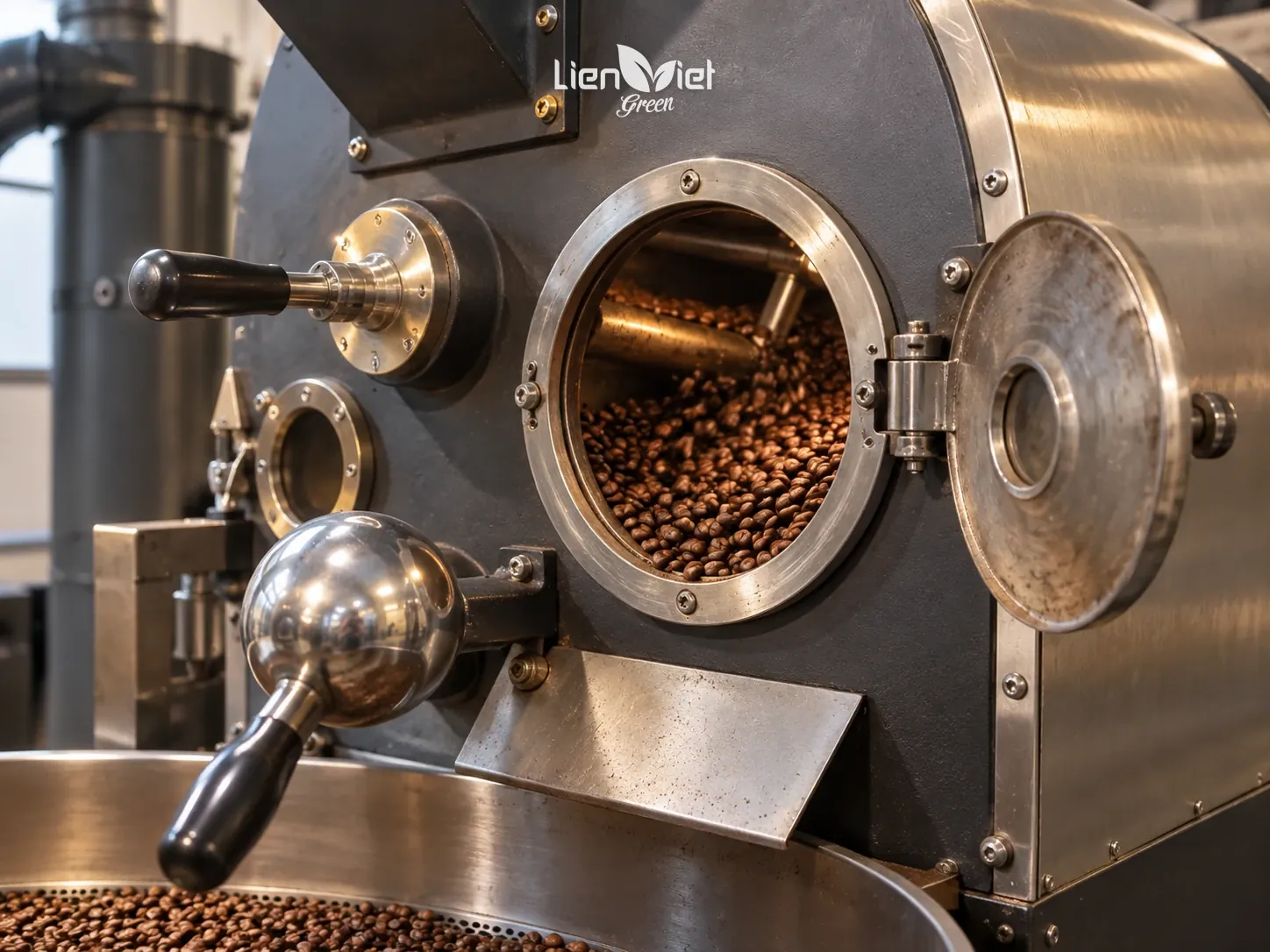
In the transition from green coffee to the final cup, roasting is the defining thermodynamic phase that unlocks flavor potential.
A lot of specialty Arabica may possess outstanding floral notes, crisp acidity, and delicate sweetness. Fine Robusta can offer rich sweetness, robust body, and a clean, lingering finish. However, without calibrated heat application, the innate potential of the raw bean remains unexpressed.
Consequently, roasting equipment architecture is a primary operational consideration for coffee roasters, F&B chains, and commercial private-label brands.
The two dominant industrial roasting technologies are traditional Drum Roasters and Hot Air (convection / fluidized bed) roasters. While both systems can produce exceptional coffee, their divergent heat transfer mechanisms and thermal control dynamics yield distinctly different flavor profiles.
Core Operating Principles: Hot Air and Drum Roasters
Before evaluating sensory distinctions, roasters must understand the thermodynamic principles underpinning each system.
At its core, coffee roasting is the controlled application of thermal energy to green coffee beans to induce physical structural changes and complex chemical reactions. Throughout this thermal cycle, free moisture evaporates, bean volume expands, cellular walls break down, and aromatic compounds form via pyrolytic and non-enzymatic browning pathways. The specific heat transfer mechanics dictate the rate, uniformity, and chemical outcomes of these transformations.
Traditional Drum Roaster Architecture
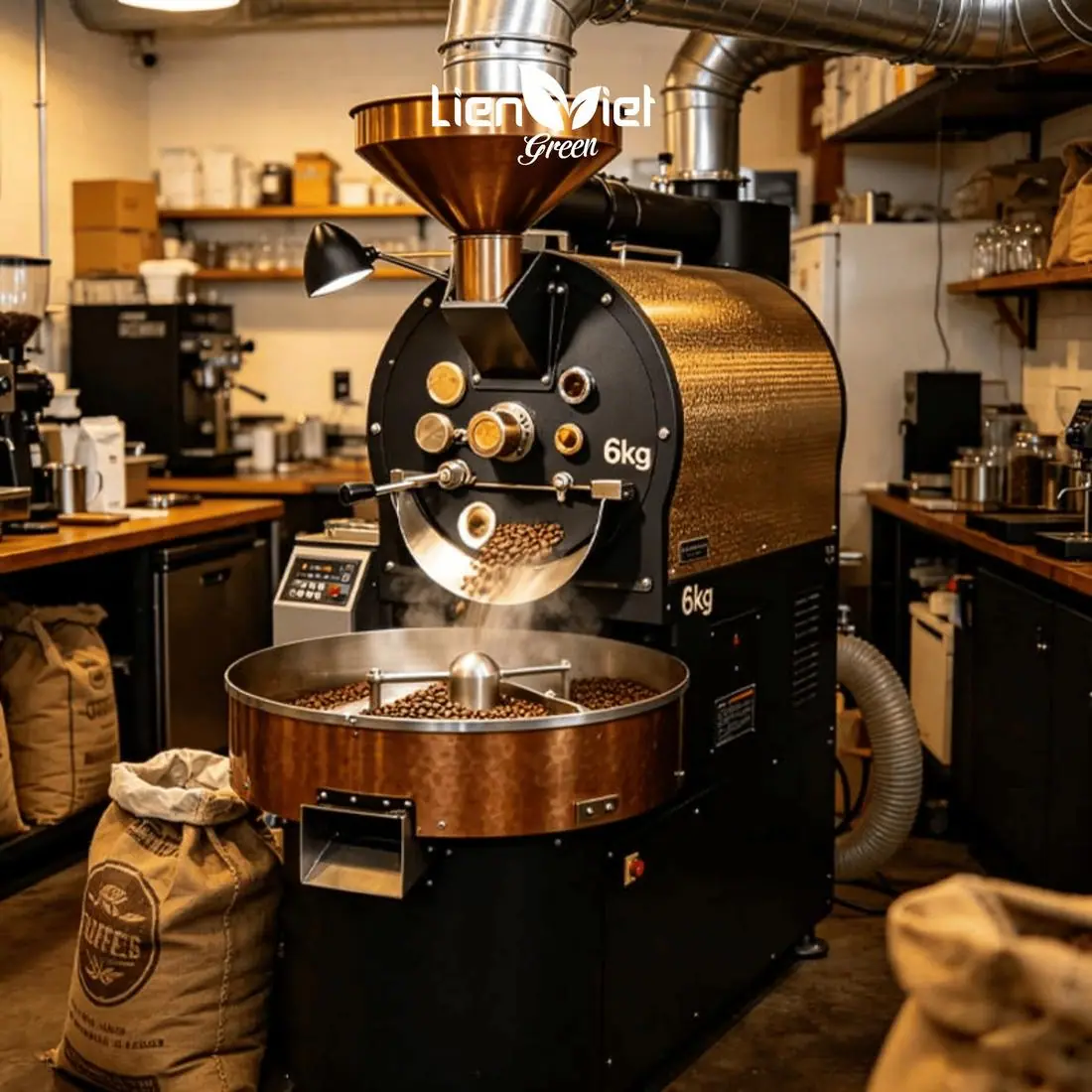
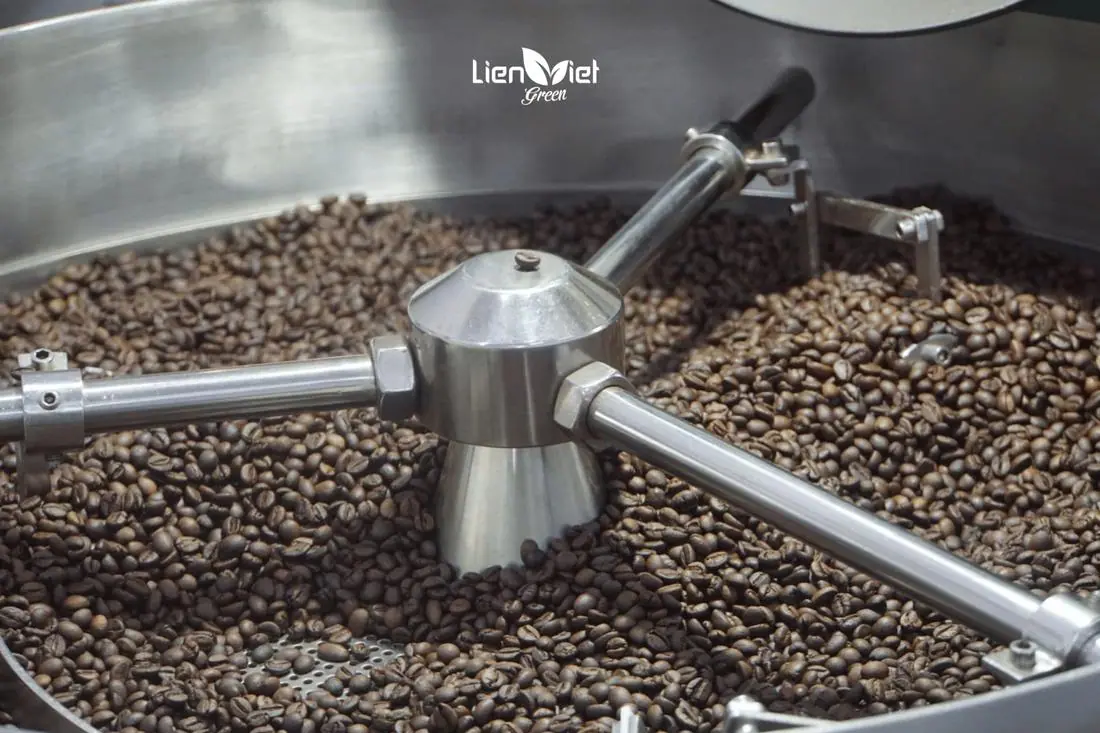
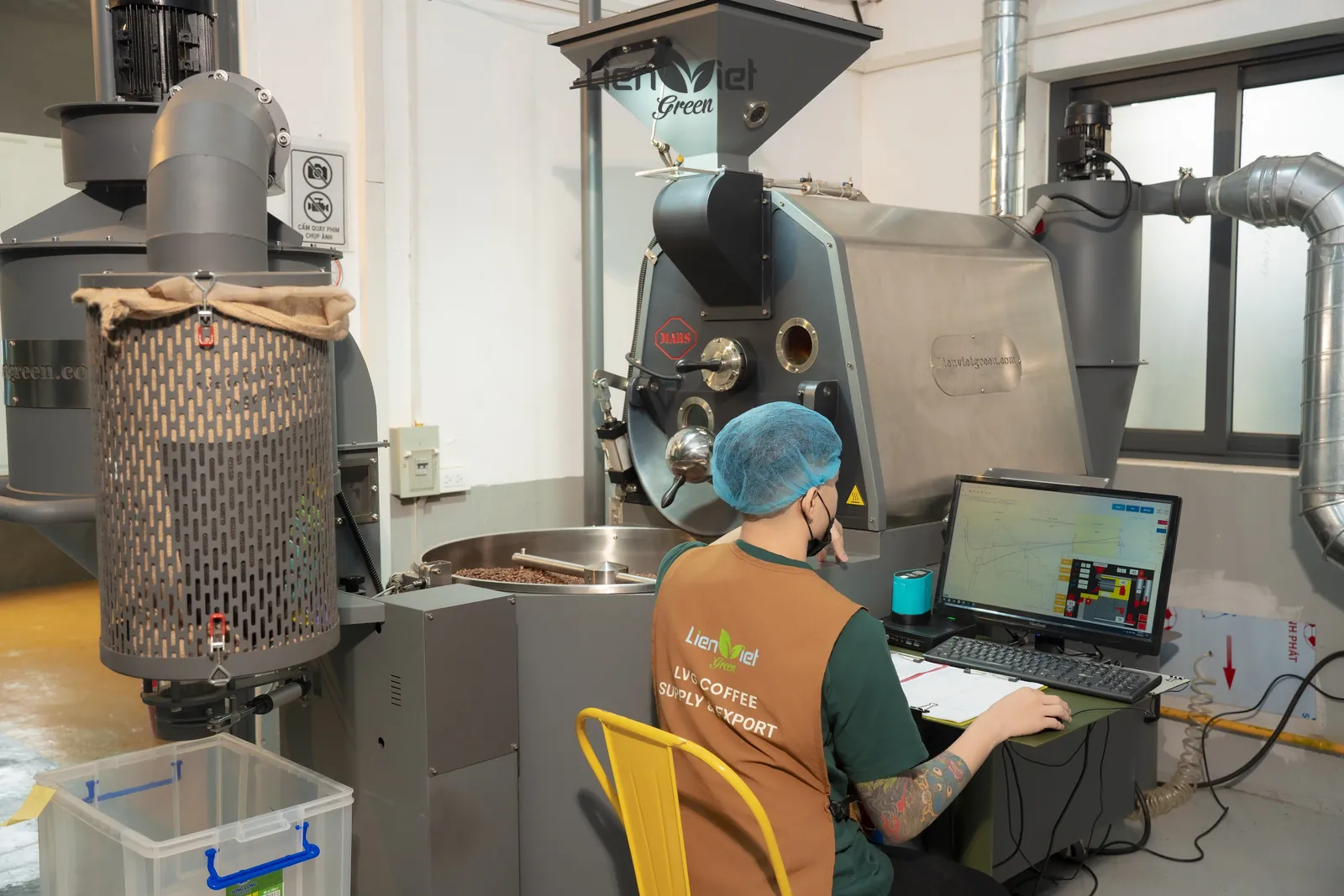
Drum roasters represent the established heritage design in commercial coffee processing. Green coffee charges into a horizontally rotating cylindrical drum positioned above a burner system. As the drum rotates, internal flighting paddles continuously agitate the bean mass, exposing it to the drum’s thermal environment.
Depending on drum engineering (single vs. double wall), thermal energy transfers through a combination of conductive heat (direct bean contact with hot drum surfaces), convective heat (airflow drawn through the drum), and radiant heat emitted from internal metal surfaces. Roastmasters manage burner gas pressure, drum rotational velocity, airflow dampers, and development time to craft target roast profiles.
Drum systems offer significant operational flexibility and have served across both commercial and specialty roasting sectors for decades.
How Heat Transfer Mechanics Influence Flavor Development
The defining distinction between Hot Air and Drum technologies is not raw heating capacity, but how thermal energy permeates the bean structure.
During roasting, beans undergo intricate chemical kinetics. The Maillard reaction creates melanoidins and foundational flavor precursors. Caramelization transforms sucrose into sweet, nutty, and aromatic complexity. The duration and temperature profile across each phase directly modulate perceived acidity, sweetness, mouthfeel body, and aftertaste.
Consequently, identical green coffee roasted across different thermodynamic systems can yield strikingly divergent cup characteristics.
A tendency, not a rule: bean density, machine design, operator expertise and profile calibration decide the final cup
Drum Roasting: Heavy Body and Deep Caramelized Profiles
Drum roasters inherently foster development curves characterized by prominent body, rich sweetness, and flavor profiles emphasizing chocolate, caramel, and toasted nut attributes. These tactile characteristics align effectively with espresso blends and traditional Vietnamese Phin brewing, particularly when the beverage concept demands robust mouthfeel, strong milk cut-through, and a lingering roasted finish.
However, this sensory orientation is a tendency rather than an absolute constraint. An expertly configured drum roaster operated with high convective airflow can produce bright, nuanced, fruit-forward specialty coffees. The ultimate cup profile remains governed by green bean density, machine design, operator expertise, and roast profile calibration.
Hot Air Roasting: Exceptional Cup Clarity and Terroir Expression
Because thermal transfer in Hot Air systems occurs predominantly through hot convective air currents, the roasting environment differs fundamentally from drum setups. When properly tuned, Hot Air roasting excels at producing clean-cup profiles with high sensory clarity, highlighting the unmasked terroir of the green coffee.
For high-grown Arabicas or refined Fine Robustas boasting delicate floral notes, fruit complexity, crisp acidity, and clean sweetness, Hot Air convection preserves these volatile top notes without overlaying heavy roasted or smoky tones. For specialty coffee applications, this clarity is a formidable operational advantage.
Does Hot Air Roasting Produce Better Coffee Compared to Drum Roasting?
The comparison cannot be reduced to a simplistic hierarchy.
“No roasting technology unilaterally guarantees better cup quality.”Lien Viet Green
A well-engineered drum roaster handling specialty-grade raw material under an experienced roastmaster consistently delivers high-quality specialty coffee. Conversely, an advanced Hot Air roaster operated with an uncalibrated curve can easily generate flat, baked, or underdeveloped coffee.
Comparative Summary: Hot Air vs Drum Roasters
Heat transfer, profile control and repeatability| Evaluation Metric | Drum Roaster | Hot Air Roaster |
|---|---|---|
| Primary heat transfer mechanism | Mixed: conduction, convection, and radiant heat | Convective hot air currents as the dominant transfer medium |
| Roast profile calibration | Flexible; requires balancing conductive drum heat and airflow | Highly responsive; driven by precise airflow velocity and air temperature |
| Thermal controllability | Governed by drum thermal mass, thermal inertia, and gas modulation | Rapid thermal response driven by direct air temperature and velocity |
| Batch-to-batch repeatability | Dependent on drum preheat stability, ambient drift, and operator oversight | Substantially higher repeatability when coupled with automated AI tracking |
| Evaluation Metric | Drum Roaster | Hot Air Roaster |
|---|---|---|
| Sensory tendencies | Viscous body, dense sweetness, prominent chocolate, caramel, and nutty notes | High cup clarity, clean aftertaste, pronounced expression of origin terroir |
| Fruit and floral retention | Modulated by contact time and conductive surface temperature | High retention potential due to uniform convective heating |
| Tactile body and mouthfeel | Tends toward heavy, rounded, and dense mouthfeel | Versatile; ranges from light and silky to medium-full based on curve design |
Note: This comparison reflects general technological dynamics. Specific flavor profiles can be modulated substantially by green bean selection and roast curve architecture.
Why Roast Profile Calibration Outweighs Machinery Selection
Roasting machinery provides the mechanical tool. The roast profile represents the strategic roadmap through which the roaster translates that tool into specific sensory outcomes.
A comprehensive roast profile encompasses far more than the drop temperature. The roastmaster must manage Rate of Rise (RoR), turning point dynamics, airflow volume, drying phase duration, the onset of First Crack, and post-crack Development Time Ratio (DTR).
If development progresses too rapidly, organic acidity remains sharp and unintegrated. If development stalls or drags excessively, volatile origin aromatics dissipate while astringency and baked bitterness dominate. The roastmaster’s task is determining the thermal equilibrium tailored specifically to each individual lot of green coffee.
Critical Variables Defining Roasted Batch Quality
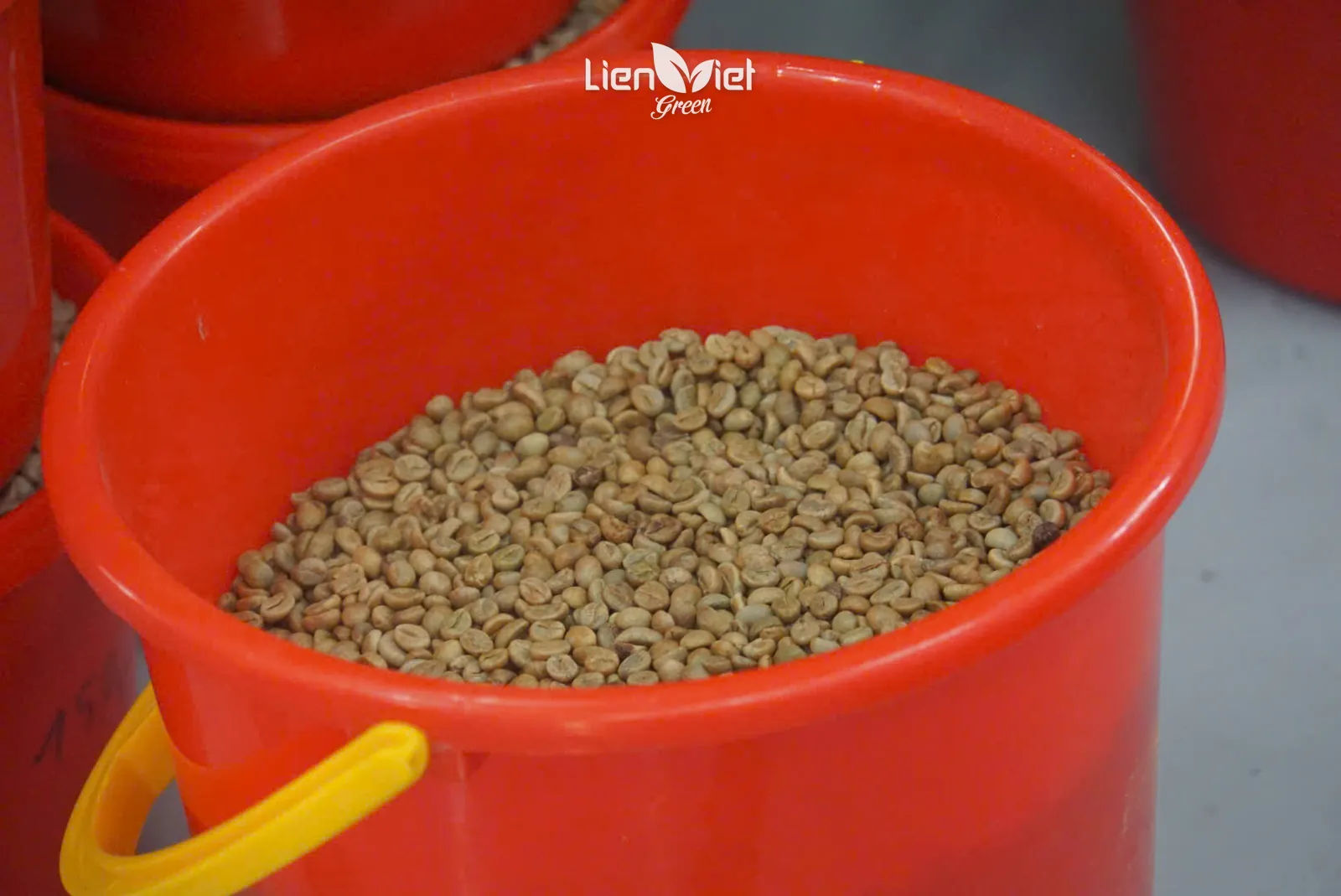
Technological evaluations are meaningless without addressing green coffee quality. Even the most sophisticated roast profile cannot elevate defective green coffee.
Seed Maturity and Cherry Ripeness
Cherry ripeness directly dictates green bean chemical density and precursor development. Selectively harvested ripe cherries exhibit higher sugar concentration and aromatic precursors. Batches with erratic ripeness respond unevenly to heat, creating inconsistent development within the same roast.
Moisture Content and Bean Density
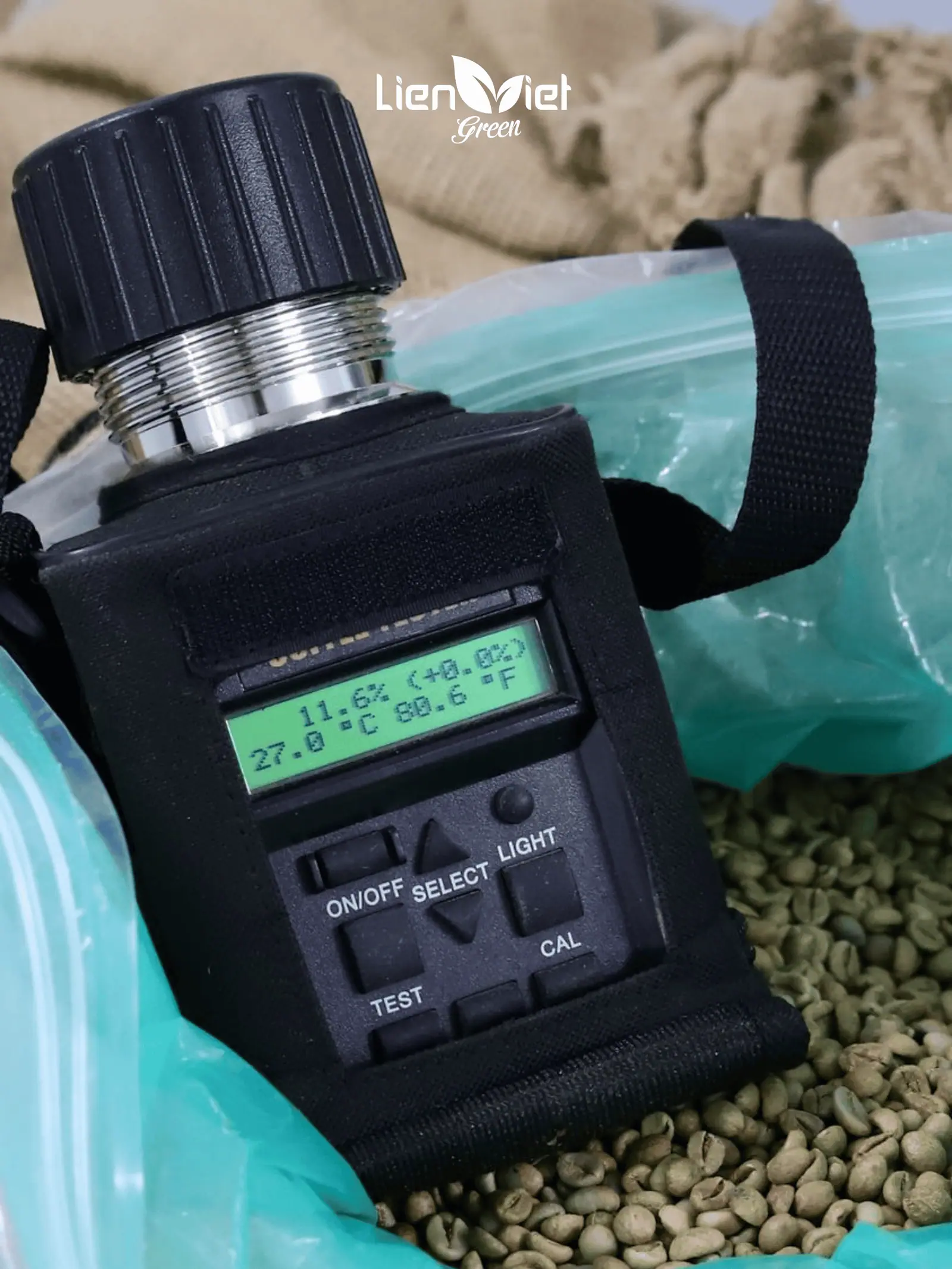
Moisture content (optimally 10.0%–12.0%) and bulk density govern how beans absorb and conduct thermal energy. Inconsistent moisture across a lot makes stable profile execution impossible, making pre-roast green bean inspection essential.
Post-Harvest Processing Method
Washed, Natural, Honey, and anaerobic fermentations exhibit differing physical structures and surface sugar content. Roasters must calibrate heat application accordingly; a single standard profile cannot be universally applied.
Batch-to-Batch Repeatability: The Ultimate Challenge for Commercial F&B
Crafting an exceptional single test batch is a technical baseline; sustaining identical quality across thousands of kilograms is the true commercial benchmark.
In multi-unit F&B chains, roast variation disrupts daily operations. If an espresso blend fluctuates in roast degree or density from shipment to shipment, store baristas must continually recalibrate grinders, dry dose, and shot times. Inconsistent coffee across outlets diminishes brand equity.
- Grinder setting
- Dry dose
- Shot time
AI-Monitored Hot Air Roasting: Precision Control for Scalable Production
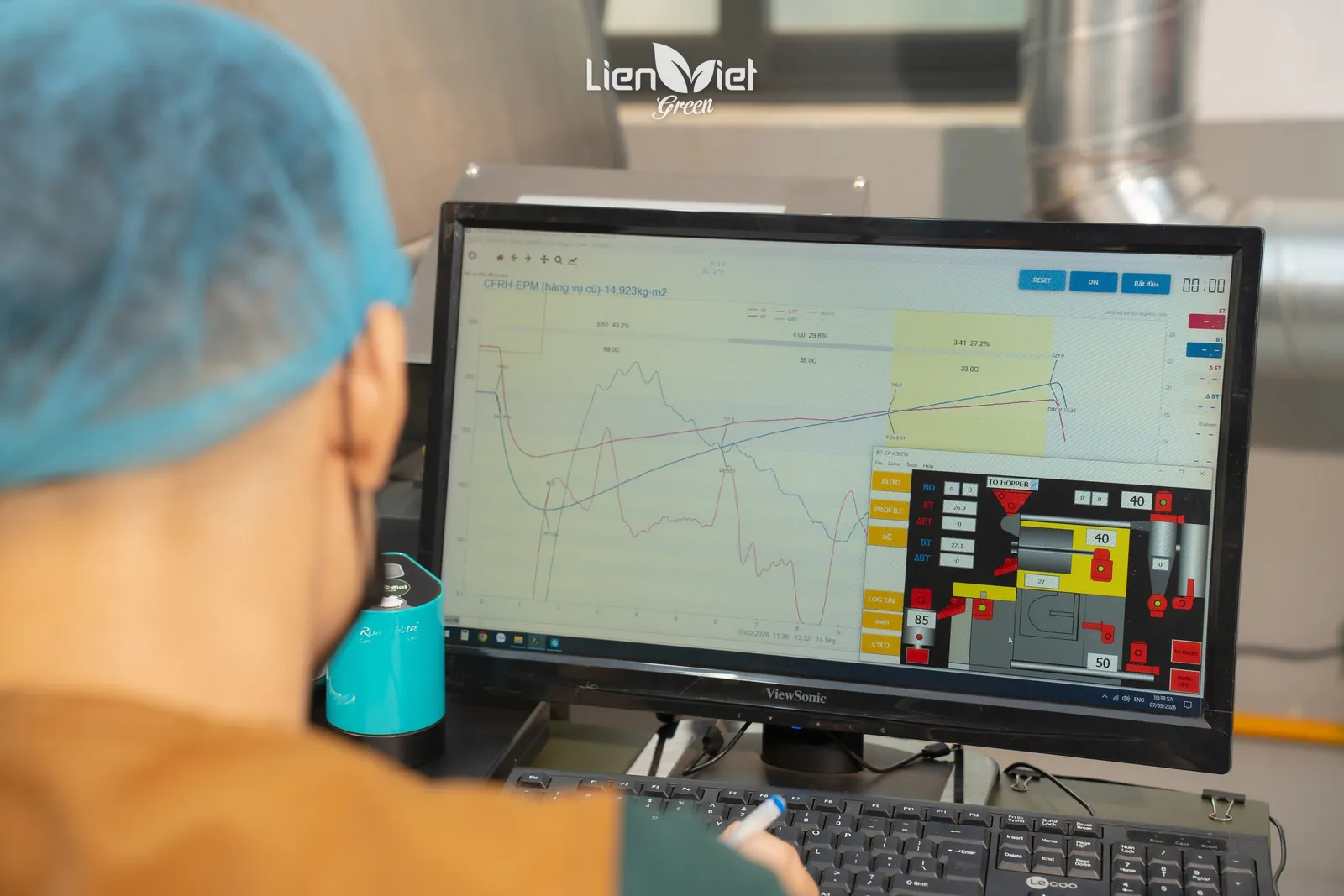
This need for absolute consistency defines Lien Viet Green’s manufacturing philosophy. At Lien Viet Green, industrial Hot Air convection roasting is integrated with AI process tracking to systematically manage roast curves and ensure lot-to-lot repeatability.
What the telemetry loop does- RecordReal-time thermal telemetry logged continuously
- TrackBean temperature, environmental temperature and RoR
- CompareAgainst the reference profile
- AdjustAutomated corrections preserve the target trajectory
- ReproduceIdentical results across consecutive production cycles
Rather than relying solely on subjective visual cues or operator intuition, real-time thermal telemetry is continuously recorded and analyzed. Digital curve tracking monitors bean temperature, environmental temperature, and RoR against reference profiles. When deviations occur, automated adjustments help preserve target roast trajectories. This precision is indispensable for high-volume commercial production, where the objective is perfect reproducibility across consecutive production cycles.
Managing Flavor Profiles with Data and Engineering
Lien Viet Green deployed Hot Air technology not merely for its modern appeal, but to build a disciplined system capable of measuring, controlling, and replicating roast profiles. Every product line requires defined sensory targets before profile engineering begins:
| Product line | Sensory target | Application |
|---|---|---|
| High-altitude Arabica | Preserving floral elegance, citric brightness, and sweetness | Specialty, filter and espresso single origins |
| Specialty Fine Robusta | Natural sweetness, rich body, and a clean, long finish | Signature Vietnamese lines |
| Commercial espresso blends | Balance of crema density, sweetness, and milk solubility | F&B chains, espresso bars |
| Traditional Vietnamese Phin blends | Darker caramelization, chocolate depth, and long-lasting strength | Phin filter brewing |
No universal recipe serves all concepts. Each raw material requires a dedicated profile; each profile requires precise control; each profile must be reliably reproducible.
When Should Commercial Operations Select Hot Air Roasted Coffee?
Hot Air roasted coffee is particularly advantageous for business models that prioritize:
- Uncompromising batch-to-batch consistencyBrands requiring identical flavor parameters across multi-batch production runs.
- Data-driven quality assuranceCompanies demanding documented telemetry and verifiable roasting metrics over subjective claims.
- Specialty Arabica and Fine RobustaPrograms focused on transparent terroir expression, clean cups, and delicate volatile aromatics.
- OEM/ODM private label brandsBusinesses requiring an industrial partner capable of translating lab-approved samples into full-scale commercial production.
- Expanding F&B chainsMulti-location chains where operational standardization across outlets is vital for customer retention.
Lien Viet Green – AI-Integrated Hot Air Roasting for Consistent Commercial Supply
Technology delivers value when it solves tangible operational problems. At Lien Viet Green, our technology solves a core commercial challenge: how can a brand preserve signature cup flavor as production volume scales? The solution integrates strictly graded green coffee, professional roasting expertise, and automated process control.
Our Hot Air systems continuously log roasting curves. Yet technology does not replace the human palate.
How technology enters production- AI tracks thermal dataCurves logged and compared batch by batch
- Roastmasters overseeSensory development guided by experience
- Q Graders verifyRigorous SCA cupping on every batch
- Consistent deliveryProfiles hold across every delivery cycle
From single-origin Arabica and Fine Robusta to customized commercial blends, Lien Viet Green delivers consistent taste profiles that maintain integrity across every delivery cycle.
Conclusion: Flavor Begins with the Seed, Defined by Roasting Technology
Drum and Hot Air roasters each possess distinct operational merits. Traditional Drum Roasters deliver rich body and deep caramelized profiles well-suited for classic blends. Hot Air convection roasters provide exceptional thermal responsiveness and cup clarity, highlighting origin characteristics and clean sweetness.
However, machinery alone cannot produce great coffee. Quality emerges from the integration of green coffee selection, post-harvest processing, calibrated roast profiles, operator craft, and rigorous quality control.
“An exceptional first batch demonstrates skill; delivering that identical profile on the hundredth batch represents true manufacturing excellence.”Lien Viet Green
Lien Viet Green – combining Hot Air convection roasting with AI-monitored profile tracking to support roasters, F&B chains, and OEM/ODM brands with stable, distinctive, and scalable coffee manufacturing.
Need a roast profile that holds from batch one to batch one hundred?
Send us a sample or a sensory target. Our roastmasters will build the profile on AI-monitored Hot Air equipment and ship test batches for your cupping.
See how we apply this in production in Hot Air roasting and batch consistency at Lien Viet Green.
To go deeper into curves, RoR and development time, read what a coffee roast profile is and how it shapes flavor.
Learn about our Hot Air roasted coffee for cafés and chains, or book a cupping at our Long Bien roastery to taste the difference yourself.
Sources: Coffee Quality Institute (CQI) Q Grader certification; Specialty Coffee Association (SCA) coffee standards.
Frequently asked questions
What is the difference between Hot Air and drum roasters?
The main difference is how heat reaches the beans. A drum roaster uses a rotating cylinder and combines conduction, convection and radiant heat. A Hot Air roaster surrounds the beans with a stream of hot air, so convection dominates. These different heat paths lead to different flavor tendencies.
Does Hot Air roasting make better coffee than drum roasting?
Not automatically. No roasting technology guarantees better coffee on its own. A well-run drum roaster can produce excellent specialty coffee, while a Hot Air roaster running an unsuitable profile can still produce unbalanced coffee.
Which flavors does Hot Air roasting tend to highlight?
When well controlled, Hot Air roasting supports clean-cup profiles with clarity that show the character of the green coffee. Drum roasting tends to favor pronounced body with chocolate, caramel and nutty notes. These are tendencies; the green coffee and roast profile decide the result.
What does a roast profile include?
A roast profile is the full heat history of a batch, not just the final temperature. It covers rate of rise, charge temperature, airflow, the timing of first crack and development time after first crack. Changing a single phase can change what ends up in the cup.
Which businesses benefit most from Hot Air roasted coffee?
Hot Air suits you if you need a profile that stays stable across production runs, want roasting data you can track, work with specialty Arabica or Fine Robusta, need OEM/ODM production that reproduces an approved sample, or run an F&B chain that needs the same taste in every store.