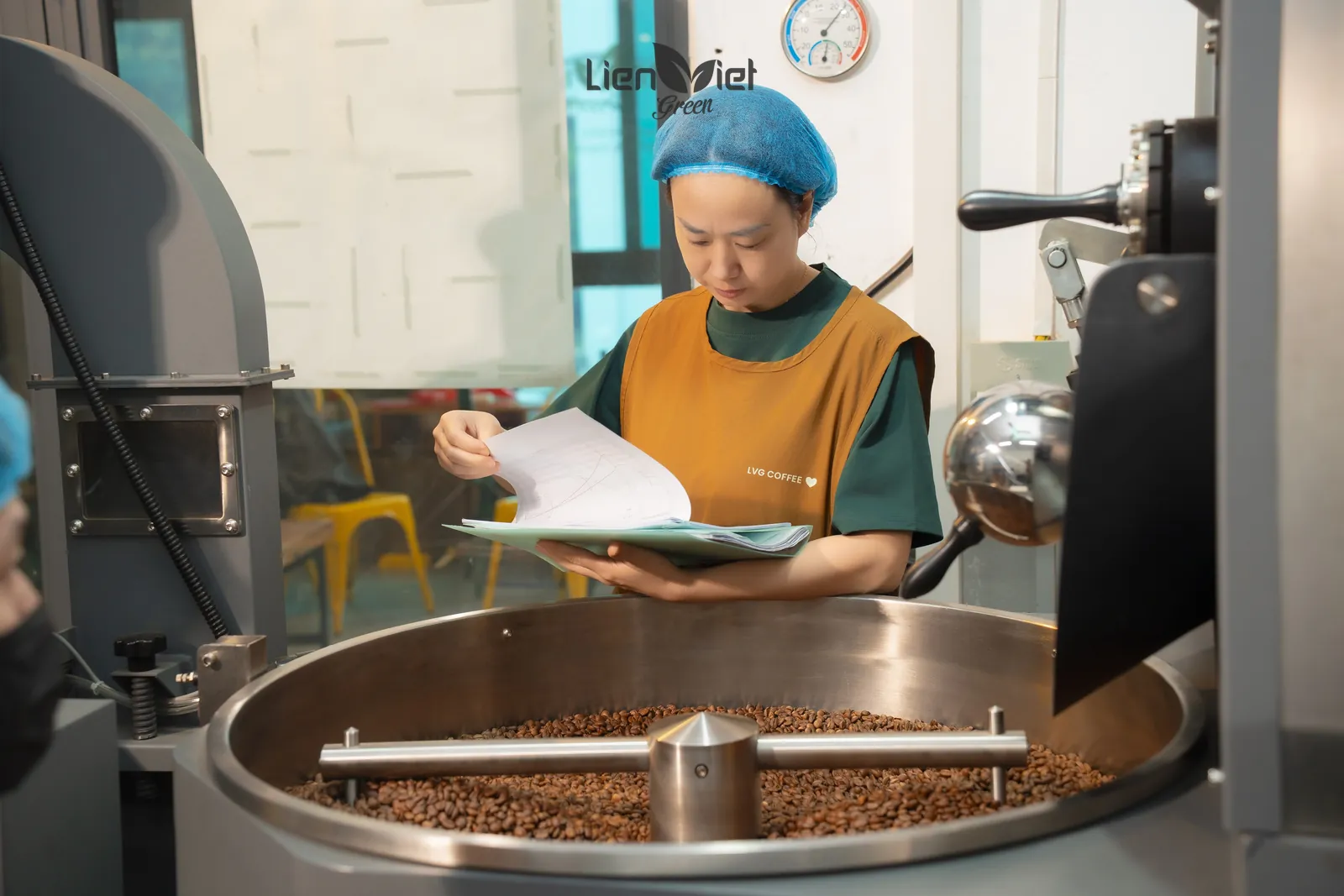
A coffee roast profile is the time-temperature record of a roast, tracking bean temperature, air temperature and Rate of Rise from charge to drop. Saving and repeating that profile is what lets a roaster shape flavor on purpose and keep every batch tasting the same.
What is a Coffee Roast Profile? Discover how roast profiling governs every flavor layer, master essential thermodynamics from Charge Temp to First Crack, and see how Hot Air technology ensures absolute batch consistency across thousands of production runs at Lien Viet Green.
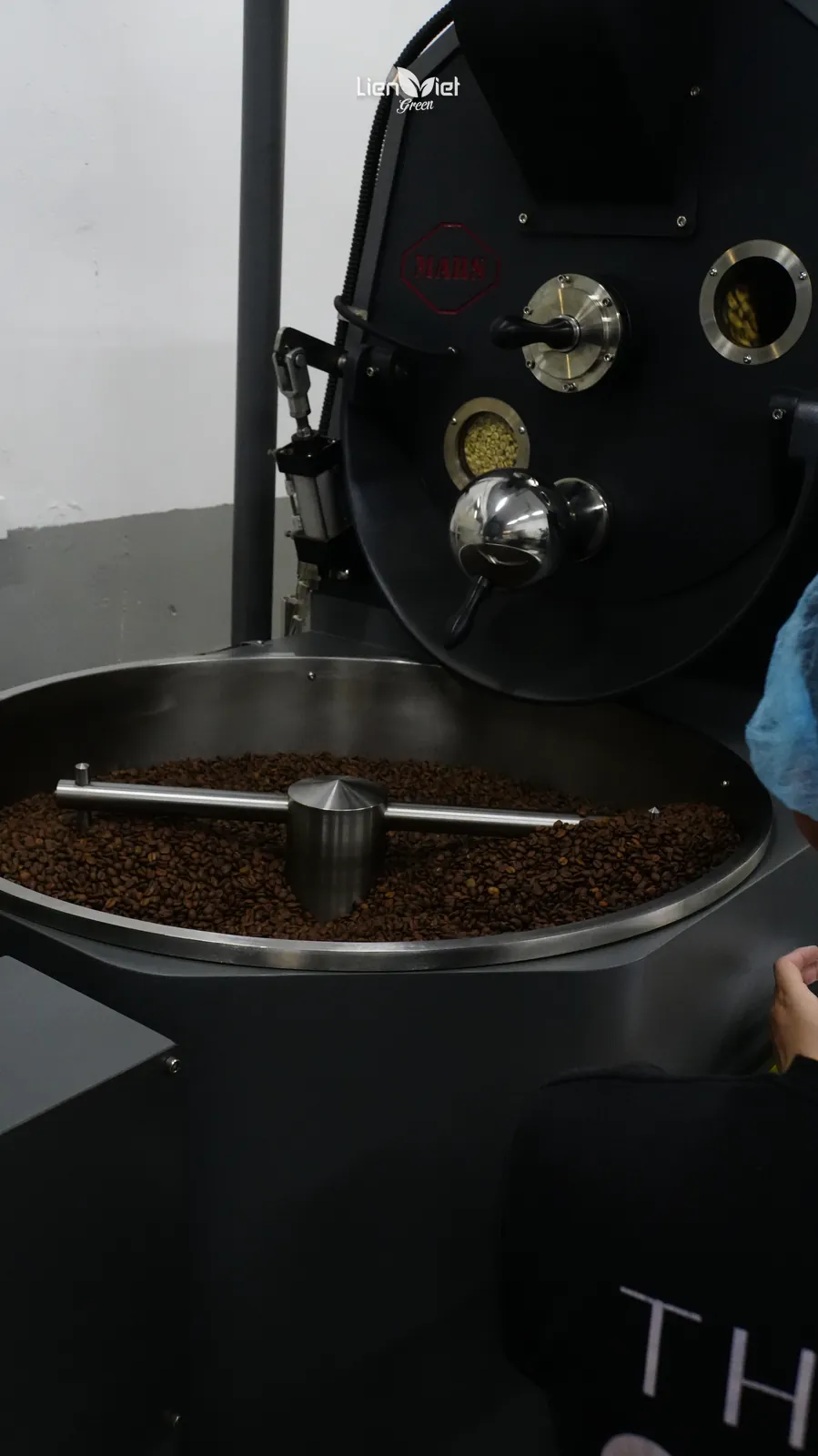
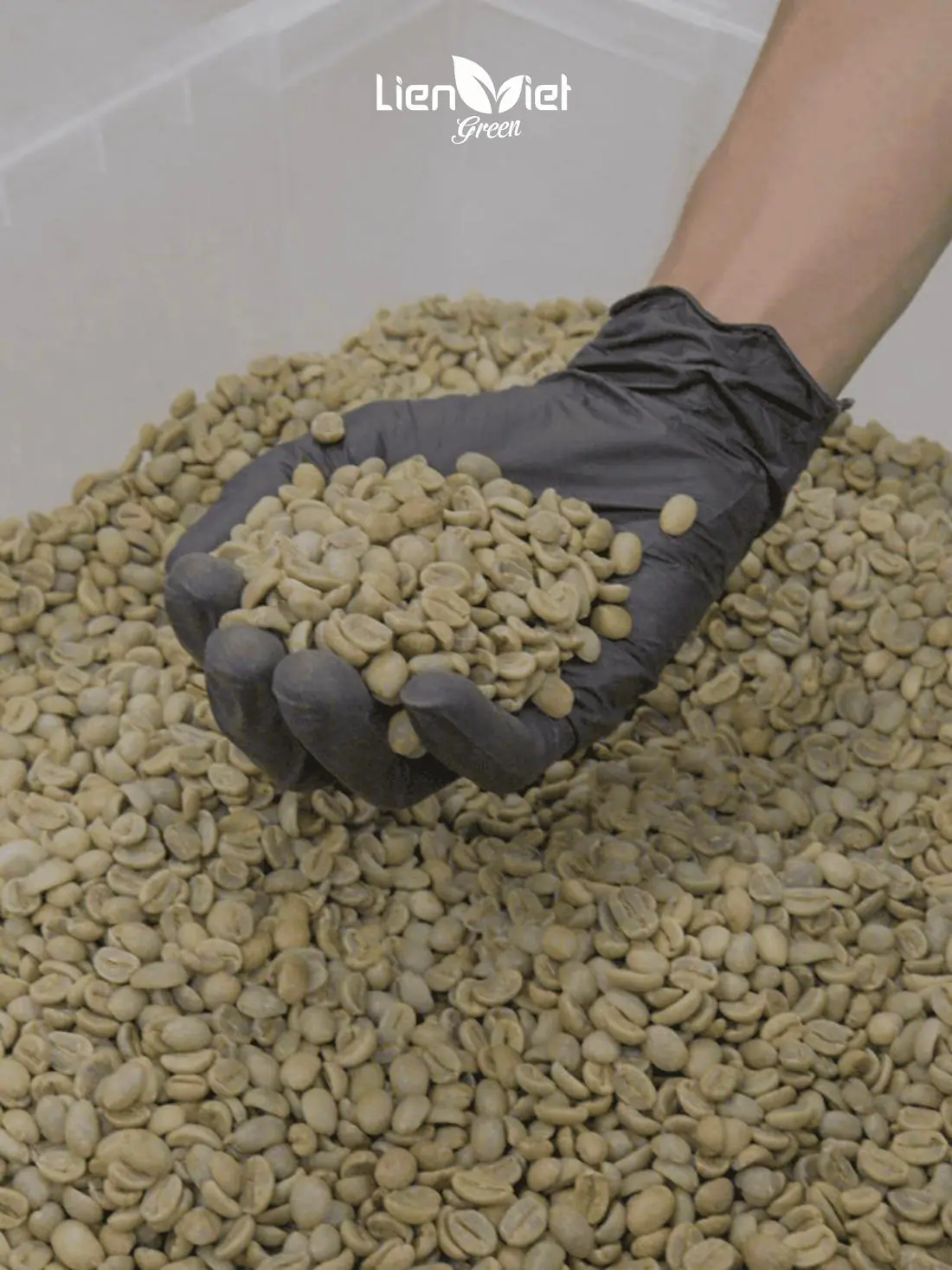
In specialty coffee and large-scale B2B contract manufacturing, cup quality goes far beyond farm origin or green bean botanical variety. Given the exact same lot of Cau Dat Arabica or Fine Robusta from Gia Lai, a slight deviation in heat transfer curves inside the drum can shift the flavor profile from vibrant berry acidity to acrid, smoky bitterness.
A Roast Profile serves as the architectural blueprint governing the physical and chemical development of the coffee bean. It is the definitive technical instrument enabling master roasters to steer Maillard reactions, preserve delicate organic acids, and maintain impeccable batch-to-batch consistency month after month.
What Is a Coffee Roast Profile and Why Does It Shape Cup Flavor?
A Roast Profile is a digital time-temperature graph tracking Bean Temperature (BT), Environmental Temperature (ET), and Rate of Rise (RoR) from charge temperature through drop point.
Chemical Architecture & Aroma
The profile dictates chlorogenic acid degradation, sucrose caramelization rates, and the synthesis of desirable aromatic esters.
Industrial Repeatability
Digitized profiles remove individual human guesswork, ensuring batch 100 tastes identical to batch 1.
Thermodynamic Roast Curve: In-Depth Analysis of BT, ET, and RoR
The following real-world roast profile diagram illustrates the thermodynamic progression of a 30kg batch of Cau Dat Arabica roasted on our automated Hot Air system:
Why Standardized Roast Profiles Are Mission-Critical for F&B Chains
For growing coffee brands, sensory inconsistency across franchise branches presents a major existential risk. Without profile automation, roasters suffer from thermal defects such as tipping, facing, scorching, or underdeveloped grassiness.
Quality Benchmark
| Performance Metric | Conventional Intuition-Based Roasting | Lien Viet Green Standardized Profile |
|---|---|---|
| Rate of Rise (RoR) | Uncontrolled fluctuations; frequent crashes and flicks | Smoothly declining RoR guided by PLC automation |
| Agtron Color Value | Variance of 4–8 Agtron points between production runs | Strict tolerance <1.0 point for absolute color precision |
| Core-to-Surface Development (DTR) | Underdeveloped grassy core with charred outer shell | Homogeneous through-core cook via 95% convective heat |
| Weight Loss (Shrinkage) | Erratic variance between 13%–19%, distorting COGS | Stabilized shrinkage with tight ±0.3% tolerance |
Three Core Thermodynamic Phases and Physical Bean Transformation
A typical production roast takes 9 to 14 minutes, transitioning through three distinct chemical and physical transformation stages:
- Drying Phase (Moisture Loss)
- Maillard Reaction (Aroma Genesis)
- First Crack Milestone
- Development Phase (Flavor Balance)
- Rapid Cooling <180s
Phase 1: Drying Phase (0°C – 155°C). Free water evaporates from cellular matrix. Beans shift from jade-green to pale yellow (Yellowing Point), emitting aromas of dried hay.
Phase 2: Maillard Reactions (155°C – 198°C). Reducing sugars and amino acids react vigorously, synthesizing hundreds of volatile aromatic compounds and color-bearing melanoidins.
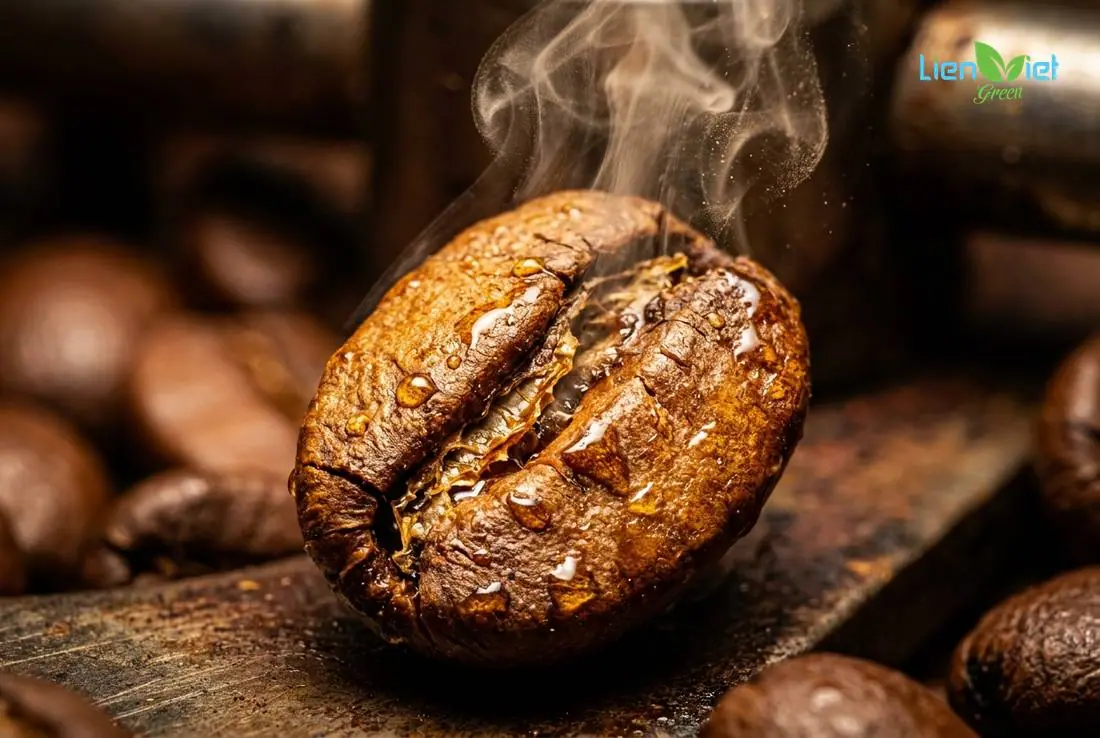
Phase 3: Development Phase (198°C – Drop). Commencing at First Crack, internal water vapor pressure reaches 25 atm, fracturing bean cell walls and releasing peak aromatic oils.
Development Time Ratio (DTR) Control and the Agtron Flavor Spectrum
The Development Time Ratio (DTR) measures the proportion of time elapsed between First Crack and drop relative to total roast time. This is the single most sensitive dial determining the balance between bright acidity and rich body:
Lien Viet Green designs custom roast profiles engineered specifically for your beverage menu.
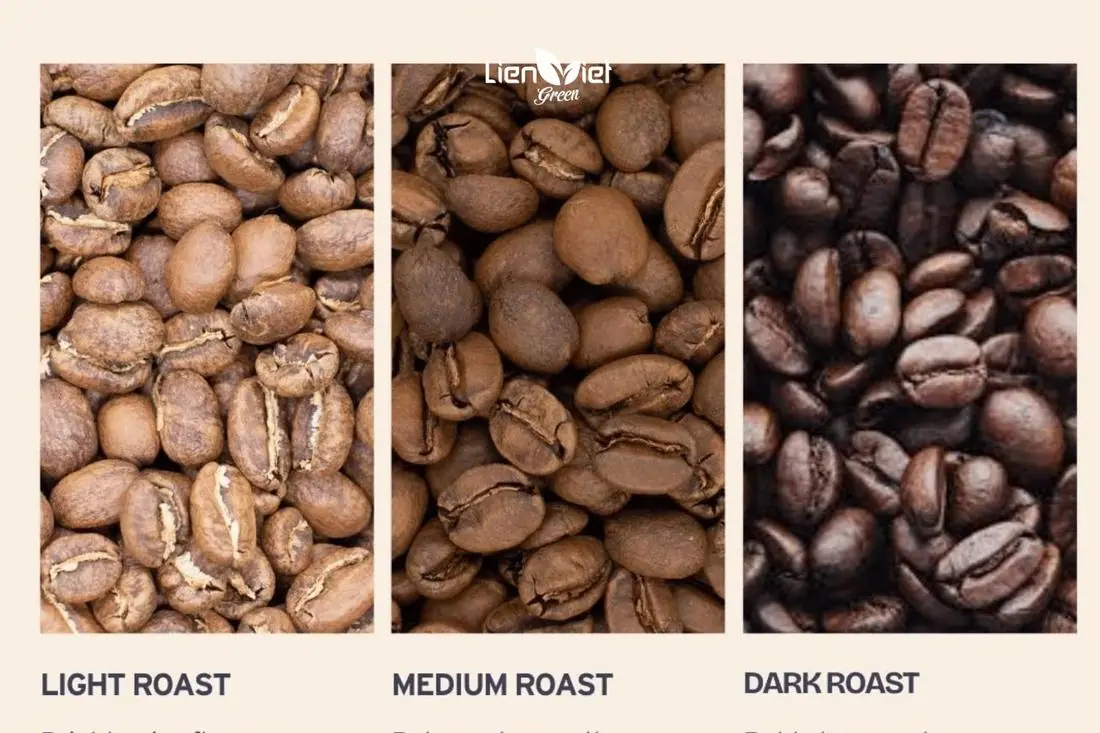
Each roasting degree maps to specific commercial beverage applications. For contemporary espresso bars, Lien Viet Green balances DTR precisely between 15.5% and 16.5% to eliminate sour astringency while preserving prolonged caramel sweetness and dense, persistent crema.
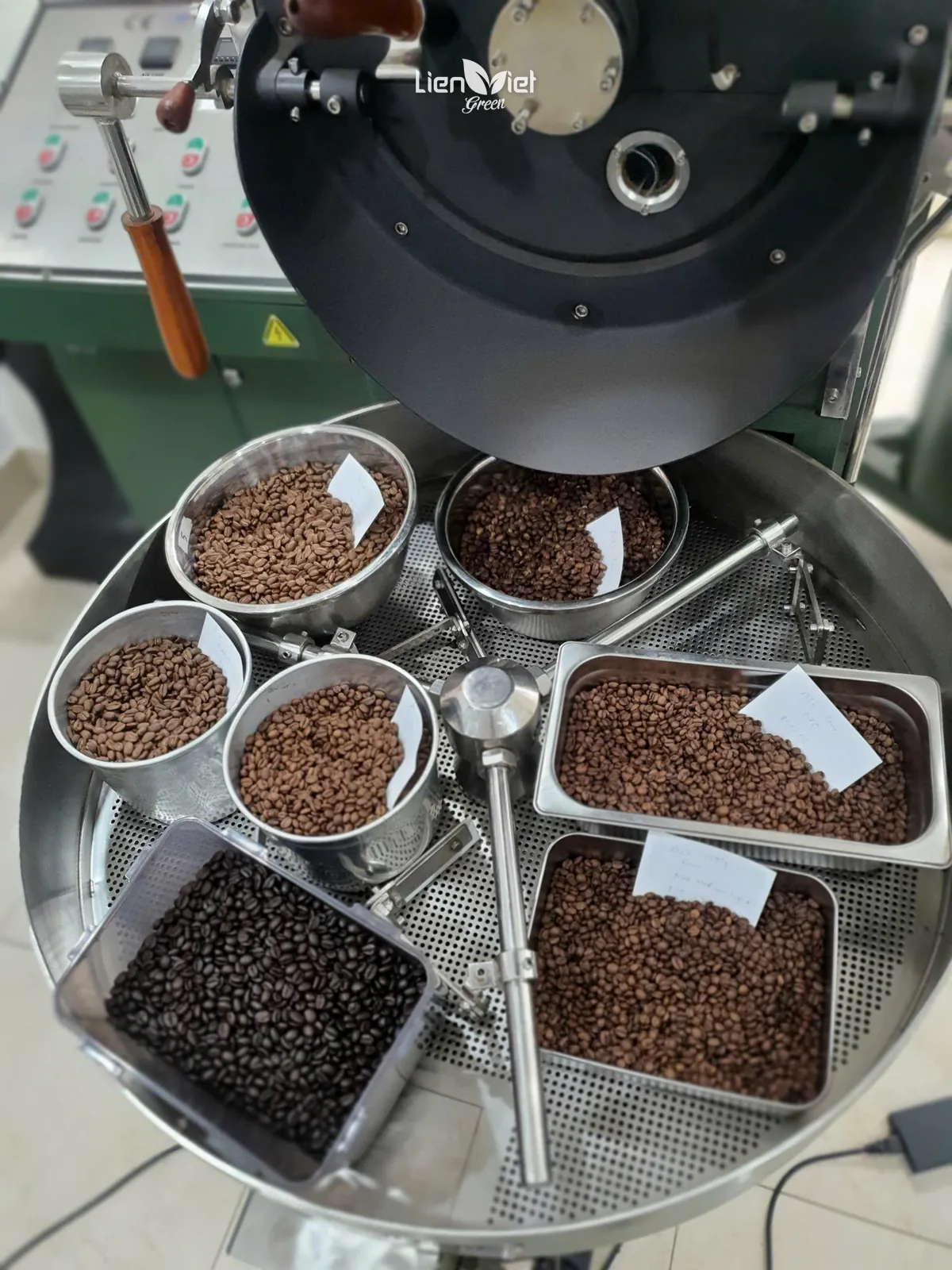
All roast batches are cross-checked against our physical colorimeter swatch boards in our R&D sensory laboratory.
Convective Hot Air Technology: Eliminating Roasting Errors & Scorching
On traditional direct-contact drum roasters, excessive conductive metal contact frequently scorches the bean surface during rapid heating. At Lien Viet Green, we deploy forced-recirculation Hot Air convective roasting:
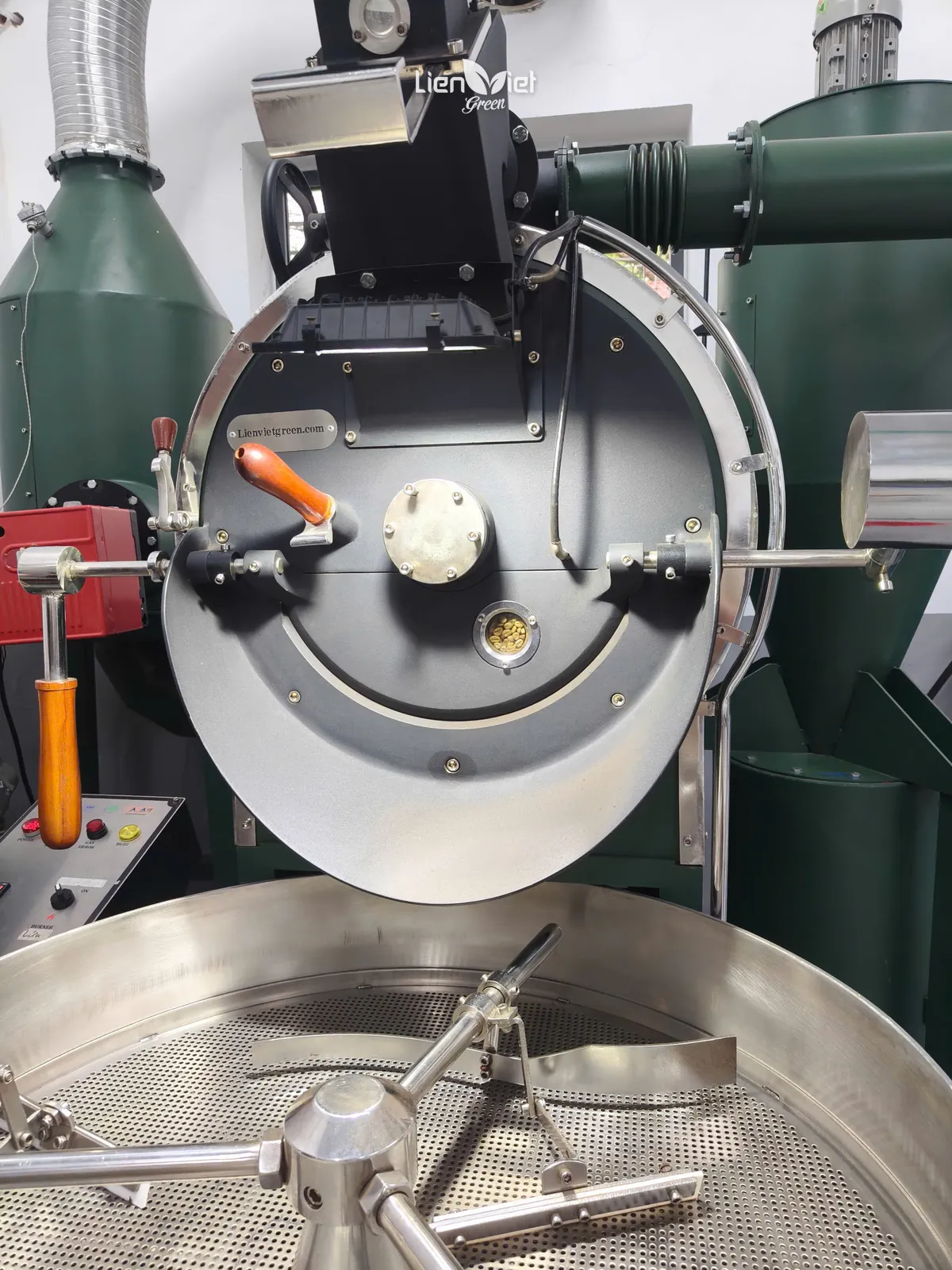
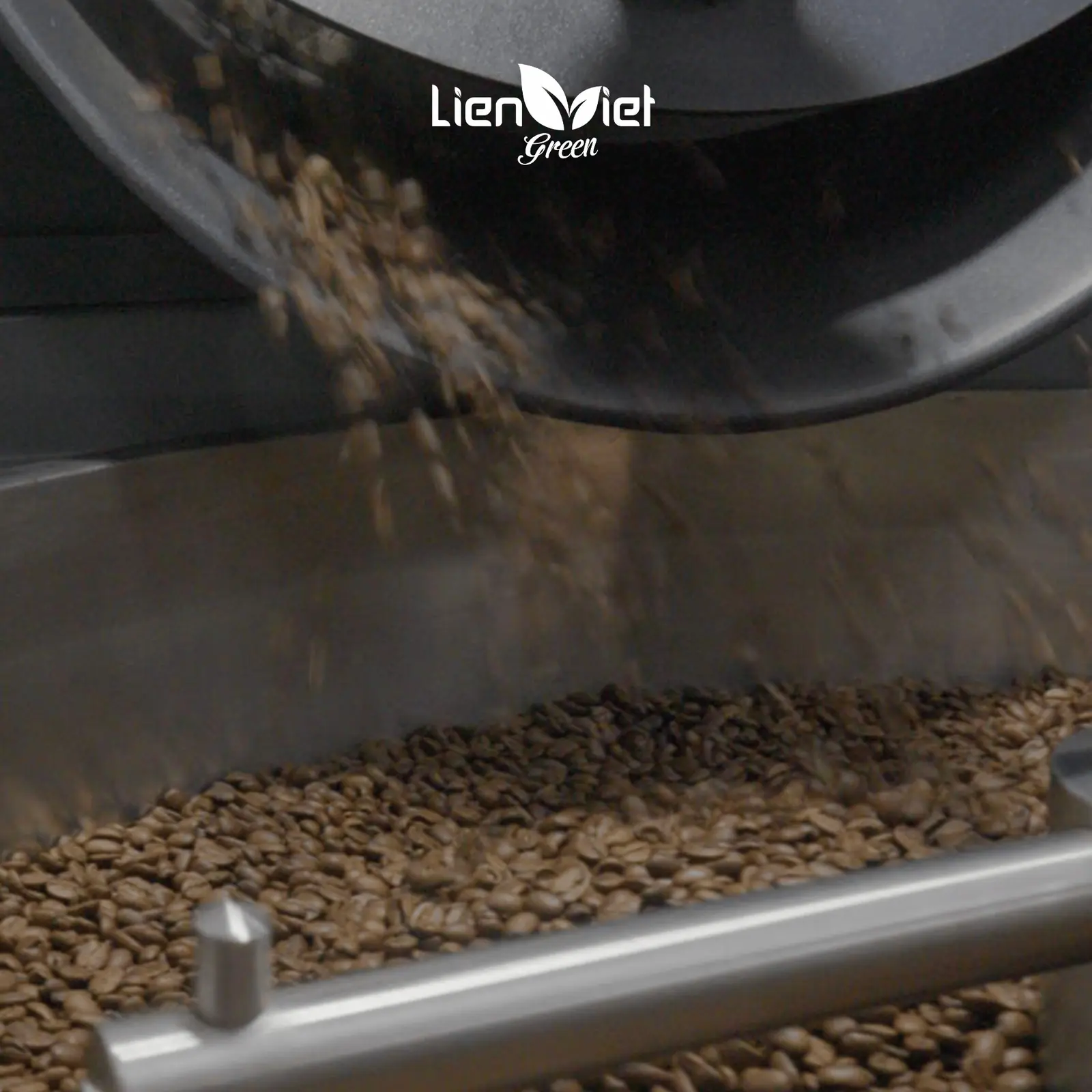
Heat Transfer Mechanics: 95% of thermal energy is delivered via high-velocity recirculating heated air enveloping beans in 360-degree suspension. Heat penetrates deep into the inner bean core independently of metal wall conduction.
Consequently, roast masters can safely drive high initial RoR to streamline drying without risking tipping, facing, or burnt acrid notes.
The 8-Step Custom OEM Roast Profile Development at Lien Viet Green
Lien Viet Green implements an 8-step industrial process enabling B2B clients to create signature, proprietary coffee profiles:
- 1Brand sensory survey
- 2Origin & variety selection
- 3Micro-batch sample roasting
- 4Q Grader sensory cupping
- 5Agtron color validation
- 6Barista extraction testing
- 7PLC digital profile lock
- 8Consistent commercial batching
Implementation Sequence
- Requirement GatheringIdentify target demographic, primary brew methods, and commercial COGS targets.
- Multi-Profile TestingRoast 3–5 candidate profiles to pinpoint the optimal balance of acidity, sweetness, and body.
- Sensory CuppingEvaluate clean cup, fragrance, aftertaste, and balance with our certified Q Graders.
- Production Parameter LockArchive digital PLC profile curves into industrial roasters for ongoing wholesale fulfillment.
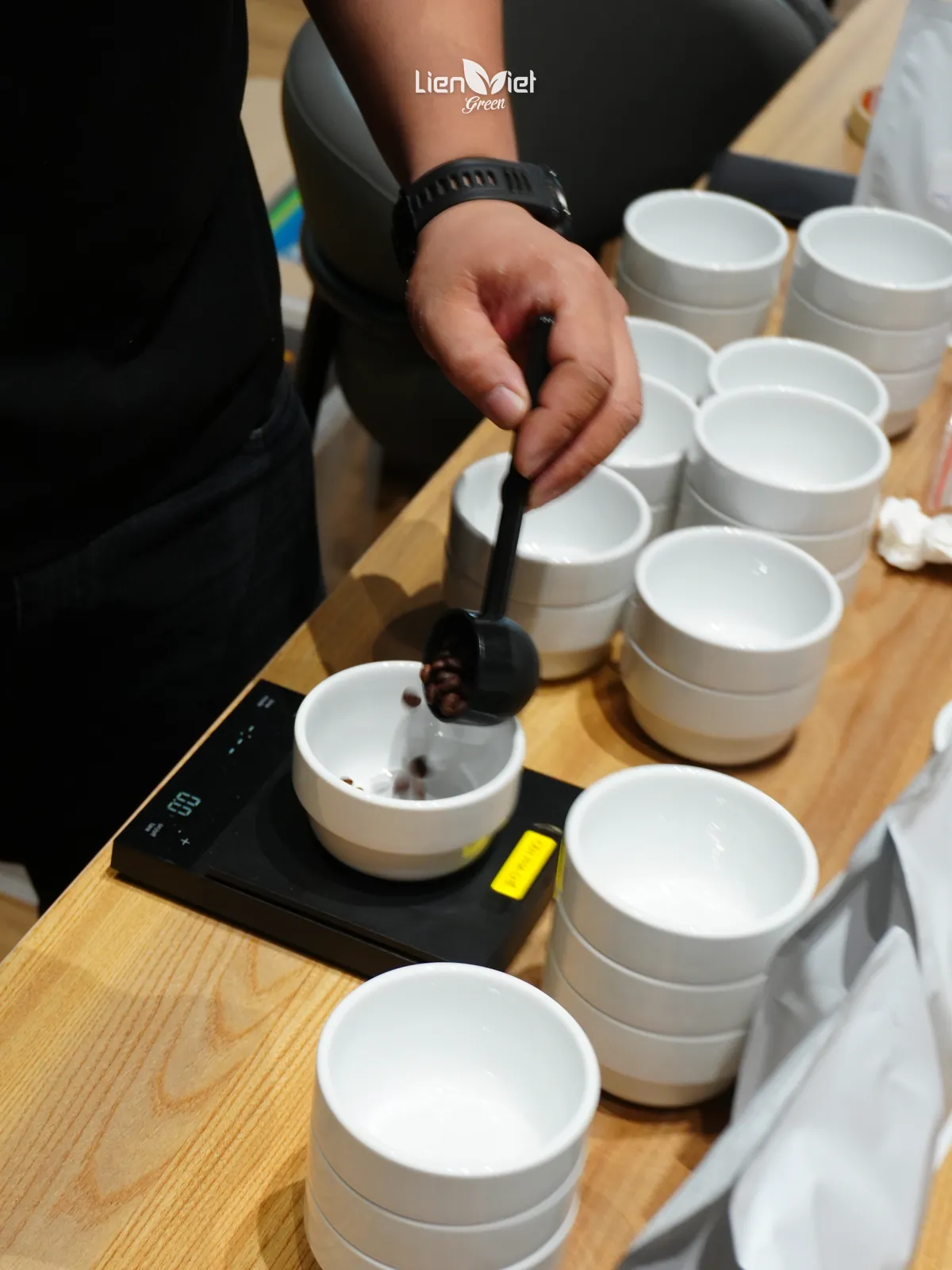
Every commercial production batch undergoes strict cupping protocol evaluation against SCA scoresheets. Our QA team audits live machine curve logs against sensory tasting results prior to final warehouse release.
This rigorous technical adherence provides F&B partners with the confidence to expand multi-unit operations without quality drift.
Conclusion: Standardized Roast Profiling – The Bedrock of F&B Chain Growth
“The art of roasting is understanding the bean; industrial mastery is replicating that perfection thousands of times without a second of drift.”Engineering & Roastery Operations, Lien Viet Green
Establishing an exclusive roast profile and standardizing manufacturing parameters represents a vital strategic milestone for F&B businesses seeking distinct brand differentiation, cost predictability, and lasting customer loyalty.
Looking to Build a Proprietary Roast Profile or Consistent OEM Roasting?
Partner with Lien Viet Green to consult with certified CQI Q Graders, receive complimentary roasted trial samples, and leverage our Hot Air roasting facilities.
The two audible milestones on every curve are covered in First Crack and Second Crack in coffee roasting explained.
Roast color is checked against the profile with an instrument; learn how the Agtron scale measures roast degree.
If your chain needs one roast profile locked in for every branch, see how we roast for cafés and F&B chains, or book a cupping at our Long Bien roastery.
Sources: Coffee Quality Institute (CQI) Q Grader certification; Specialty Coffee Association (SCA) coffee standards; ISO 22000:2018 on the ISO website and Lien Viet Green roastery ISO 22000:2018 certificate.
Frequently asked questions
What does a roast profile include?
A roast profile records bean temperature (BT), the air temperature in the roasting chamber (ET) and the Rate of Rise (RoR). The data is logged from the moment the beans are charged until the batch is dropped.
Why do F&B chains need a standardized roast profile?
Without a set profile, beans are easily scorched on the outside or underdeveloped inside, and flavor drifts between branches. A saved, repeatable profile keeps batches steady in color, taste and weight loss.
What is DTR in coffee roasting?
DTR, or Development Time Ratio, is the time from First Crack to drop as a share of total roast time. A low DTR gives bright acidity and berry notes; a high DTR gives bold chocolate flavor and heavier body. For espresso, Lien Viet Green targets about 15.5–16.5%.
How does Hot Air roasting keep a profile stable?
Hot Air roasting transfers heat mainly through hot air surrounding the beans rather than through the metal drum. Beans cook evenly to the core with less tipping and scorching, which makes the same profile easier to repeat.
How can my café get its own roast profile?
Lien Viet Green surveys your taste preferences, selects origins, roasts several options, cups them with a Q Grader and your team, then locks the settings for repeat orders. You can start by booking a cupping at the roastery.