OEM Coffee Packaging: Why One-Way Degassing Valves Are Essential
Understand the physics of post-roast CO2 degassing and how integrated one-way valves protect aromatic oils, prevent bag rupture, and eliminate oxidative rancidity for private label coffee.
📌 Technical Specifications of One-Way Degassing Valves
- Post-Roast CO2 Volume: Freshly roasted coffee releases 2 to 5 liters of carbon dioxide per kilogram over 7 to 14 days.
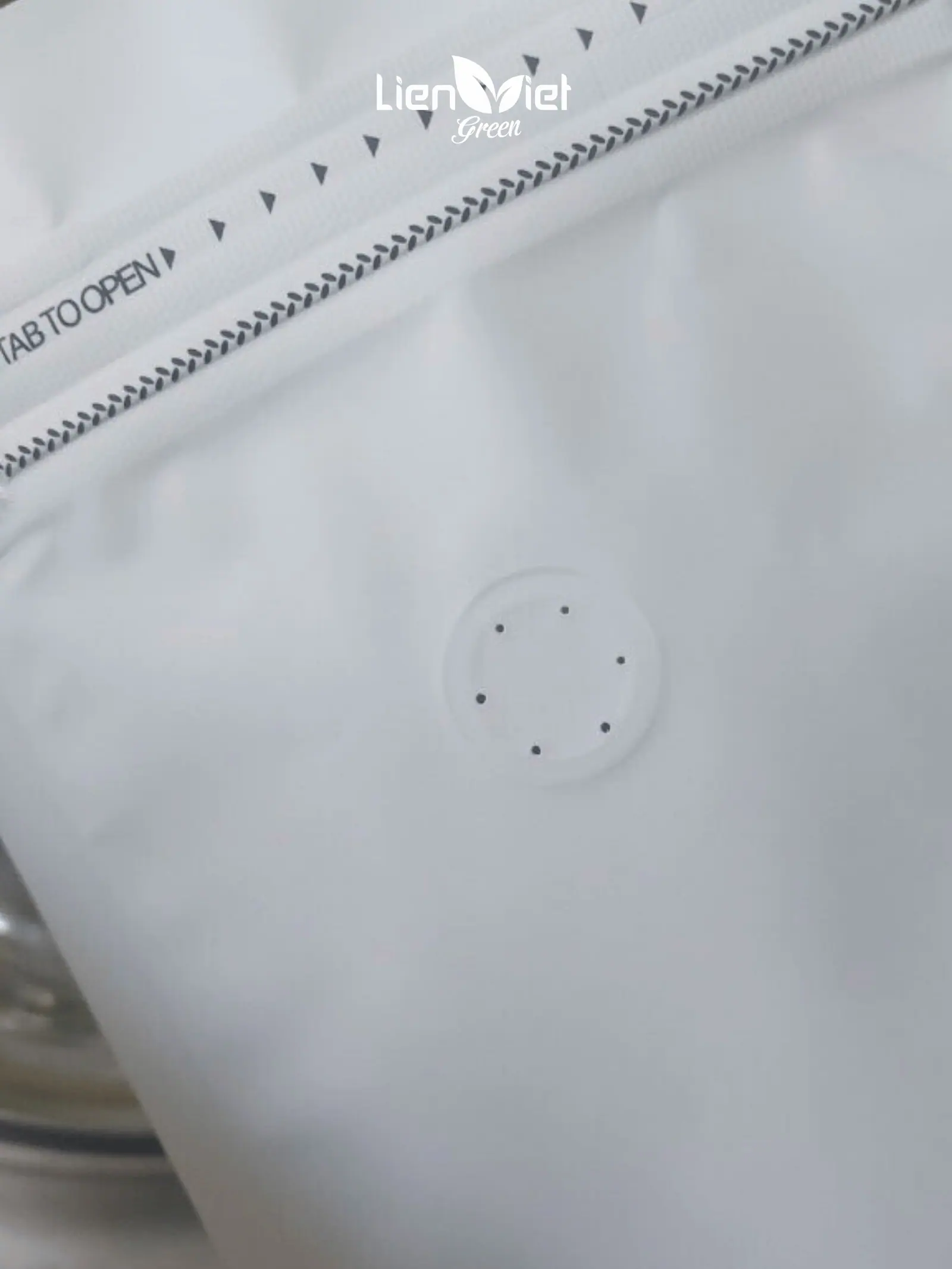
- Valve Hydro-Mechanical Principle: Internal silicone diaphragm opens automatically when package pressure exceeds ambient, sealing shut instantly when equalized.
- Anti-Oxidation Defense: Prevents 100% of atmospheric oxygen from infiltrating the bag, maintaining essential lipid compounds.
- Multi-Barrier Laminate Structure: 3-4 layer foil laminates (PET/AL/PE or Kraft/AL/PE) providing maximum UV and moisture isolation.
1. The Science of Carbon Dioxide Degassing in Roasted Coffee
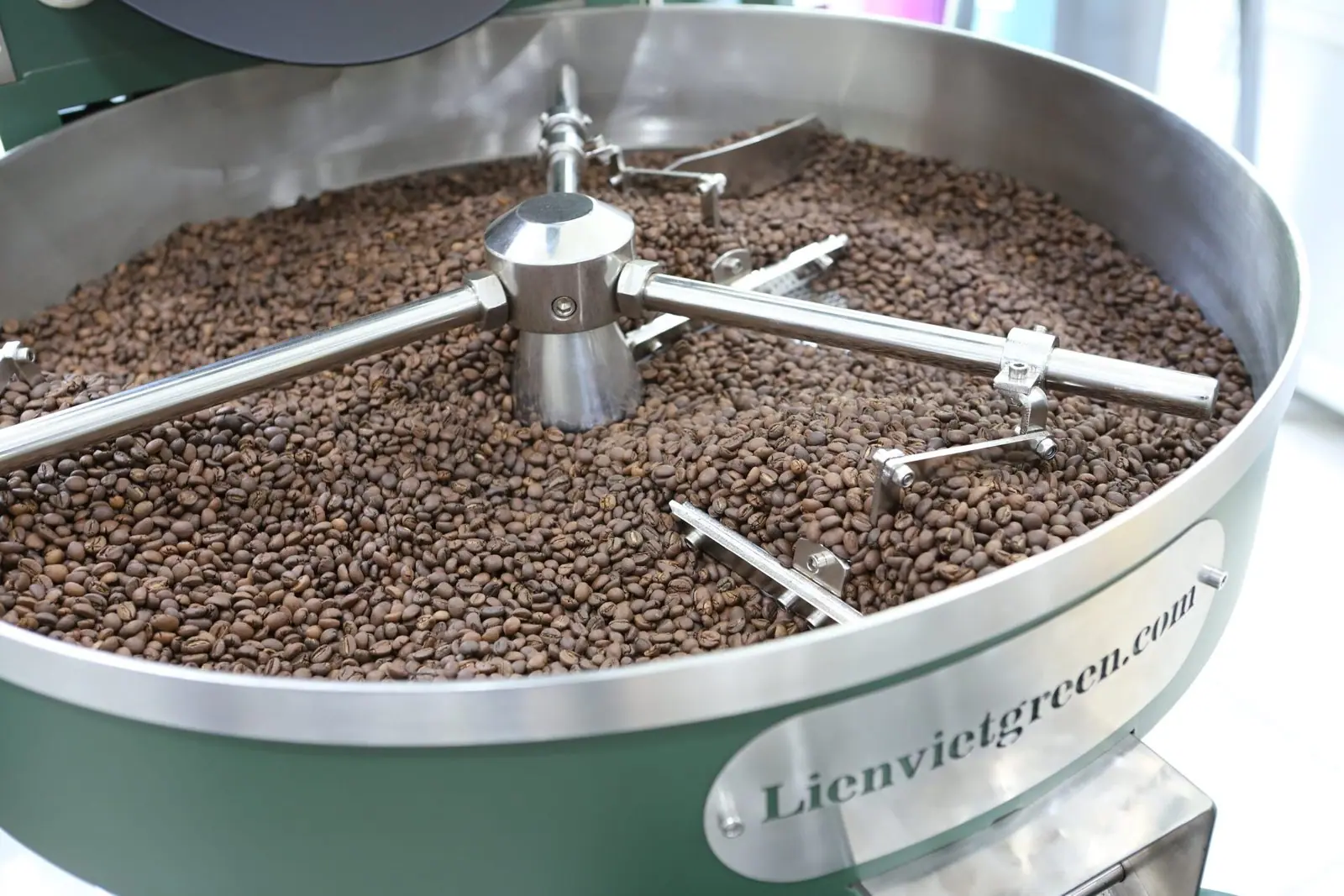
Thermal pyrolysis during roasting breaks down sugars and cellular structures, trapping high concentrations of carbon dioxide within the bean’s microporous matrix. Immediately following cooling, beans begin active degassing.
Sealing freshly roasted coffee in non-valved airtight packaging causes rapid pressure buildup, leading to severe bag inflation and seam rupture during transit.
2. Comparative Shelf-Life Impact Across Packaging Formats
| Packaging Format | Degassing & Barrier Mechanism | Flavor Shelf-Life Window | Technical Failure Risk |
|---|---|---|---|
| Standard Paper / Poly Bag (No Valve) | Zero oxygen barrier, no CO2 relief valve | 7 – 14 days max | Rapid lipid oxidation, 80% aroma loss within two weeks |
| Sealed Foil Bag (No Valve) | Airtight seal without pressure relief | 30 days | Severe package ballooning, seam bursting during air/land transport |
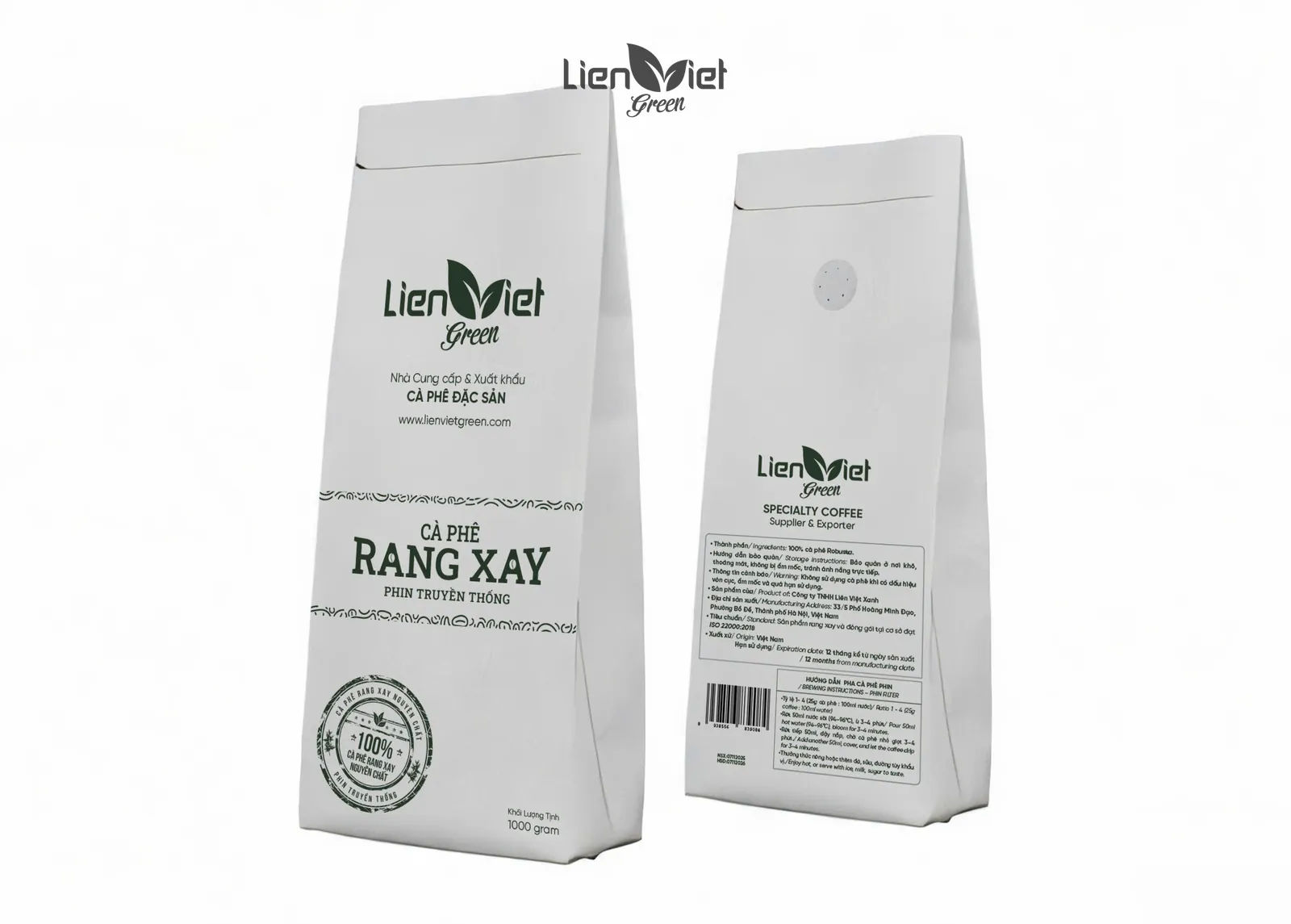
| 4-Layer Laminate + One-Way Valve (Lien Viet Green) | Continuous CO2 release + 100% O2/UV blocking | 12 – 18 months | Complete aromatic integrity preservation, safe long-haul shipping |
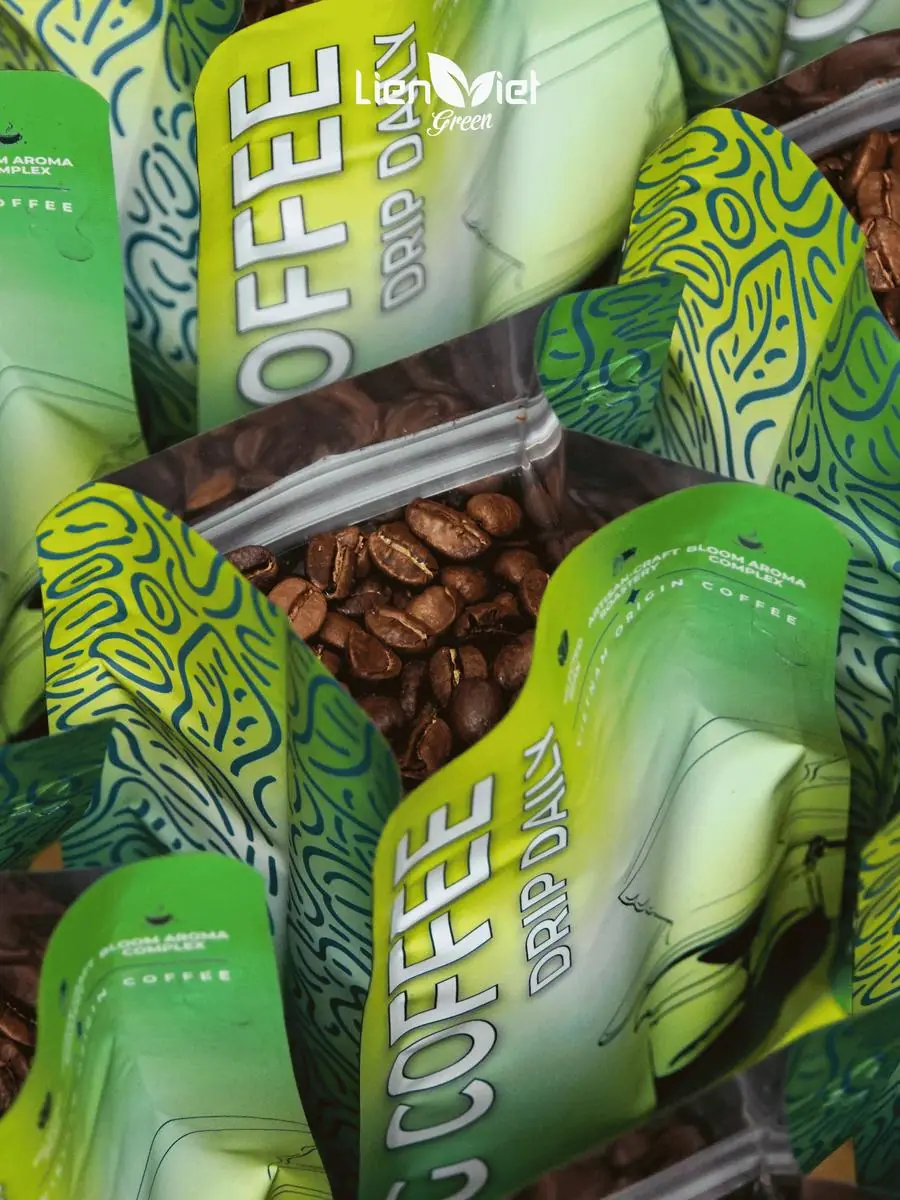
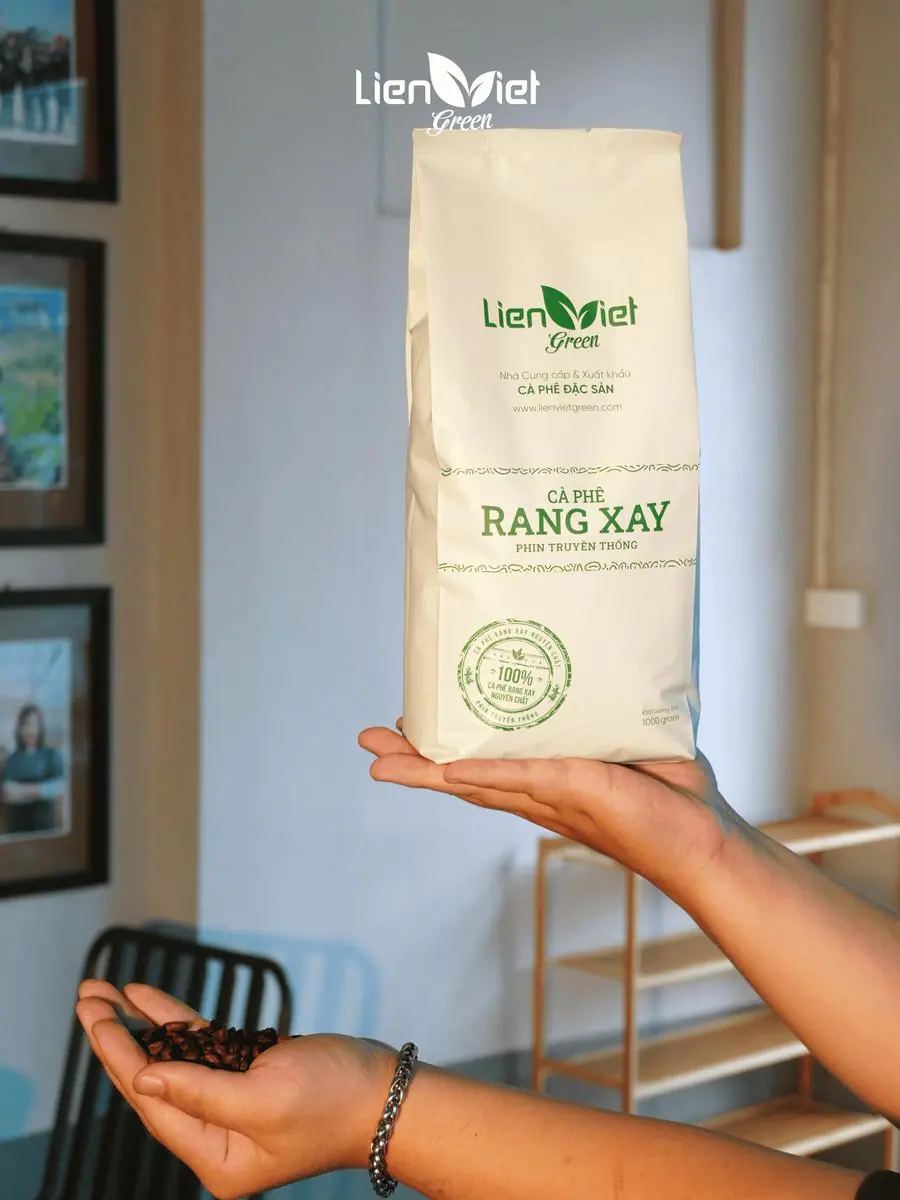
Once the bags reach your shelves, follow our guide to storing roasted coffee beans in commercial cafés.
Packaging is one part of a larger project, covered in our article on custom roasting and packaging OEM for enterprises.
To develop valved bags printed with your brand, start with our OEM and private-label coffee service. Want to taste before you decide? book a cupping at our Long Bien roastery.
Frequently asked questions
Why do coffee bags have a one-way valve?
Freshly roasted coffee keeps releasing carbon dioxide. A one-way valve lets that gas escape while stopping outside air from getting in, so the bag does not balloon or burst and the coffee is protected from oxidation.
How does a one-way degassing valve work?
Inside the valve is a flexible diaphragm. When pressure in the bag rises above the outside air, it opens to vent CO2, then closes again once the pressure evens out, keeping oxygen out.
What happens if roasted coffee is sealed without a valve?
Carbon dioxide builds up inside the bag. In an airtight foil bag this causes ballooning and can split the seams during transport, while unsealed paper or poly bags let oxygen in and the aroma fades quickly.
What packaging material is used for OEM coffee bags with valves?
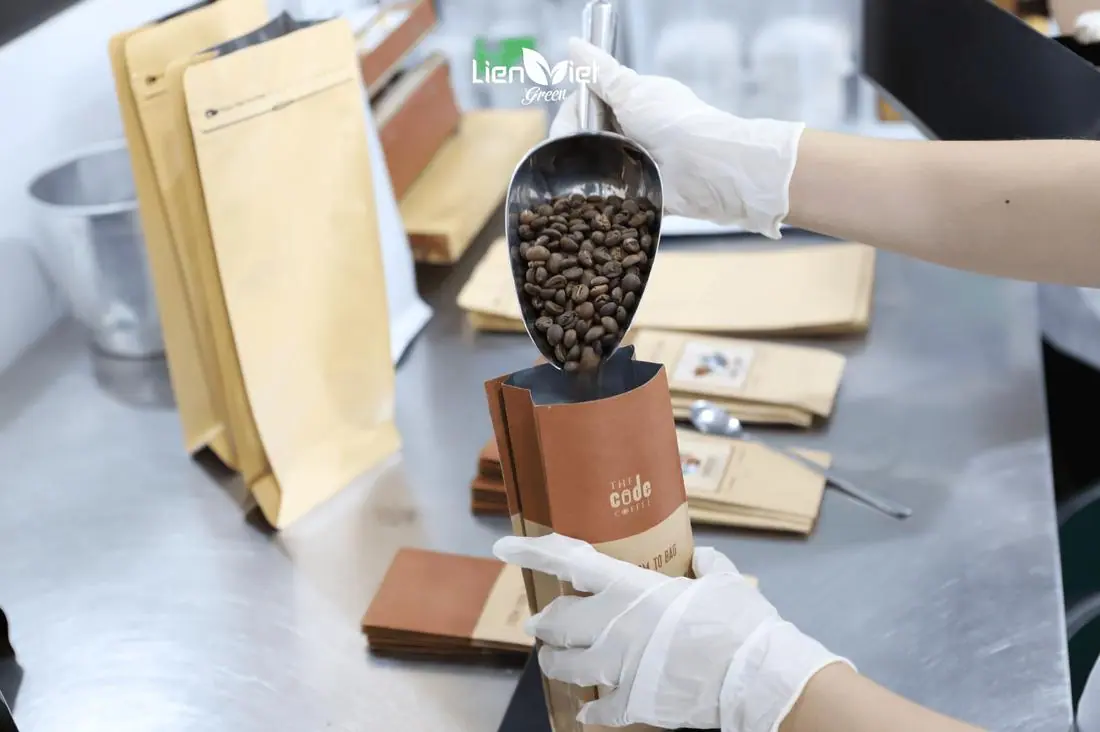
Multi-layer foil laminates such as PET/AL/PE or Kraft/AL/PE are common. The foil layer blocks light, moisture and oxygen, and the one-way valve is heat-sealed into the bag.
Can Lien Viet Green print private-label coffee bags with degassing valves?
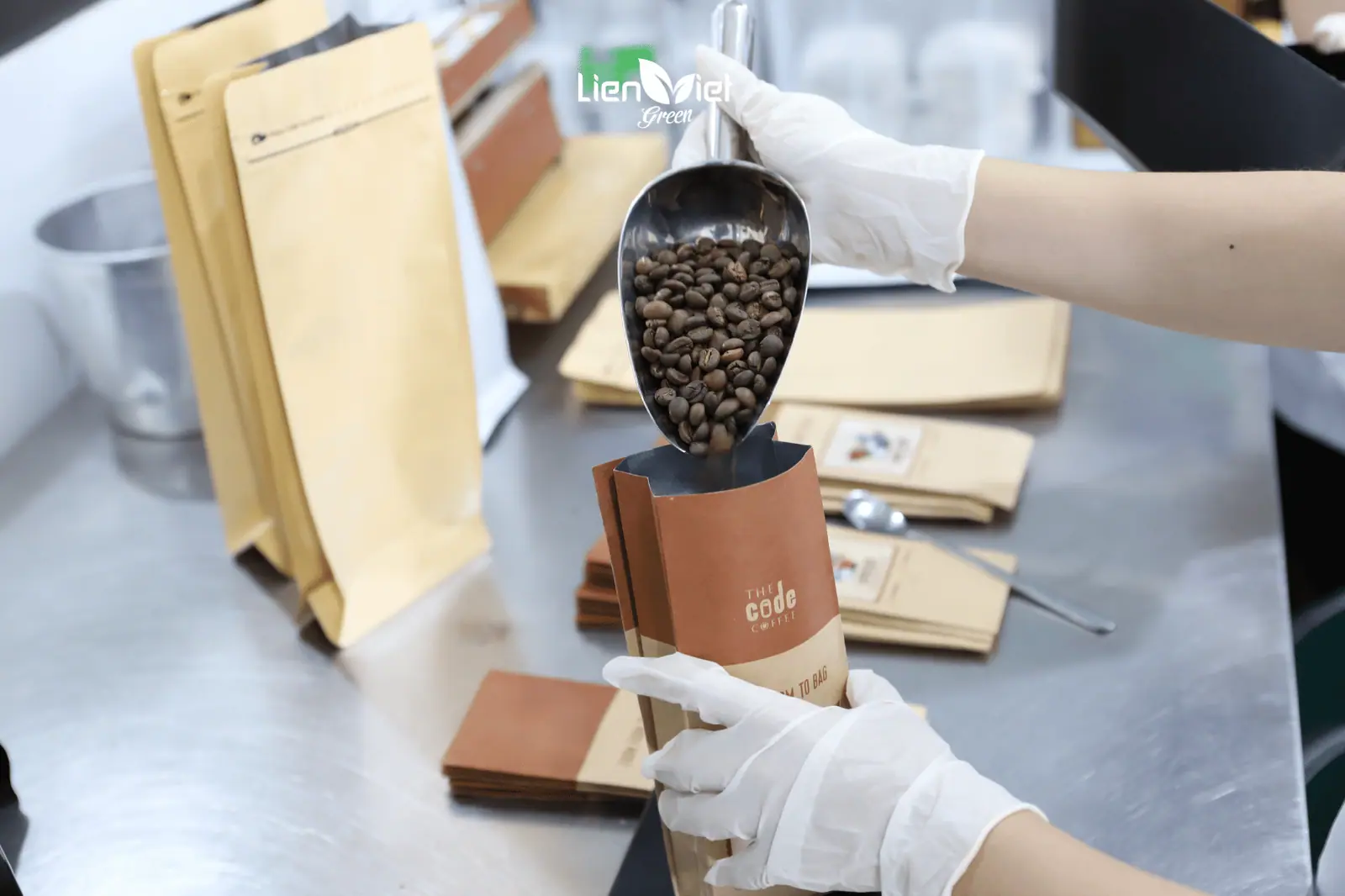
Yes. Lien Viet Green offers private-label roasting, bag printing and packing in multi-layer bags fitted with one-way valves, with a heat-seal check on finished packs.
Turnkey OEM Packaging Solutions with Integrated One-Way Valves
Lien Viet Green provides complete private label coffee roasting, bag printing, and precision valve packaging services.